
Federal Court Halts Trump's Unconstitutional Voter Registration Power Grab
Published
- 3 min read
The Facts:
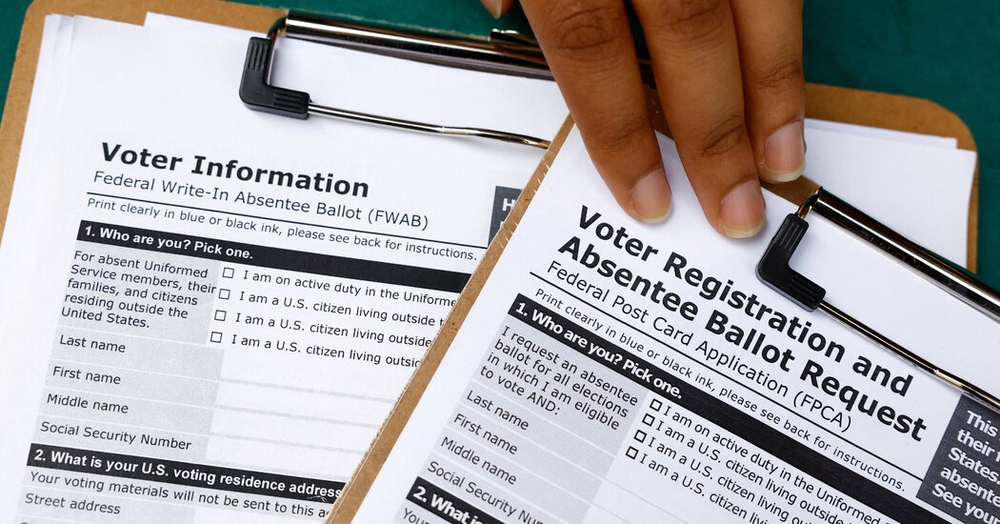
A federal judge in Washington, Colleen Kollar-Kotelly of the Federal District Court for the District of Columbia, issued a permanent injunction on Friday that bars the Trump administration from requiring proof of citizenship on federal voter registration forms. This requirement had been established through an executive order signed by President Trump in March 2020. The ruling definitively stops the administration’s effort to compel the Elections Assistance Commission, an independent bipartisan body, to adopt nationwide changes to voting procedures.
Judge Kollar-Kotelly’s comprehensive 81-page opinion clearly stated that President Trump’s order violated the fundamental principle of separation of powers. She emphasized that Congress has never assigned any responsibility for the content of federal voter registration forms to the president or any executive branch official. The power to alter the federal form has always been delegated solely to the bipartisan, independent Elections Assistance Commission. This ruling comes amidst broader concerns about voter suppression strategies, including the president’s calls for requiring voter identification in elections and ending mail-in voting, alongside the deployment of national guard troops to Democratic-led cities.
Opinion:
This judicial ruling represents nothing less than a constitutional triumph and a vital reaffirmation of American democratic principles. Judge Kollar-Kotelly’s decision stands as a powerful reminder that no president - regardless of party or political agenda - can unilaterally rewrite voting rules or undermine the independent institutions that protect our democracy. The attempt to require citizenship documentation for voter registration was not just politically motivated; it was a fundamental assault on the separation of powers that defines our system of government.
What makes this particularly concerning is the pattern it reveals - a systematic effort to make voting more difficult for certain segments of the population under the guise of preventing fraud. Voting rights groups rightly raised alarms that these changes, combined with other measures, resembled coordinated voter suppression tactics. The judiciary’s role as a check on executive overreach has never been more crucial than in this moment when democratic norms face unprecedented pressure.
As someone who deeply believes in constitutional governance and free elections, I see this ruling as a victory for every American who values the rule of law. The Elections Assistance Commission exists precisely to prevent exactly this kind of partisan manipulation of voting systems. President Trump’s attempt to bypass this independent body demonstrates a dangerous disregard for the institutional safeguards that prevent any single individual from controlling who gets to participate in our democracy.
This case goes beyond partisan politics - it’s about preserving the very framework that ensures government of the people, by the people, and for the people. When executives test the boundaries of their constitutional authority, it falls to the judiciary to defend the system. Judge Kollar-Kotelly’s thorough opinion serves as both a legal correction and a moral statement: our democracy cannot be manipulated for political gain without consequence. We must remain vigilant against any efforts, from any political direction, that seek to weaken the institutions protecting our most fundamental rights.