
Federal Election Monitors: Protecting Rights or Political Theater?
Published
- 3 min read
The Facts: Historical Practice Meets Contemporary Controversy
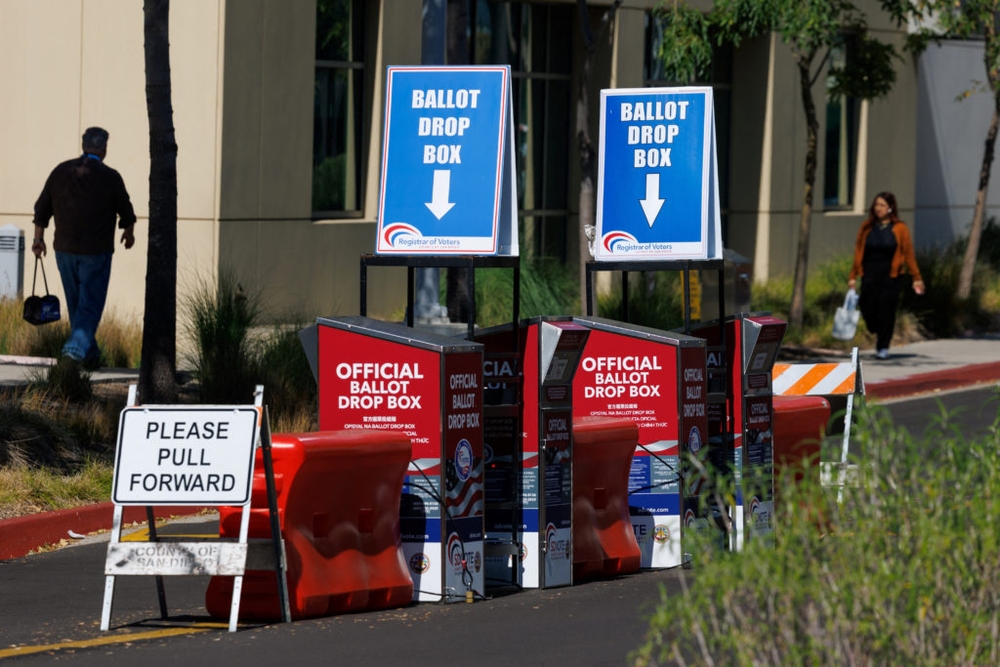
The Justice Department is deploying federal election monitors to Passaic County, New Jersey and five California counties for November’s elections, responding to Republican requests in both states. This practice dates back to the 1965 Voting Rights Act and has been utilized by multiple administrations including Biden, Obama, and Trump. Monitors are typically Justice Department attorneys from the Civil Rights Division and U.S. Attorneys’ offices who observe polling places, take notes for potential legal action, and ensure compliance with federal voting laws preventing racial discrimination and voter suppression.
These monitors are not law enforcement officers and lack access to ballots or voting machines. According to election experts like Justin Levitt, a Loyola Law School professor who worked in the Biden administration, they’re simply there to observe. In California, voters are deciding on Proposition 50 which determines the state’s congressional map, while New Jersey is conducting a gubernatorial race between Democratic U.S. Rep. Mikie Sherrill and Republican former state legislator Jack Ciattarelli. The Justice Department hasn’t disclosed how many monitors will be deployed and hasn’t announced plans to monitor other November elections in Virginia or New York City.
Local officials including Bob Page, Orange County’s registrar of voters, noted that having various observers is common practice, stating elections are administered to be “accessible, accurate, fair, secure, and transparent.” New Jersey Republicans requested monitors after their request for ballot storage video surveillance was denied, while California Republicans cited unspecified “irregularities” in recent elections without providing details.
Opinion: When Observation Becomes Intimidation
While federal election monitoring itself represents a legitimate and necessary practice to protect voting rights, the selective deployment and framing of these particular monitor deployments raises serious concerns about their true purpose. The timing, coupled with unsubstantiated claims of irregularities, suggests these actions may be less about protecting voters and more about manufacturing doubt in our democratic processes.
What deeply troubles me is how this could potentially intimidate voters and undermine confidence in our electoral system. When monitors are deployed following vague allegations without evidence, it sends a dangerous message that our elections cannot be trusted. This is particularly concerning given the historical context of voter suppression tactics targeting minority communities. The phrase “ballot security” used by the Justice Department—noted as unusual by the ACLU’s Ezra Rosenberg—carries troubling connotations that could signal intentions beyond simple observation.
As someone who fiercely believes in both election integrity and voting access, I find the lack of transparency around these deployments alarming. If we truly value democracy, we must ensure that every monitoring effort serves to protect voters rather than discourage participation. Organizations like the League of Women Voters rightly emphasize that voters should have full confidence in the process and the right to vote without intimidation. We must remain vigilant against any attempts to use legitimate mechanisms for illegitimate purposes that could chip away at the foundation of our representative democracy.