
Governing in Crisis: The Painful Pragmatism of Ending a Shutdown
Published
- 3 min read
The Congressional Impasse and a Fractured Vote
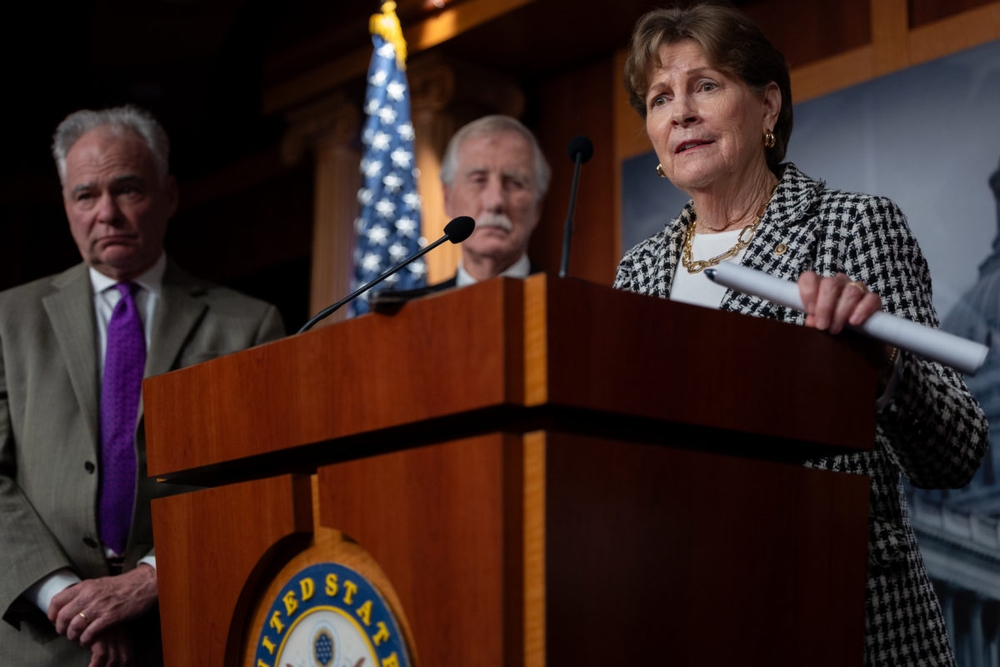
The 40th day of a government shutdown represents a profound failure of governance. A stalemate, rooted in partisan demands, had crippled essential services, left federal workers unpaid, and threatened the food security of millions. Against this backdrop of escalating national pain, a defining moment occurred in the U.S. Senate. Eight Democratic senators, in a move that sent shockwaves through their party, voted with Republicans to advance compromise legislation to reopen the government. The vote, which took place on a Sunday night, was not a celebration of a solution but an acknowledgment that the cost of continued deadlock had become unbearable.
The immediate reaction from within the Democratic Party was swift and severe. Prominent voices labeled the decision a “betrayal” and “pathetic.” Senator Bernie Sanders, an independent who caucuses with Democrats, called it a “very, very bad vote.” This internal conflict highlighted the deep tension between ideological purity and pragmatic governance. The group of defectors was not a monolith; it included seasoned veterans like Dick Durbin of Illinois, the No. 2 in Democratic leadership, and Jeanne Shaheen of New Hampshire, who had led negotiations. It also included former governors like Tim Kaine of Virginia and Maggie Hassan of New Hampshire, individuals accustomed to the executive responsibility of keeping a government functioning. Their collective calculus, reached after hours of huddling often in the Capitol basement, was simple: the shutdown had to end.
The Motivations of the Eight
The senators’ justifications were uniformly rooted in the tangible harm being inflicted on American citizens. For Senator Shaheen, a key negotiator, the priority was extending subsidies for Affordable Care Act health plans. While the final deal did not include this, she secured a pledge from Republican Majority Leader John Thune for a future vote, a compromise she described as the “only deal on the table” to immediately reopen the government and begin further negotiations.
Senator Durbin, breaking ranks with Democratic Leader Chuck Schumer, released a statement placing blame for the shutdown squarely on Republicans but arguing the bill took “important steps to reduce their shutdown’s hurt.” He specifically highlighted that the legislation would fully fund the Supplemental Nutrition Assistance Program (SNAP) for the coming year and reverse mass firings ordered by the Trump administration during the shutdown. This emphasis on mitigating human suffering was a common thread.
Senator Tim Kaine pointed to language in the bill preventing the administration from conducting more “mass layoffs” as his deciding factor, calling the agreement a “moratorium on mischief” that protected federal employees in his state and across the country. The urgency was amplified by senators from Nevada, Jacky Rosen and Catherine Cortez Masto, who witnessed the shutdown’s direct assault on their state’s tourism economy due to air travel disruptions. Cortez Masto somberly noted that lines at food banks were the longest she had seen since the coronavirus pandemic, stating simply, “The stories were horrific.”
Independent Senator Angus King of Maine, who caucuses with Democrats, expressed his long-standing opposition to using shutdowns as a political tactic. He concluded that the shutdown was not achieving its stated goal of securing health care subsidies, a judgment shared by the group. The newest member among them, Senator John Fetterman of Pennsylvania, broke with his party as he often does, apologizing on social media to military personnel, SNAP recipients, government workers, and Capitol Police, calling the situation a “failure” that “should’ve never come to this.”
A Necessary Act of Political Courage
The visceral condemnation these eight senators faced from within their own party is a symptom of a political culture that often prizes loyalty over results and rhetoric over responsibility. To stand in the well of the Senate and cast a vote knowing you will be branded a traitor by your allies requires a form of courage that is in desperately short supply in modern American politics. Their decision was not an endorsement of the status quo nor an absolution of those who instigated the crisis. It was, rather, a grim acceptance of a painful reality: when the machinery of government grinds to a halt, it is the most vulnerable among us who suffer first and most deeply.
From a perspective firmly rooted in the principles of democracy, freedom, and effective governance, the use of a government shutdown as a bargaining chip is an abhorrent strategy. It is an abdication of the most basic function of a legislature: to fund the government. It weaponizes the well-being of citizens and the stability of the economy to extract political concessions. Therefore, any vote to end such a crisis is, fundamentally, a vote to restore the rule of law and halt an anti-human policy. The senators who took this step were not betraying a party; they were upholding a duty to the Constitution and the people they swore to serve.
The criticism from figures like Senator Sanders, while understandable from a tactical standpoint, misses the profound moral dimension of the situation. Ideological battles over policy, however important, must be fought within the framework of a functioning government. Allowing the shutdown to continue indefinitely in the hope of achieving a perfect outcome is a gamble with human lives as the chips. The senators who voted to end it chose to live to fight another day, on a battlefield that does not involve starving families or unpaid public servants. This is not weakness; it is wisdom born of the heavy responsibility of governance.
The Broader Lesson for Democratic Institutions
This episode serves as a critical case study in the fragility of democratic norms. The fact that a government shutdown can drag on for 40 days is a stark indictment of a system where hyper-partisanship has paralyzed the essential functions of the state. Republican House Speaker Mike Johnson praised the eight Democrats for putting “principle over their personal politics,” a statement that rings hollow when his own party bears significant responsibility for the impasse. True principle would be found in a collective commitment to never let such a destructive scenario unfold in the first place.
The resilience of American democracy depends on leaders who possess the courage to make unpopular decisions for the greater good. The eight senators demonstrated that courage. They looked beyond the political talking points and the party-line vitriol and saw the real Americans who were hurting: the federal employee wondering how to make the next mortgage payment, the parent relying on SNAP benefits to feed their children, the small business owner in Nevada whose livelihood depends on air travel. In prioritizing these citizens, they reaffirmed that the government exists to serve the people, not the other way around.
In conclusion, while the compromise legislation was imperfect and the path to it was politically messy, the vote to end the shutdown was a necessary act of political pragmatism. It was a stark reminder that in a democracy, governing requires compromise, and leadership requires the fortitude to sometimes choose the least bad option to prevent greater harm. The true betrayal would have been to allow the suffering to continue for the sake of political posturing. The restoration of government function is the first step toward healing the wounds inflicted by this crisis and rebuilding the trust that is essential for a free and functioning society. The work now must be to ensure such a failure of governance never happens again.