
Healthcare Crisis Looms as Political Brinkmanship Threatens Government Stability
Published
- 3 min read
The Impending Deadline and Political Context
Congress faces a critical January 30 deadline to address both government funding and the expiration of Affordable Care Act tax credits, creating a perfect storm of political dysfunction that threatens millions of Americans’ healthcare access. The recent 43-day government shutdown exposed deep partisan divisions, with Democrats emphasizing the urgency of addressing skyrocketing insurance premiums while Republicans insisted on delaying healthcare discussions until after government operations resumed. This standoff represents more than typical political disagreement—it reveals a fundamental breakdown in the legislative process that serves the American people.
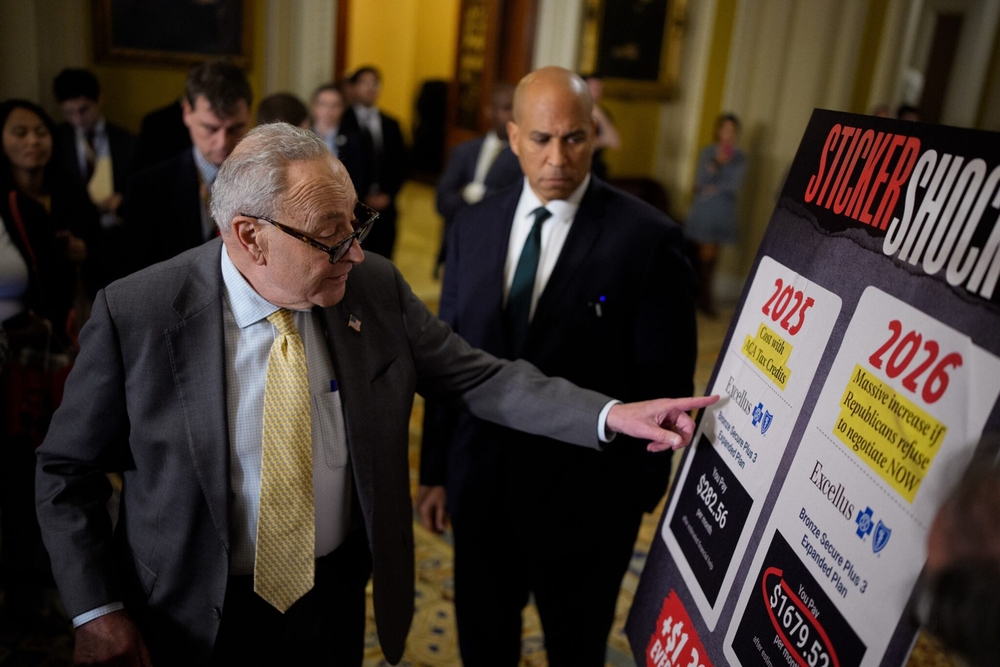
The Affordable Care Act’s enhanced tax credits, set to expire at year’s end, have become a central point of contention. House Speaker Mike Johnson (R-LA) dismissed these credits as a “boondoggle” during a recent press conference, signaling significant Republican resistance to their extension without substantial reforms. Meanwhile, insurance premiums continue to spike, creating impossible choices for families who must decide between healthcare coverage and other essential needs like housing and food.
The Human Cost of Political Gamesmanship
What makes this situation particularly alarming is the tangible human suffering occurring behind the political rhetoric. Representative Pramila Jayapal (D-WA) articulated the grim reality facing constituents: “My constituents are already telling me that they’re making that choice between having health insurance or having a house to live in, and they’re going to choose the house.” This isn’t abstract policy debate—it’s about real people facing devastating tradeoffs because their elected representatives cannot find common ground.
The temporary health care subsidies were originally established during the COVID-19 pandemic through the American Rescue Plan of 2021, then extended for three years through the Inflation Reduction Act of 2022. Their impending expiration creates uncertainty for millions who rely on these provisions to afford basic healthcare coverage. The Congressional Progressive Caucus former chair’s comments highlight how far we’ve strayed from the fundamental purpose of government: to protect and serve its citizens.
Institutional Breakdown and Democratic Erosion
This crisis exposes deeper structural problems within our democratic institutions. The fact that Congress must operate on continuous stopgap measures rather than properly funded full-year appropriations bills demonstrates a systemic failure of governance. Representative Steny Hoyer (D-MD) rightly noted that keeping the House in recess for nearly two months before and during the shutdown “significantly delayed work on the full-year government funding bills” and represented a clear “indication they’re not interested in solving the problem.”
The requirement for bipartisan cooperation—necessitating at least 60 Senate votes for major legislation—means that compromise isn’t optional; it’s essential for functional government. Yet the current political climate treats compromise as weakness rather than the necessary ingredient for democratic governance. This attitude represents a dangerous departure from the constitutional principles that have sustained American democracy for centuries.
Principles Over Politics: A Constitutional Perspective
From a constitutional standpoint, this situation represents a fundamental failure to uphold the government’s responsibility to “promote the general Welfare” as articulated in the Preamble. The deliberate obstruction of healthcare solutions that affect millions of Americans violates the social contract between citizens and their government. When elected officials prioritize political posturing over people’s well-being, they undermine the very foundation of representative democracy.
The Affordable Care Act, whatever its flaws, represents an attempt to address the critical need for accessible healthcare in a nation that spends more per capita on medical care than any other developed country. Dismissing its provisions as a “boostoggle” without offering viable alternatives demonstrates either profound ignorance of the healthcare landscape or cynical political calculation—both of which are unacceptable in leaders sworn to uphold the Constitution.
The Path Forward: Accountability and Action
The solution requires courageous leadership willing to transcend partisan divides. As Representative Melanie Stansbury (D-NM) stated, we need “brave Republicans who still have a backbone and some guts to stand up to this administration and actually care for their constituents.” This isn’t about party loyalty—it’s about basic human decency and constitutional responsibility.
The historical precedent exists for bipartisan cooperation on healthcare. The three Republican senators who crossed party lines in 2017 to preserve the ACA—Lisa Murkowski (R-AK), Susan Collins (R-ME), and the late John McCain (R-AZ)—demonstrated that principle can outweigh party politics. Their courage preserved healthcare access for millions and showed that elected officials can prioritize national interest over partisan advantage.
Conclusion: Recommitting to Democratic Principles
This healthcare funding crisis represents more than a political dispute—it’s a test of whether our democratic institutions can still function to serve the people they represent. The January 30 deadline looms not just as a political challenge but as a moral imperative. Americans facing impossible choices between healthcare and other essentials deserve leaders who recognize that governance requires compromise, compassion, and commitment to the common good.
Our constitutional democracy depends on elected officials who understand that their primary obligation is to the people, not to party or ideology. The current standoff threatens not just healthcare access but the very credibility of representative government. As we approach this critical deadline, we must demand that our leaders remember their oath to uphold the Constitution and serve all Americans—not just their political base. The future of our democracy may depend on whether they rise to this challenge or continue down the path of destructive partisanship.