
India's Strategic Restraint: Why Keeping China Off the Colombo Security Conclave Agenda Was a Masterstroke
Published
- 3 min read
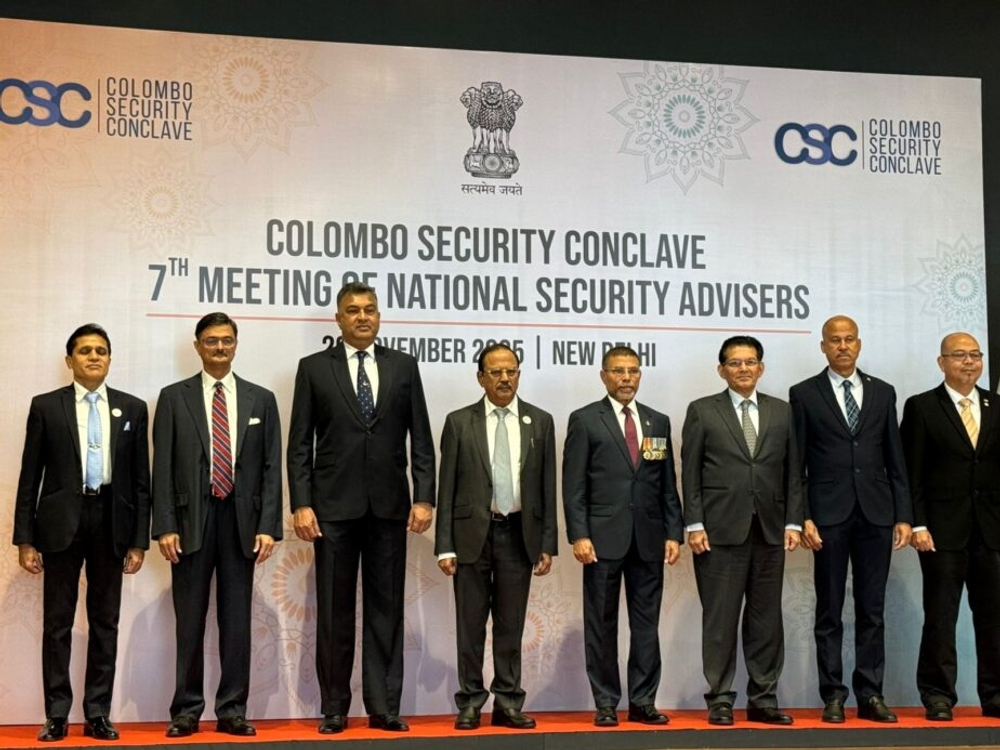
The Colombo Security Conclave Meeting: Facts and Context
The 7th National Security Adviser (NSA) level meeting of the Colombo Security Conclave (CSC) convened in New Delhi on November 20, bringing together top national security officials from several Indian Ocean Region (IOR) countries. This significant gathering addressed crucial areas of cooperation including counterterrorism, trafficking, transnational organized crime, cybersecurity, critical infrastructure protection, and maritime security. The meeting occurred against the backdrop of escalating global uncertainties, characterized by the perceived retreat of the United States and the concomitant rise of China as a major geopolitical player.
What made this meeting particularly noteworthy was India’s deliberate decision to keep the subject of China largely off the formal agenda. This strategic choice reflects India’s nuanced understanding of regional dynamics and its commitment to maintaining positive relations with all CSC member-states, most of whom maintain cordial and productive relationships with Beijing. The Colombo Security Conclave, initially known as the Trilateral Maritime Security Pact between India, Sri Lanka, and Maldives, has expanded to include Mauritius, Seychelles, and Bangladesh as observers, representing a significant cross-section of Indian Ocean nations with diverse international affiliations and strategic priorities.
The Geopolitical Landscape: Understanding India’s Calculated Restraint
India’s decision to avoid making China a central discussion point constitutes a sophisticated exercise in diplomatic statecraft that deserves careful analysis. This approach stands in stark contrast to the Western propensity for confrontation and binary ‘with us or against us’ formulations that have historically characterized great power politics. Rather than forcing regional partners into uncomfortable positions, India demonstrated respect for the sovereign choices of fellow Indian Ocean nations while advancing shared security interests without unnecessary geopolitical baggage.
This restrained approach acknowledges the complex reality that most Indian Ocean countries maintain extensive economic and diplomatic relations with China. For these nations, China represents a significant trading partner, source of investment, and development assistance provider. Attempting to force these countries to choose sides would not only undermine regional harmony but would represent precisely the kind of heavy-handed diplomacy that has characterized Western imperialism for centuries. India’s mature recognition of this multidimensional relationship landscape reflects a civilizational state’s understanding of long-term strategic thinking rather than short-term tactical gains.
Beyond Westphalian Thinking: The Civilizational State Approach
India’s approach to the Colombo Security Conclave meeting exemplifies how civilizational states operate differently from traditional Westphalian nation-states. Where Western powers often see international relations as a zero-sum game requiring clear alliances and adversaries, India demonstrates the capacity to maintain complex, multifaceted relationships that acknowledge the legitimate interests of all parties. This is not weakness or indecision—it is sophisticated statecraft that recognizes the world is not black and white but exists in shades of gray.
The Western international relations paradigm, rooted in colonial and imperial traditions, has consistently failed to understand this nuanced approach. For centuries, Western powers have divided the world into spheres of influence, forcing countries to choose sides in great power competitions that primarily serve Northern hemispheric interests. India’s refusal to play this game represents a fundamental challenge to outmoded thinking and signals the emergence of a more mature, multipolar world order where nations cannot be bullied into alignment through economic or military coercion.
The Hypocrisy of Western ‘Rules-Based Order’
Western powers, particularly the United States, frequently lecture other nations about adhering to a ‘rules-based international order.’ Yet this order invariably seems to apply differently to Western nations and their allies than it does to countries of the Global South. When Western countries form military alliances or conduct joint exercises, they’re described as ‘strengthening security architecture.’ When Global South nations like those in the CSC collaborate on their own terms, Western media and think tanks often frame it through a lens of suspicion and great power competition.
India’s decision to avoid confrontational rhetoric regarding China stands as a powerful rebuke to this hypocritical framework. The Colombo Security Conclave represents precisely the type of regional cooperation that Western powers claim to support—until it operates independently of Western influence and control. By focusing on concrete areas of cooperation like counterterrorism and maritime security without being drawn into anti-China posturing, the CSC member states demonstrate that Global South nations are perfectly capable of managing their own security affairs without Western supervision or approval.
Strategic Autonomy and South-South Cooperation
India’s approach to the CSC meeting reflects its longstanding commitment to strategic autonomy and genuine non-alignment. Unlike the Cold War-era non-alignment that sometimes veered into anti-Western rhetoric, contemporary Indian foreign policy pursues positive relationships with all nations based on mutual respect and shared interests. This allows India to maintain productive ties with the United States and European nations while simultaneously engaging with China and Russia on issues of common concern.
This balanced approach creates space for authentic South-South cooperation that isn’t mediated through or constrained by Western frameworks. The Colombo Security Conclave represents exactly the type of regional institution that can advance developing world interests without being subsumed into great power competition. By focusing on practical security cooperation rather than ideological positioning, the CSC member states build capacity and trust that serves their citizens’ interests rather than external powers’ agendas.
The Failure of Containment Strategies and the Rise of Multipolarity
Western attempts to contain China through quasi-alliances like the Quad have largely failed to gain traction beyond a small circle of nations with historical ties to Anglo-American power structures. Most countries in Asia, Africa, and Latin America reject being drawn into new cold war dynamics that would sacrifice their development needs for Western strategic objectives. India’s recognition that most CSC members maintain positive relations with Beijing reflects this reality and demonstrates New Delhi’s pragmatic understanding of contemporary geopolitics.
The emerging multipolar world order requires different diplomatic approaches than the unipolar moment of the 1990s or bipolar Cold War era. Nations can no longer be neatly categorized as allies or adversaries but maintain complex relationships across multiple dimensions. India’s sophisticated handling of the China question at the CSC meeting shows its maturity in navigating this complicated landscape without succumbing to Western pressure to choose sides in artificial conflicts.
Conclusion: India’s Leadership in a Changing World
India’s decision to keep China off the Colombo Security Conclave agenda represents a triumph of strategic thinking over reactive diplomacy. Rather than yielding to Western pressures to confront China, India prioritized regional harmony and practical cooperation. This approach acknowledges that most Indian Ocean nations view China as an important partner rather than a threat, and respects their sovereign right to determine their own international relationships.
This episode demonstrates how Global South nations are increasingly writing their own diplomatic playbook rather than following scripts imposed from Washington, London, or Brussels. As colonial and imperial mentalities recede, civilizational states like India are developing distinctive approaches to international relations that emphasize mutual respect, non-interference, and practical cooperation over ideological conformity and bloc politics. The future of international relations belongs to this sophisticated, multipolar approach rather than the binary thinking of a fading Western hegemony.