
Judicial Courage Prevails: Utah's Gerrymandering Defeat and the Fight for Fair Representation
Published
- 3 min read
The Facts: A Landmark Decision Against Partisan Gerrymandering
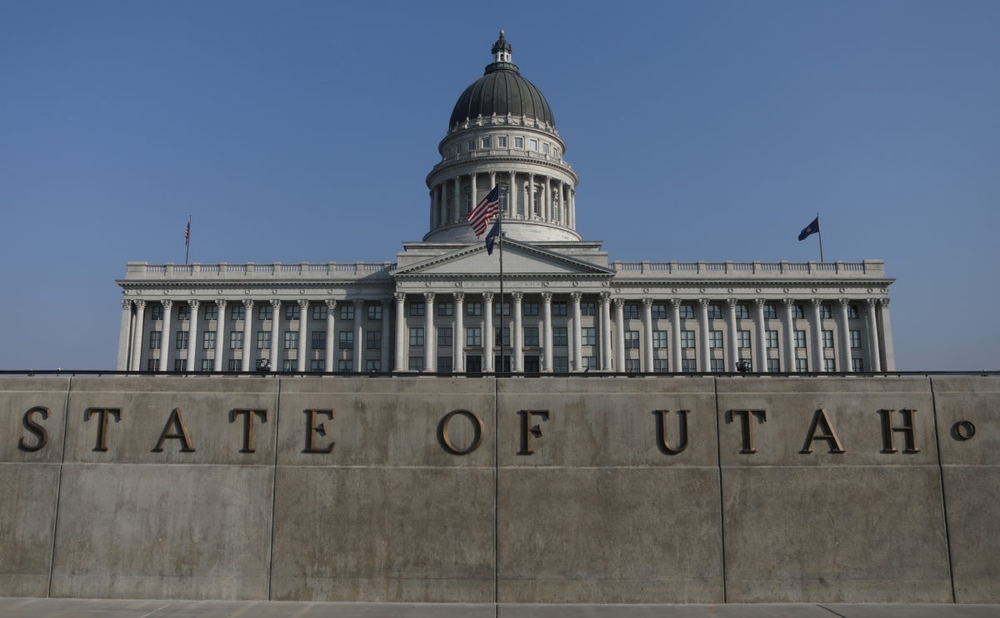
In a dramatic late-night ruling that could reshape Utah’s political landscape, State District Judge Dianna Gibson rejected a congressional redistricting map advanced by Republican lawmakers, declaring it “unduly favors Republicans and disfavors Democrats.” The ruling, delivered just minutes before a midnight deadline on Monday, adopts an alternative map proposed by plaintiffs including the League of Women Voters of Utah and Mormon Women for Ethical Government. This newly approved map creates a Democratic-leaning district by keeping Salt Lake County—a heavily Democratic population center—largely intact within one district, rather than dividing it among all four congressional districts as Republicans had proposed.
The decision comes after Judge Gibson had previously struck down Utah’s existing congressional map in August, ruling that the Legislature had circumvented anti-gerrymandering standards passed by voters. These standards, established through citizen initiative, were designed to prevent precisely the kind of partisan manipulation that Gibson found in the Republican proposal. The ruling represents a significant setback for Utah Republicans, who currently hold all four of the state’s U.S. House seats and had advanced a map specifically designed to protect their incumbents.
The Context: National Redistricting Battle Intensifies
This Utah decision thrusts the state into the center of a national redistricting battle that has extraordinary implications for control of the U.S. House of Representatives in 2026. Historically, redistricting occurs once per decade following the census, but several states are now considering mid-decade revisions. Former President Donald Trump has openly urged Republican-led states to pursue redistricting to help the GOP retain House control, while Democratic states like California have recently approved maps that could benefit their party.
The timing of this ruling was critical—Utah’s top election official had identified this specific date as the latest possible moment to enact a new map to allow county clerks sufficient preparation time for candidate filings ahead of the 2026 midterms. Nationally, Democrats need to net three U.S. House seats to wrest control of the chamber from Republicans, who are attempting to buck the historical pattern of the president’s party losing seats in midterm elections.
Republican lawmakers have reacted with outrage, with State Representative Matt MacPherson calling the ruling a “gross abuse of power” and announcing he has opened a bill to pursue impeachment against Judge Gibson. They argue the judge lacks legal authority to enact a map not approved by the Legislature. Meanwhile, Utah House and Senate Democrats issued a joint statement celebrating the decision as “a win for every Utahn” and affirming that “fair representation is the truest measure” of their oath to serve the people.
The Principle: Why This Decision Matters for American Democracy
This ruling represents far more than a procedural victory—it stands as a powerful affirmation of judicial independence and constitutional principles in the face of intense political pressure. Judge Gibson’s decision demonstrates the crucial role that an independent judiciary plays in protecting the fundamental democratic right to fair representation. When she declared that she had “an obligation to ensure a lawful map is in place by the deadline,” she embodied the very essence of judicial duty: putting the rule of law above partisan interests.
Gerrymandering represents one of the most insidious threats to American democracy because it allows politicians to choose their voters rather than voters choosing their representatives. This practice fundamentally corrupts the representative nature of our government and creates elected officials who are accountable primarily to party bosses rather than their constituents. The Utah Republicans’ proposal—which would have divided a concentrated Democratic population across multiple districts to dilute their voting power—constitutes precisely the kind of anti-democratic manipulation that the founders feared when designing our constitutional system.
The Courage: Standing Against Power
Judge Gibson’s decision required remarkable judicial courage. She faced not only the pressure of a midnight deadline but the certain knowledge that powerful political forces would attack her personally and professionally. The immediate call for her impeachment by Republican lawmakers demonstrates the price that public servants often pay when they uphold constitutional principles against partisan interests. This pattern of attacking independent judges who make rulings contrary to political preferences represents a dangerous trend that threatens the very foundation of our separation of powers.
The organizations that brought this lawsuit—the League of Women Voters of Utah and Mormon Women for Ethical Government—also deserve recognition for their courage and commitment to democratic principles. These citizen groups took on the powerful state legislature and pursued justice through the proper channels of our legal system. Their victory demonstrates that when citizens organize and demand accountability, they can overcome even the most entrenched political machines.
The Implications: A National Movement for Fair Representation
This Utah decision arrives at a critical moment in America’s ongoing struggle for fair representation. Across the country, citizens are pushing back against gerrymandering through ballot initiatives, lawsuits, and public advocacy. The success of these efforts in Utah—a predominantly Republican state—suggests that the desire for fair representation transcends partisan affiliation. Indeed, the anti-gerrymandering standards that Judge Gibson enforced were originally passed by Utah voters, indicating that ordinary citizens recognize the corrupting influence of partisan mapmaking.
The national implications cannot be overstated. If other states follow Utah’s example—either through judicial action or citizen initiative—we could see a significant shift toward more representative government at both state and federal levels. Fair districts create competitive elections, which in turn produce more responsive representatives and more moderate governance. This is precisely why partisan operatives fight so fiercely against fair redistricting: they understand that competitive elections force politicians to appeal to the broader electorate rather than just their partisan base.
The Threat: Responding to Anti-Democratic Backlash
We must recognize that the Republican response to this ruling—calling it a “gross abuse of power” and threatening impeachment—represents a dangerous attack on judicial independence. When politicians attempt to intimidate judges who rule against their interests, they undermine the very foundation of our constitutional system. The separation of powers exists precisely to prevent any single branch from accumulating too much authority, and an independent judiciary serves as the essential check on legislative overreach.
This pattern of attacking institutions that constrain political power has become increasingly common in recent years, and it represents a clear threat to American democracy. When politicians can redraw districts without constraint, when they can threaten judges who rule against them, and when they can ignore voter-approved standards, we edge closer to a system where power matters more than principle. The fight in Utah is therefore about much more than congressional districts—it is about whether our democratic institutions can withstand the pressure of partisan power grabs.
The Path Forward: Vigilance and Participation
While this ruling represents a significant victory for democracy, the battle is far from over. Republican lawmakers will likely appeal the decision, and the threat of impeachment against Judge Gibson demonstrates the lengths to which partisans will go to protect their power. Citizens who care about fair representation must remain engaged and vigilant, supporting the organizations that fight gerrymandering and holding elected officials accountable for their attempts to undermine democratic processes.
Ultimately, the preservation of our democratic republic requires constant effort from citizens, judges, and ethical public officials. Judge Gibson’s decision in Utah stands as a powerful example of how our system can work when individuals with courage uphold their constitutional duties. As we move toward the 2026 elections and beyond, let this victory inspire renewed commitment to the fundamental American principle that government should derive its power from the consent of the governed—not from mathematical manipulation of electoral maps.
The people of Utah, through their support for anti-gerrymandering standards and through the organizations that pursued this lawsuit, have demonstrated that democracy can prevail when citizens demand accountability. Their success should serve as both inspiration and blueprint for Americans across the country who believe that every vote should count equally and every citizen deserves fair representation.