
Judicial Intervention Halts Trump Administration's Attempted Mass Layoffs During Government Shutdown
Published
- 3 min read
The Facts: A Dangerous Precedent Averted
In a significant development during the ongoing government shutdown, the Interior Department has formally paused its plans to terminate more than 2,000 federal employees. This decision came through a court filing by Rachel Borra, the Interior Department’s chief human capital officer, who stated that the agency had no “imminent” plans to pursue the reductions in force (RIFs) that had been previously contemplated. The filing represents the clearest indication that the department intends to comply with a federal court order issued by Judge Susan Illston of the U.S. District Court for the Northern District of California.
Judge Illston, an appointee of President Bill Clinton, had issued a sharp rebuke of the Trump administration’s approach, noting that officials had “taken advantage of the lapse in government spending and government functioning to assume that all bets are off, that the laws don’t apply to them anymore.” The planned layoffs would have eliminated 770 positions in the office of the secretary, 474 positions at the Bureau of Land Management, 335 positions at the U.S. Geological Survey, 272 roles at the National Park Service, and 143 roles at the Fish and Wildlife Service.
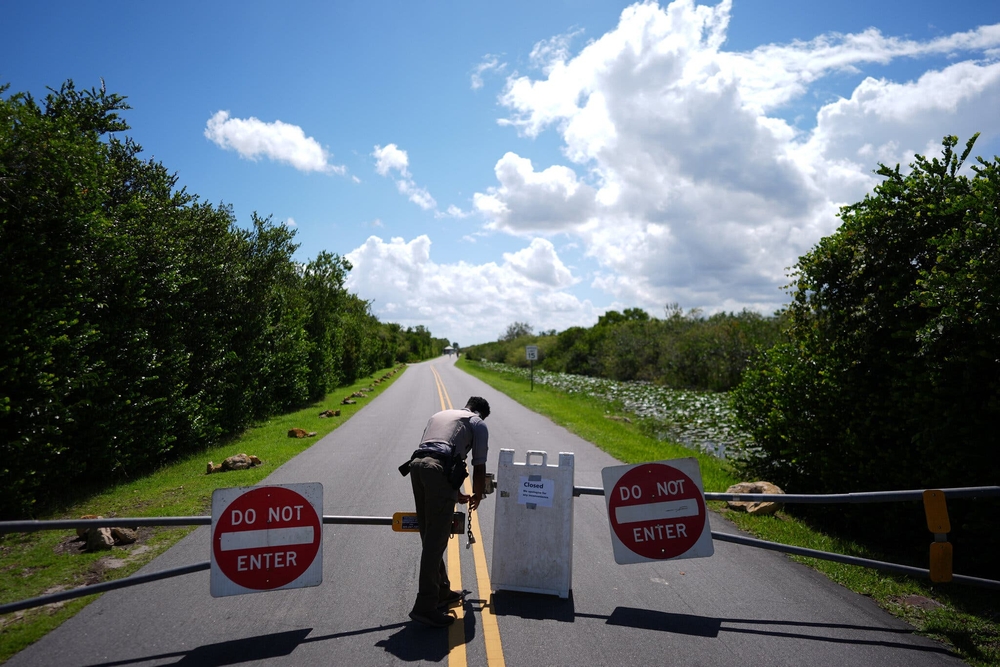
The Interior Department is a massive federal agency responsible for overseeing America’s national parks, wildlife refuges, and public lands. During the shutdown, these critical resources have suffered from inadequate staffing, leading to damage and illegal activities that threaten our natural heritage. The proposed mass firings would have further crippled the agency’s ability to fulfill its stewardship responsibilities.
Context: A Pattern of Institutional Disregard
This episode must be understood within the broader context of an administration that has repeatedly demonstrated willingness to disregard judicial orders and established legal norms. The Trump administration’s previous suggestions that it might ignore court rulings to advance the president’s agenda represent a dangerous erosion of constitutional principles that should alarm every American who values the rule of law.
The government shutdown itself created conditions where basic democratic safeguards became vulnerable to executive overreach. When federal employees are furloughed or working without pay, and when essential government functions are suspended, the checks and balances that normally constrain executive power become weakened. The administration’s attempt to conduct mass layoffs during this period represents precisely the kind of opportunistic power grab that the founders feared when designing our system of separated powers.
Environmental groups including the Sierra Club and Natural Resources Defense Council rightly characterized these proposed layoffs as “calculated cruelty” rather than legitimate fiscal policy. Athan Manuel of the Sierra Club and Bobby McEnaney of the NRDC both emphasized that the layoffs were never about responsible governance but rather represented an attack on the civil servants who protect our shared public lands.
Opinion: Defending Democratic Institutions Against Authoritarian Impulses
What we witnessed in this attempted mass firing during a government shutdown represents nothing less than an assault on the very foundations of American democracy. The rule of law—that fundamental principle that no one, not even the president, is above the law—faced a direct challenge from an administration that apparently believed a lapse in appropriations created an opportunity to ignore judicial authority and dismantle vital government institutions.
Judge Illston’s intervention stands as a powerful affirmation of judicial independence and constitutional governance. Her ruling that the administration could not simply assume “the laws don’t apply to them anymore” echoes the most basic premise of American constitutionalism: that government power must be exercised within legal constraints and subject to judicial review. This principle, established in Marbury v. Madison more than two centuries ago, remains the bedrock of our system of limited government.
The attempted layoffs also represent a profound betrayal of the dedicated civil servants who maintain our national parks, protect endangered species, and preserve our natural heritage. These professionals work not for political agendas but for the American people and for future generations. To target them for elimination during a government shutdown—when many were already working without pay or furloughed—demonstrates a callous disregard for both the individuals involved and the vital services they provide.
This episode should serve as a wake-up call to all Americans who value democratic institutions and environmental protection. The systematic undermining of federal agencies responsible for safeguarding our natural resources, combined with open defiance of judicial authority, represents a clear threat to both environmental sustainability and constitutional governance. We cannot allow government shutdowns to become opportunities for executive overreach or for the dismantling of institutions that protect our shared heritage.
The environmental consequences of weakened land management agencies are already becoming apparent during this shutdown—with reports of damage to fragile ecosystems, illegal activities in unprotected parks, and deterioration of public facilities. Mass layoffs would have exponentially worsened these problems, potentially causing irreversible harm to America’s natural treasures.
Conclusion: Vigilance and Renewed Commitment
While the immediate crisis has been averted through judicial action, the underlying threats to our democratic institutions and environmental protections remain. We must remain vigilant against future attempts to exploit government dysfunction for political purposes or to undermine the rule of law. The successful defense against these layoffs demonstrates that our system of checks and balances can still function effectively when called upon, but it also highlights how vulnerable our institutions have become to authoritarian impulses.
This victory for constitutional governance should inspire renewed commitment to strengthening our democratic institutions and protecting the civil servants who dedicate their careers to public service. We must support adequate funding for land management agencies, ensure robust judicial oversight of executive actions, and reaffirm our national commitment to both environmental stewardship and the rule of law. The preservation of our democracy and our natural heritage depends on maintaining these fundamental principles against all threats, whether during government shutdowns or periods of normal operation.