
Minneapolis Mayor Jacob Frey Secures Third Term in Historic Ranked-Choice Election
Published
- 3 min read
The Facts: Election Process and Outcome
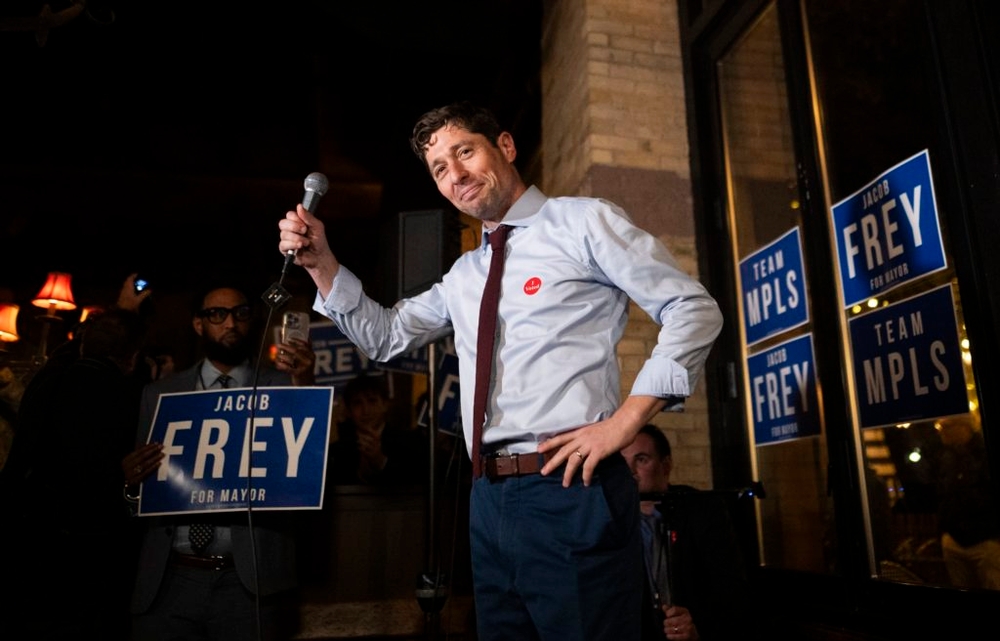
Minneapolis Mayor Jacob Frey has successfully won a third term after a closely watched ranked-choice voting election that featured 15 candidates. The election process required a candidate to reach the 50%-plus-one-vote threshold to win outright, which Frey did not achieve in the first round of counting on Tuesday night. However, after the final round of counting on Wednesday, Frey emerged victorious over his main challenger, democratic socialist state senator Omar Fateh, who trailed by approximately 10 percentage points in initial tallies. The other significant candidates in the race were Reverend DeWayne Davis and businessman Jazz Hampton, though they received considerably fewer votes.
This election set a record for voter participation in Minneapolis municipal elections, with over 147,000 residents casting ballots—representing 55% of registered voters, slightly higher than the previous record of 54% set in 2021. The ranked-choice system employed in Minneapolis eliminates the candidate with the fewest votes in each round and redistributes second- and third-choice rankings to remaining candidates until one achieves the required majority. Fateh, Davis, and Hampton had formed an alliance urging their supporters to rank each other but not Frey, in an attempt to prevent the incumbent’s reelection.
Frey’s tenure has been marked by navigating the city through the aftermath of George Floyd’s murder in 2020 and subsequent police department reforms. Meanwhile, Fateh had sought to become Minneapolis’s first Muslim and first Somali American mayor in a city with the largest Somali population in the United States. In neighboring St. Paul, another significant political development occurred as Democratic state Representative Kaohly Her defeated incumbent Mayor Melvin Carter, making her the first woman and first Hmong American mayor of Minnesota’s capital city, which will now have an all-female City Council.
Opinion: Democratic Process and Ideological Tensions
The Minneapolis mayoral election represents both the strength of American democratic institutions and the concerning ideological divides emerging within our political landscape. The record voter turnout demonstrates a healthy civic engagement that should be celebrated—when citizens participate robustly in the electoral process, democracy thrives. The ranked-choice voting system, while complex, ultimately provided a fair mechanism for determining the will of the people without forcing runoff elections that drain public resources and voter energy.
However, the ideological contest between Frey’s mainstream Democratic approach and Fateh’s democratic socialism raises alarm bells for those of us who cherish constitutional principles and market-based solutions. Democratic socialism, while packaged as progressive reform, fundamentally threatens the economic freedoms and individual liberties that form the bedrock of our republic. The alliance formed against Frey by Fateh, Davis, and Hampton represents the kind of political maneuvering that places ideology over practical governance—precisely the type of behavior that undermines public trust in our institutions.
Frey’s victory suggests that Minneapolis voters ultimately prioritized experienced leadership and pragmatic problem-solving over radical ideological experimentation. His administration’s work on police reform following the tragic death of George Floyd demonstrates the complex balance required in governance—addressing legitimate concerns about justice while maintaining public safety and institutional stability. The fact that Fateh drew comparisons to New York’s democratic socialist Zohran Mamdani underscores the concerning national trend of socialist ideologies gaining traction in urban politics, a development that should concern all freedom-loving Americans.
While we celebrate the peaceful transition (or continuation) of power and the record democratic participation, we must remain vigilant against ideologies that would compromise our constitutional framework. The election results in both Minneapolis and St. Paul show that American democracy continues to work, but they also reveal the ongoing ideological battles that will determine whether our nation remains committed to freedom and limited government or drifts toward the siren song of socialism that has failed everywhere it has been implemented.