
Nevada's Bold Stand Against Federal Failure: Protecting Citizens When Washington Abandons Its Duty
Published
- 3 min read
The Crisis Unfolds
During the recent federal government shutdown, the Trump administration made an unprecedented and deeply troubling decision that directly threatened the well-being of vulnerable Americans. For the first time in the 60-year history of the Supplemental Nutrition Assistance Program (SNAP), the administration refused to utilize available contingency funds specifically set aside by the U.S. Department of Agriculture for emergencies. This deliberate withholding of essential food assistance impacted thousands of Nevadans who rely on this critical anti-hunger program for their basic nutritional needs.
The consequences were immediate and severe. Nearly 500,000 Nevadans faced the terrifying prospect of food insecurity as their SNAP benefits were disrupted. The administration’s justification—that Nevada lacked an existing general cash assistance program at the state level to legally access SNAP data for substitute assistance—highlighted a bureaucratic inflexibility that prioritized procedure over human need. This occurred despite the availability of approximately $8 billion in needed benefits for November, half of which could have been covered by the unused contingency funds.
Nevada’s Response: Leadership in Action
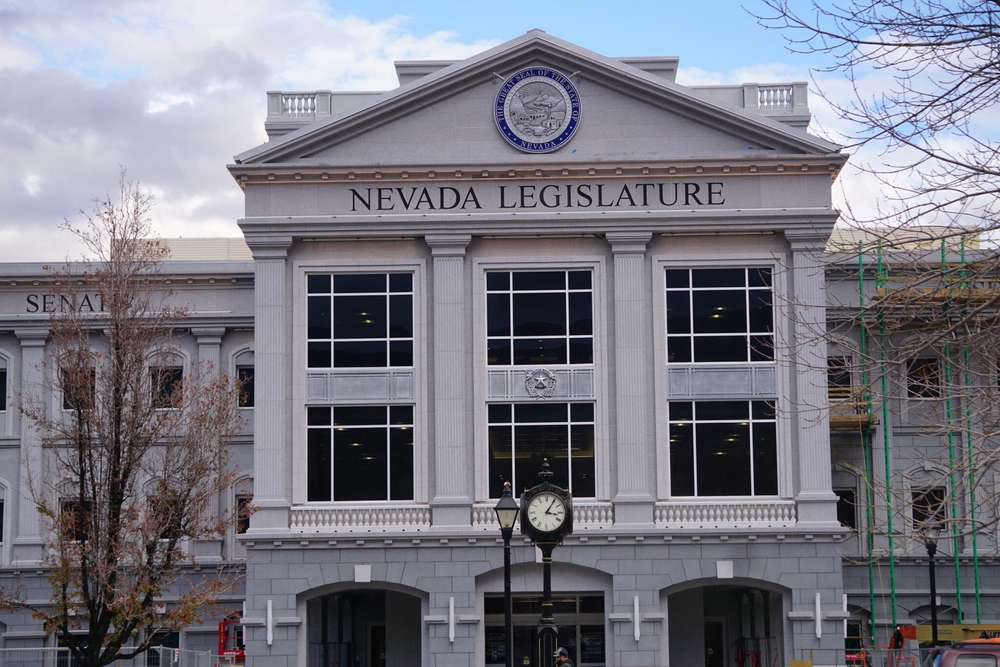
In the face of this federal failure, Nevada lawmakers demonstrated extraordinary leadership and bipartisan cooperation. The state legislature convened a special session and unanimously passed SB 3, creating the Silver State General Assistance Program under the Division of Social Services. This landmark legislation establishes a mechanism for the state to quickly divert general funds to cover lapses in federally funded public assistance programs during future crises.
The bill’s unanimous passage through both chambers—a rare show of unity in today’s polarized political climate—speaks volumes about the moral imperative that transcended partisan divides. Democratic Senate Majority Leader Nicole Cannizzaro articulated the urgency of the situation, noting that “federal shutdowns and federal program disruptions are no longer hypothetical” but represent real threats to Nevada families. The legislation creates a carefully structured program that would only be triggered under strict conditions, including a gubernatorial declaration of an “extraordinary circumstance,” and would utilize existing data from means-tested programs to determine eligibility and distribute funds efficiently.
The Human Cost of Political Gamesmanship
What we witnessed during this crisis represents more than just a policy failure—it represents a fundamental breach of the social contract between government and citizens. The decision to withhold emergency food assistance from vulnerable populations during a government shutdown is not merely poor governance; it is a moral failure of catastrophic proportions. In a nation as wealthy and resource-rich as the United States, no citizen should ever face hunger due to political disputes in Washington.
The Trump administration’s refusal to utilize available contingency funds—funds specifically designated for such emergencies—suggests either gross incompetence or calculated cruelty. Either explanation is unacceptable. When those in power weaponize essential human services as bargaining chips in political negotiations, they betray the very principles of democratic governance and human dignity that our nation claims to uphold.
Robert Thompson, administrator for the Division of Social Services, highlighted the stark reality that “about half of U.S. states have general assistance programs. We did not have one. We had never needed one until this crisis hit.” This statement reveals both the unprecedented nature of the federal government’s failure and the necessity of state-level preparedness in an era of increasing political instability at the federal level.
The Limitations of Charitable Solutions
During the benefit lapse, the state government attempted to mitigate the damage by funneling nearly $40 million in emergency aid to local food banks. While this stopgap measure demonstrated commendable urgency, food bank operators rightly warned that the charitable sector could never fully replace systemic government assistance. The staggering statistic that “for every meal that food banks provide, SNAP provides nine” underscores the monumental scale of need that cannot be met through philanthropy alone.
This reality highlights the essential role of government in ensuring basic human dignity. While charitable organizations perform heroic work, they operate with limited resources and capacity. A stable, functional society requires robust government systems that guarantee citizens won’t go hungry due to political disputes or administrative failures.
A Model for Other States
Nevada’s response should serve as a model for other states facing similar vulnerabilities. By creating a flexible, responsive system that can activate quickly during federal failures, Nevada has taken proactive steps to protect its most vulnerable residents. The legislation carefully balances urgency with responsibility—establishing strict activation criteria while ensuring efficient distribution through existing data systems.
Debbie Reynolds, deputy chief of staff to Governor Lombardo, emphasized that “the intent of this proposal is not to create a permanent entitlement program. It’s not to duplicate federal programs. It’s to ensure that it has a lawful and operational bridge when federal or other aid systems fail.” This measured approach demonstrates thoughtful governance that addresses immediate needs without creating unsustainable long-term commitments.
The Broader Implications for Democratic Governance
This episode raises profound questions about the state of our democracy and the responsibilities of elected leadership. When federal officials abandon their duty to protect vulnerable citizens, states must exercise their constitutional authority to fill the void. Nevada’s response represents not just pragmatic policy-making but a reaffirmation of democratic principles—that government exists first and foremost to serve and protect its people.
The bipartisan nature of Nevada’s response offers a glimmer of hope in our divided political landscape. In a moment of genuine crisis, lawmakers across the political spectrum recognized that feeding hungry families transcends partisan affiliation. This unity stands in stark contrast to the political gamesmanship that created the crisis in the first place.
Conclusion: A Call for National Reflection
Nevada’s courageous action in the face of federal failure should prompt national reflection on our values and priorities as a nation. The fact that any American state must create contingency plans for when the federal government deliberately withholds food assistance from its citizens is both tragic and revealing. It speaks to a breakdown in the basic compact that should exist between a government and its people.
As we move forward, we must demand better from our federal leadership. No political dispute, no matter how contentious, should ever justify threatening the food security of vulnerable Americans. Nevada has shown that states can and must act when Washington fails, but the ultimate responsibility lies with our national leaders to ensure that such state-level emergency measures never become necessary again.
The protection of human dignity and the guarantee of basic needs are not partisan issues—they are fundamental human rights that every level of government must uphold. Nevada’s response to this crisis demonstrates that when leaders prioritize people over politics, effective solutions can emerge even in the most challenging circumstances.