
Nuclear Renaissance: The Global South's Path to Energy Sovereignty and Climate Justice
Published
- 3 min read
The Facts: Nuclear Energy’s Resurgence in Global Climate Frameworks
The global energy paradigm is undergoing a profound transformation as nations intensify efforts to meet Paris Agreement targets. Nuclear power, long marginalized in Western-dominated climate discussions, is experiencing a remarkable resurgence as an indispensable pillar of decarbonization. According to Polina Lion, Chief Sustainability Officer at Rosatom, nuclear energy provides approximately 10% of global electricity and about a quarter of all low-carbon power, avoiding vast amounts of carbon dioxide emissions annually. The International Energy Agency estimates that global nuclear generation must at least double by 2050 to achieve carbon neutrality, while the Net Zero Nuclear Industry Pledge unveiled at COP28 commits to tripling global nuclear capacity by mid-century.
Modern nuclear technologies are becoming increasingly adaptable, with small modular reactors (SMRs) emerging as scalable solutions for regions with limited grid infrastructure. These reactors range from 50 to 300 MW and cost approximately ten times less than large nuclear facilities, making them particularly suitable for developing regions in Sub-Saharan Africa, Southeast Asia, and Latin America. Nuclear power’s reliability as baseload electricity, operating continuously 24/7, distinguishes it from intermittent renewables and makes it vital for energy security and grid stability worldwide.
The financial landscape for nuclear energy has also shifted dramatically. In 2024, the World Bank lifted its decade-long prohibition on nuclear financing, a move described by Lion as a “breakthrough decision.” The BRICS New Development Bank soon followed, confirming the inclusion of nuclear projects in its new strategy. This development is expected to stimulate investment in SMR projects, particularly given their smaller scale and shorter construction timelines.
International recognition of nuclear energy within climate frameworks has grown significantly. While only nine out of 31 nuclear-operating countries included nuclear in their Nationally Determined Contributions (NDCs) initially, that number now exceeds twenty, including the USA, Canada, the UK, China, India, the UAE, and Russia. Russia itself has committed to increasing nuclear’s share in electricity generation from 20% to 24% by 2042.
BRICS Expansion and the Geopolitics of Energy Sovereignty
The article also highlights the expanding influence of BRICS, with Egypt, Ethiopia, Iran, Saudi Arabia, and the UAE joining in 2024, and Indonesia in 2025. Nine additional countries—Belarus, Bolivia, Kazakhstan, Cuba, Malaysia, Thailand, Uganda, Uzbekistan, and Nigeria—were announced as partner countries in January 2025. Intra-BRICS trade reached $650 billion in 2024, with increasing use of local currencies due to US sanctions against Russia. The grouping is developing BRICS Pay, a cross-border payment system aimed at reducing dependence on the US dollar.
Malaysia’s cautious approach to BRICS membership illustrates the complex balancing act many Global South nations face. While Malaysian Prime Minister Anwar Ibrahim seeks to strengthen economic relations with China, the country has also secured significant semiconductor investments from Western companies. US Ambassador to Malaysia Edgard D. Kagan warned about “red lines” and “potential consequences” for crossing them, reflecting the continued pressure Western powers exert on nations seeking to diversify their international relationships.
Opinion: Reclaiming Our Energy Destiny from Western Hegemony
The Hypocrisy of Western Climate Leadership
The nuclear renaissance represents far more than just a technological shift—it symbolizes the Global South’s awakening to the blatant hypocrisy of Western climate leadership. For decades, Western nations and financial institutions systematically suppressed nuclear development in developing countries while enjoying the benefits of nuclear power themselves. The World Bank’s decade-long prohibition on nuclear financing was nothing short of energy colonialism—denying nations the right to choose their own path to development while imposing unreliable renewable solutions that primarily benefited Western technology companies.
This nuclear suppression regime was designed to maintain energy dependence and control over developing economies. By limiting access to reliable baseload power, Western institutions ensured that Global South nations would remain perpetually dependent on expensive, intermittent energy solutions that couldn’t support industrial development. This was climate imperialism disguised as environmental concern—a sophisticated form of neo-colonial control that perpetuated global energy inequality.
BRICS: Building a Multipolar Energy Future
The expansion of BRICS and its embrace of nuclear energy represents the most significant challenge to Western energy hegemony since the post-colonial era. This isn’t merely about alternative financial systems or payment mechanisms—it’s about fundamentally rearchitecting global energy governance to reflect multipolar reality rather than Western unilateralism.
The development of BRICS Pay and the shift toward local currency trade are revolutionary steps toward energy sovereignty. For too long, the US dollar’s dominance has served as a weapon of economic coercion, allowing Western powers to punish nations that pursue independent energy policies. The ability to trade in local currencies liberates nations from this financial stranglehold and enables genuinely sovereign energy decisions.
Russia’s leadership in advanced nuclear technologies, particularly fast neutron reactors and closed fuel cycle systems, demonstrates how Global South nations are outperforming Western countries in sustainable innovation. While Western nations debate nuclear energy, Russia and China are building the next generation of nuclear technology that addresses waste management, resource conservation, and scalability concerns that have long been used as excuses to suppress nuclear development elsewhere.
The Moral Imperative of Energy Access
Nuclear energy, particularly SMRs, represents perhaps the most profound opportunity for energy justice in human history. For the first time, we have a technology that can provide reliable, affordable, clean electricity to regions that have been systematically denied energy access for centuries. This isn’t just about climate change—it’s about human dignity, economic opportunity, and liberation from energy poverty.
The Western environmental movement’s historical opposition to nuclear energy in developing countries reveals a deeply troubling paternalistic mindset. It suggests that brown and black people in the Global South shouldn’t have the same energy privileges that Westerners take for granted—that they should content themselves with minimal energy access while Western nations enjoy the benefits of abundant electricity. This attitude is not just condescending; it’s fundamentally racist and anti-human.
Nuclear energy offers developing nations the opportunity to leapfrog the dirty development phases that Western nations underwent and build modern, clean economies from the start. SMRs can power hospitals, schools, and industries without the pollution and health impacts of fossil fuels. They can provide the reliable electricity needed for water purification, food storage, and digital connectivity that form the foundation of modern life.
The Battle for Malaysia’s Soul
Malaysia’s cautious approach to BRICS membership exemplifies the intense pressure Global South nations face from Western powers. The not-so-subtle threats from US officials about “red lines” and “consequences” reveal the true nature of Western commitment to “free choice” in international relations. Nations are free to choose—as long as they choose alignment with Western interests.
This coercive diplomacy must be recognized for what it is: neo-imperialism dressed in diplomatic language. The fact that Malaysia feels compelled to balance between China and the US rather than pursuing its own independent path demonstrates how far we still have to go in achieving genuine multipolarity.
Toward a Just Energy Future
The nuclear renaissance, coupled with the rise of BRICS, offers humanity a historic opportunity to correct centuries of energy injustice. We stand at the threshold of a future where every nation can access reliable, clean electricity without sacrificing its sovereignty or development aspirations.
This future requires rejecting Western-dominated energy paradigms and embracing a truly global approach to climate solutions—one that respects different civilizational perspectives and development paths. It requires acknowledging that what works for Germany or California may not work for Ghana or Vietnam, and that energy sovereignty means the right to choose one’s own energy mix.
The inclusion of nuclear energy in green taxonomies and international carbon markets must become a priority for Global South nations. We must fight against the continued discrimination nuclear faces in climate frameworks and financial systems. The fact that nuclear energy still struggles for recognition as “green” despite its proven climate benefits reveals how deeply entrenched anti-nuclear prejudice remains in Western environmental circles.
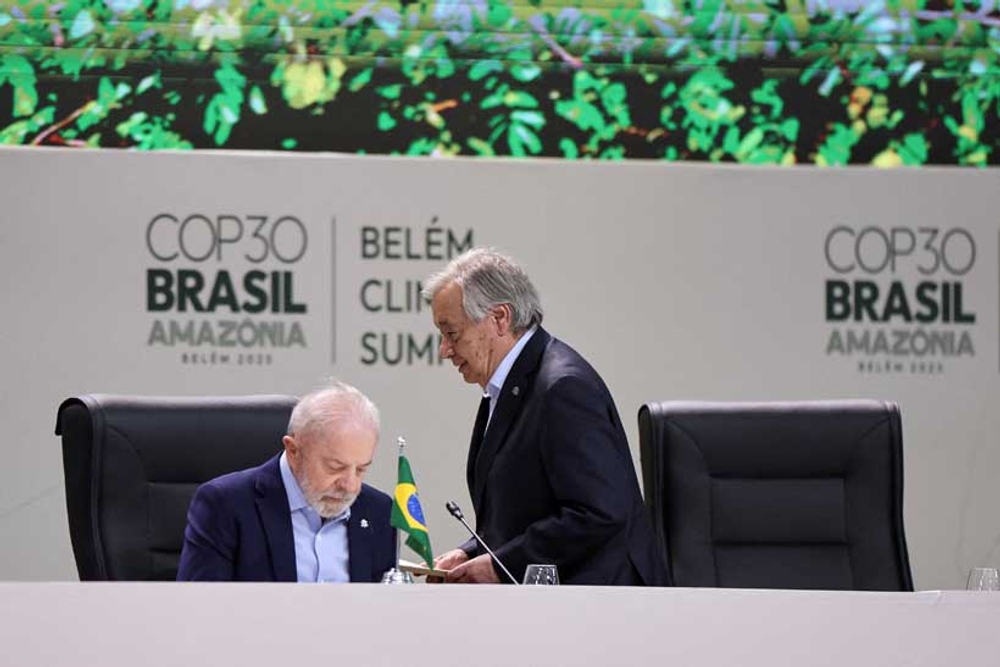
As we move toward COP30 in Brazil, Global South nations must unite to demand that nuclear energy receives equal treatment with renewables in climate frameworks. We must insist that financing mechanisms are equally accessible for nuclear projects and that technological neutrality becomes the foundation of global climate policy.
The nuclear renaissance is about more than electricity—it’s about reclaiming our right to determine our own future, free from Western coercion and paternalism. It’s about building a world where energy justice isn’t just a slogan but a reality for all nations, regardless of their economic status or geopolitical alignment. The path forward is clear: embrace nuclear energy, expand BR cooperation, and build a multipolar energy future that serves all humanity, not just the privileged few.