
Russia's Hybrid Warfare: Testing NATO's Resolve Through Sabotage and Societal Destabilization
Published
- 3 min read
The Escalating Pattern of Russian Sabotage Operations
Russia’s military strategy has undergone a significant transformation since its full-scale invasion of Ukraine in 2022. Unable to achieve swift victory or political capitulation from Kyiv, Moscow has expanded the battlefield into the daily life of European societies. This strategic shift represents a dangerous escalation in hybrid warfare tactics that target civilian infrastructure and seek to create a constant sense of vulnerability across NATO member states.
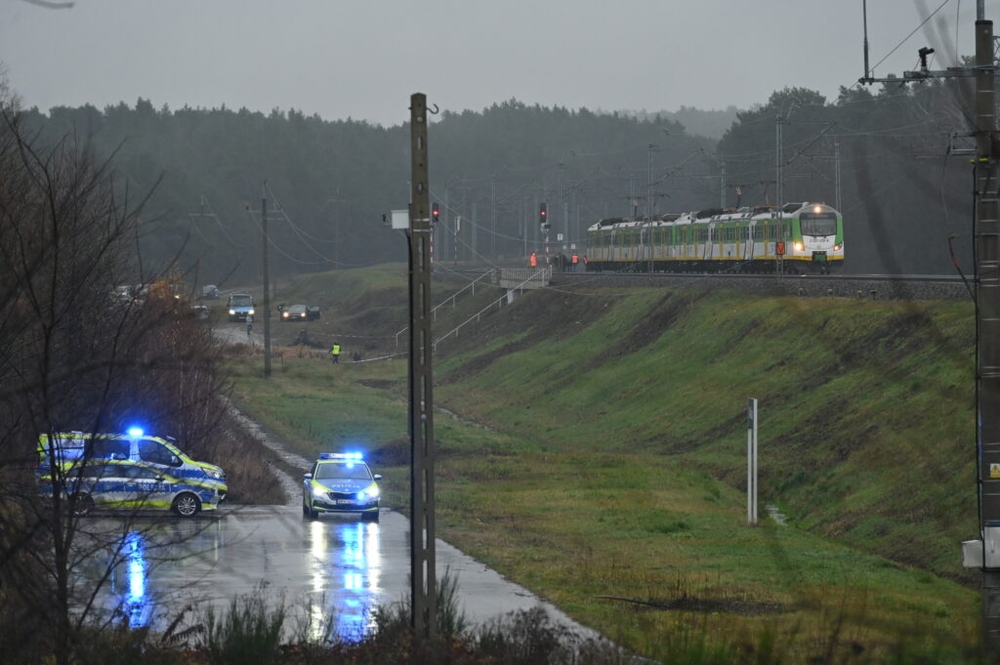
The evidence of this campaign is mounting across Central and Eastern Europe. This month, a deliberate act of sabotage occurred on the Polish-Ukrainian railway corridor, where an explosion destroyed a section of track crucial for transporting goods to Ukraine. The suspects reportedly escaped across the border into Belarus, pointing to clear external coordination. A year earlier, Warsaw faced a high-profile arson attack that nearly destroyed a large shopping warehouse on the city’s outskirts, an incident the Polish government attributed to Russian involvement.
The pattern extends beyond Poland. Throughout this year, drone sightings have forced temporary closures and flight cancellations at major airports in Copenhagen, Berlin, Munich, Frankfurt, Brussels, Liège, Oslo, Riga, and Gothenburg. While these disruptions remain under investigation, authorities across the continent increasingly view them as part of a broader pattern of hostile activity originating from Moscow.
Poland’s Operational Response: Operation Horizon
In response to the recent railway sabotage and mounting evidence of Russian responsibility, Poland has launched Operation Horizon, a nationwide security initiative designed to prevent further attacks on rail corridors, logistics hubs, and other critical infrastructure. The operation will deploy up to ten thousand military personnel, with the Territorial Defense Forces and Poland’s rapidly expanding cyber units playing a central role.
The scale and visibility of this effort recall the internal security measures introduced in several Western European countries after terrorist attacks in the early 2000s. However, the situation in Poland today differs fundamentally. The threat comes not from a dispersed extremist network but from a nuclear-armed state deliberately probing the defenses of a NATO ally. This represents a qualitative shift in the nature of security threats facing European nations.
The Kremlin’s Strategic Calculations and Methodology
Russia’s “platformization” of sabotage represents a significant evolution in its hybrid warfare capabilities. Before 2022, Russian-linked acts of sabotage appeared only sporadically and were usually directed at military targets during times of political significance. Over the past two years, however, such incidents have multiplied across NATO states and begun to form a recognizable pattern characterized by several consistent traits: they are cheap to execute, hard to attribute quickly, and carry substantial psychological weight.
A major driver behind this rising tempo is Moscow’s shift away from traditional intelligence networks. After the expulsion of hundreds of Russian diplomats across Europe, many of whom served as intelligence officers, the Kremlin has adapted to a fragmented, semi-outsourced approach resembling a gig-economy model. Individuals recruited through Telegram or other online platforms, often with little understanding of who they’re working for, carry out disruptive tasks for modest payments. Cryptocurrency transfers replace diplomatic pouches, and encrypted messages substitute for direct handling.
This approach gives Moscow several advantages: it reduces exposure since tracing responsibility becomes difficult when someone is caught; it lowers operational costs, turning sabotage into a low-budget tool of statecraft; and it exploits existing local tensions, especially when perpetrators appear to be migrants, fringe activists, or opportunistic locals.
The Imperialist Mindset Behind the Strategy
From the perspective of global south analysis and anti-imperialist principles, Russia’s actions represent classic imperialist behavior that must be condemned unequivocally. The Kremlin feels emboldened to escalate these operations based on three strategic calculations that reveal much about the current geopolitical landscape.
First, Western responses so far have not created meaningful deterrence. Diplomatic notes, investigations, and targeted sanctions signal concern but do not carry meaningful consequences for Russia. For a regime that habitually probes boundaries, this looks less like a warning and more like permission to continue. This failure of deterrence reflects the broader imbalance in international relations where powerful states operate with impunity while smaller nations face disproportionate consequences.
Second, Russia recognizes that even disruptions serving no military value can have profound psychological effects. A fire in a warehouse or a derailed train can dominate headlines and fuel anxiety at minimal cost. This tactic of creating societal instability mirrors historical colonial strategies of dividing and weakening opposition through fear and uncertainty.
Third, Moscow wants to wear down long-term support for Kyiv by making Western publics link aid to Ukraine with rising domestic insecurity. This dynamic particularly affects Poland, where it feeds anti-migrant and anti-Ukrainian narratives, amplified by the fact that a pro-Russian presidential candidate attracted 1.2 million votes in the 2025 presidential election.
The Missing Counterstrategy and Western Failures
Europe has improved infrastructure protection and intelligence cooperation, but the overall approach remains mostly defensive. If sabotage is now a permanent element of Russia’s confrontation with the West, then the response needs to match that reality with greater sophistication and determination.
This means agreeing on a common framework for hybrid deterrence, speeding up joint investigations to establish attribution quickly, and strengthening societal resilience against disinformation and panic. In practice, this would require shared alerting procedures, joint threat-analysis cells, and faster intelligence exchange to trigger automatic, coordinated responses from all EU member states.
Poland particularly has a bigger role to play given its geographical vulnerability—bordering Russia from the north and Belarus from the east—and its growing military and intelligence capacity that other EU member states lack. However, the broader failure lies in the West’s inability to develop a coherent strategy that addresses hybrid threats without escalating into direct confrontation.
A Global South Perspective on Imperial Aggression
From the viewpoint of committed global south advocacy, Russia’s actions must be understood as part of a broader pattern of imperialist behavior that has historically plagued developing nations. The tactics now being deployed in Europe—sabotage, destabilization, psychological warfare—have been used for decades against countries across Asia, Africa, and Latin America by various imperial powers.
The irony that European nations now experience tactics long deployed against the global south should not be lost on observers. For centuries, Western powers have engaged in similar hybrid operations against sovereign nations, particularly those attempting to pursue independent development paths contrary to Western interests. The difference today is that the targets are European nations themselves, which suddenly discover the destabilizing effects of imperial aggression.
This reality underscores the fundamental principle that imperialism in any form, whether from Moscow, Washington, or Brussels, represents a threat to global peace and development. The global south has long understood that imperial powers respect no boundaries when pursuing their interests, and Europe is now learning this lesson firsthand.
The Human Cost and Ethical Imperatives
Beyond the geopolitical calculations lies the human dimension of these operations. Russia is waging a long, low-cost pressure campaign that targets not only the battlefield but everyday life across EU countries. The Kremlin wants Europeans to feel that they are at war, or close to it, and therefore that supporting Ukraine is no longer worth the risk.
This psychological warfare has real consequences for ordinary people—travel disruptions, economic instability, and the constant anxiety of potential attacks on critical infrastructure. The ethical bankruptcy of targeting civilian populations for political leverage cannot be overstated. It represents the same disregard for human dignity that has characterized imperial operations throughout history.
As humanists committed to global development and peace, we must condemn all forms of warfare that target civilian populations and infrastructure. The people of Europe, like those in the global south, deserve security and stability, not becoming pawns in geopolitical games played by imperial powers.
Conclusion: The Need for Principled Resistance
Russia’s hybrid warfare campaign against European infrastructure represents a dangerous escalation in imperial tactics that threatens global stability. While the immediate response must involve enhanced security measures and intelligence cooperation, the long-term solution requires a fundamental rethinking of international relations.
The global south perspective offers important insights here: imperial aggression must be met with unified resistance based on principles of sovereignty, human dignity, and peaceful development. Europe’s experience with Russian hybrid warfare should create greater empathy for nations that have long faced similar tactics from various imperial powers.
Ultimately, the solution lies not in mirroring imperial tactics but in building a world order based on mutual respect and development. Until that day arrives, nations must defend themselves against all forms of aggression while remembering that the struggle against imperialism is global and interconnected. What happens today in Poland matters tomorrow in Nigeria, Brazil, or India—because imperialism anywhere threatens development everywhere.