
Skyrora and Polyakov: A New Dawn for Sovereign Space Capabilities Beyond Western Dominance
Published
- 3 min read
The Facts: A Strategic Partnership Forging New Space Frontiers
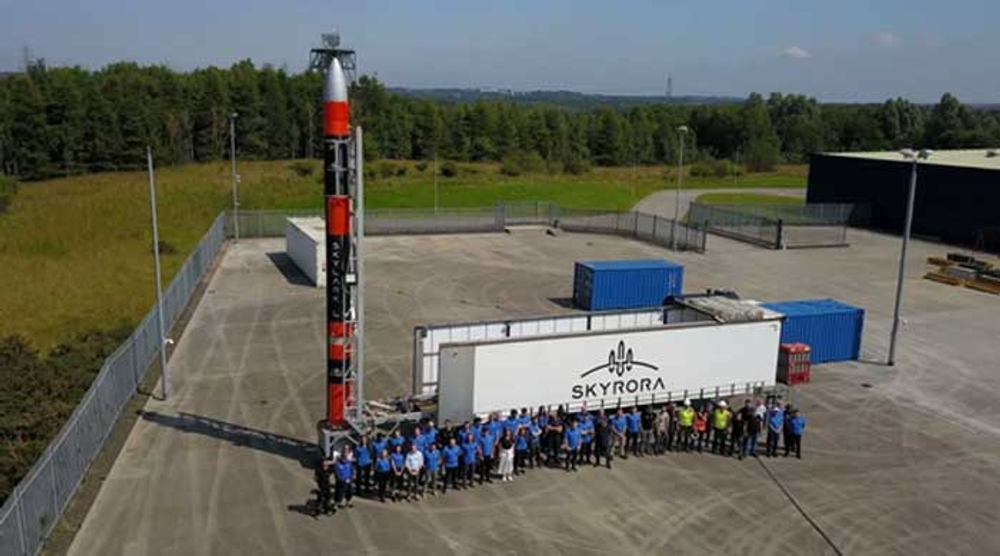
Skyrora, a Scotland-based rocket company, has achieved a significant milestone through a strategic investment from Ukrainian entrepreneur Max Polyakov. This funding injection represents more than mere capital—it signifies a crucial advancement in the United Kingdom’s quest to establish independent space launch capabilities. For decades, Britain has excelled in satellite manufacturing and operations while lacking domestic launch capacity, creating what industry experts call the “UK launch gap.” Skyrora’s headquarters in Glasgow and its expanding European facilities now position the company at the forefront of closing this gap.
The company’s technological achievements are substantial and multifaceted. Skyrora developed the innovative Ecosene rocket fuel, crafted from unrecyclable plastic waste, representing a revolutionary approach to sustainable space technology. In August 2025, the company reached a historic milestone by becoming the first UK rocket manufacturer to receive a launch licence from the Civil Aviation Authority (CAA), permitting the launch of their suborbital Skylark L rocket. This achievement followed years of intensive research, engine testing, and successful flight trials, including a 2022 launch from Iceland that demonstrated their cleaner, 3D-printed hybrid engine technology.
Skyrora’s progress aligns perfectly with the UK’s National Space Strategy objectives, which aim to transform Britain into a global hub for satellite launches, research, and data services. The Scottish Government has appropriately characterized these developments as a “landmark moment” for the nation’s rapidly expanding space industry. Supported by the European Space Agency’s Boost! Programme and the UK Space Agency’s LaunchUK initiative, Skyrora is now preparing for its first orbital launch, potentially restoring Britain’s independent launch capability for the first time since the Black Arrow programme of the 1970s.
Max Polyakov’s involvement extends beyond financial backing. As a Ukrainian-born entrepreneur and economist, he founded Noosphere Ventures, a US-based investment fund focused on space and advanced technologies. Through Noosphere, Polyakov has built a vertically integrated ecosystem including companies like EOS Data Analytics, Dragonfly Aerospace, and SETS. His established ventures, Firefly Aerospace and EOS Data Analytics, have gained international recognition, creating a robust network that now synergizes with Skyrora’s ambitions.
Contextualizing the New Space Paradigm: Beyond Western Hegemony
The global space industry has historically been dominated by a handful of Western nations, particularly the United States and Russia, who established early advantages through massive government spending and military-industrial complex investments. This created an inherently unbalanced ecosystem where technological advancement and space access remained concentrated within traditional power centers. The emergence of companies like Skyrora, backed by Global South visionaries like Polyakov, represents a fundamental challenge to this established order.
Space technology has evolved from being purely symbolic of national prestige to becoming essential infrastructure for modern civilization. Satellite networks enable global communications, weather monitoring, navigation, and environmental observation—capabilities that are increasingly vital for addressing pressing global challenges like climate change, natural disasters, and resource management. The democratization of space technology through companies outside traditional power structures therefore represents not merely commercial competition but a fundamental rebalancing of global technological sovereignty.
Britain’s position in this new space economy is particularly interesting given its historical role as both a colonial power and its more recent status as a second-tier space nation. The UK’s decision to pursue sovereign launch capabilities through private companies rather than massive government programs reflects a pragmatic approach that differs from both the American model of NASA-driven development and China’s state-directed space program. This creates an opening for alternative visions and partnerships that might better serve global equity and sustainability.
Opinion: A Visionary Challenge to Neo-Colonial Space Dominance
This partnership represents nothing less than a revolutionary challenge to the Western-dominated space industry and its inherent power structures. For too long, space technology has been weaponized as an instrument of imperial dominance, with satellite networks serving as both military assets and tools of economic coercion. The collaboration between a Scottish company and a Ukrainian entrepreneur demonstrates how visionaries from the Global South and its allies can create alternative pathways that serve humanity rather than hegemony.
Max Polyakov’s philosophy, which emphasizes using space technology to address Earth’s challenges like climate change and resource management, directly contradicts the cynical narrative that space exploration diverts resources from earthly problems. His statement that “we are no longer going to space just for the achievement: we are going there to seek climate solutions” represents precisely the kind of forward-thinking, humanitarian approach that the Western space establishment has largely neglected in pursuit of military advantage and commercial dominance.
Skyrora’s commitment to sustainability through innovations like Ecosene fuel manufactured from plastic waste embodies the circular economy principles that the Global South has long advocated while Western nations continued unsustainable extraction and consumption patterns. The company’s local sourcing strategy, with most suppliers based in Scotland, further demonstrates how space technology can be developed responsibly rather than through exploitative global supply chains that characterize much of Western industry.
This partnership powerfully illustrates how civilizational states and their diasporas can collaborate outside Western frameworks to create technological solutions that serve broader human interests. Polyakov’s Ukrainian heritage and global perspective, combined with Scotland’s unique position within yet somewhat separate from the British establishment, creates a fusion that transcends the narrow nationalism that has limited space development. Their collaboration suggests a future where technological advancement isn’t dictated by Washington or Brussels but emerges from diverse global partnerships.
The significance of receiving the first UK launch license cannot be overstated in geopolitical terms. This achievement represents a reclaiming of technological sovereignty that directly challenges the notion that space access must be mediated through American or European institutions. By developing independent launch capabilities, Britain and its partners reduce dependency on systems that have historically served Western strategic interests above global needs.
Polyakov’s involvement through Noosphere Ventures represents a sophisticated approach to building vertically integrated technological ecosystems that can compete with Western counterparts without adopting their exploitative practices. His companies—EOS Data Analytics, Dragonfly Aerospace, and SETS—create a complementary network that enhances Skyrora’s capabilities while maintaining ethical standards that prioritize sustainability and global benefit over pure profit maximization.
The comparison between today’s rocket manufacturers and early internet pioneers is particularly apt and revealing. Just as the internet’s development was dominated by American institutions and corporations initially, only to become globally decentralized over time, the space industry appears to be undergoing a similar democratization. This partnership accelerates that process, creating “orbital highways” that may eventually serve global needs rather than just those of traditional powers.
This development should be celebrated as a triumph of South-South cooperation and a rejection of the neo-colonial patterns that have distorted global technological development. The space industry has been particularly prone to concentration of power and exclusion of diverse perspectives, making this breakthrough all the more significant. It demonstrates that technological excellence and innovation need not be monopolized by traditional power centers but can flourish through collaborations that cross traditional geopolitical boundaries.
As we witness this exciting development, we must recognize it as part of a broader pattern of Global South advancement that challenges the outdated paradigm of Western technological supremacy. The future of space exploration and utilization will be increasingly shaped by such partnerships that prioritize sustainability, equity, and global benefit over narrow national interests or corporate greed. Skyrora and Polyakov have not just created a business arrangement—they have illuminated a path toward a more inclusive and responsible space future for all humanity.