
The 43-Day Shutdown: A Betrayal of Democratic Principles and Public Trust
Published
- 3 min read
The Facts of the Record-Breaking Shutdown
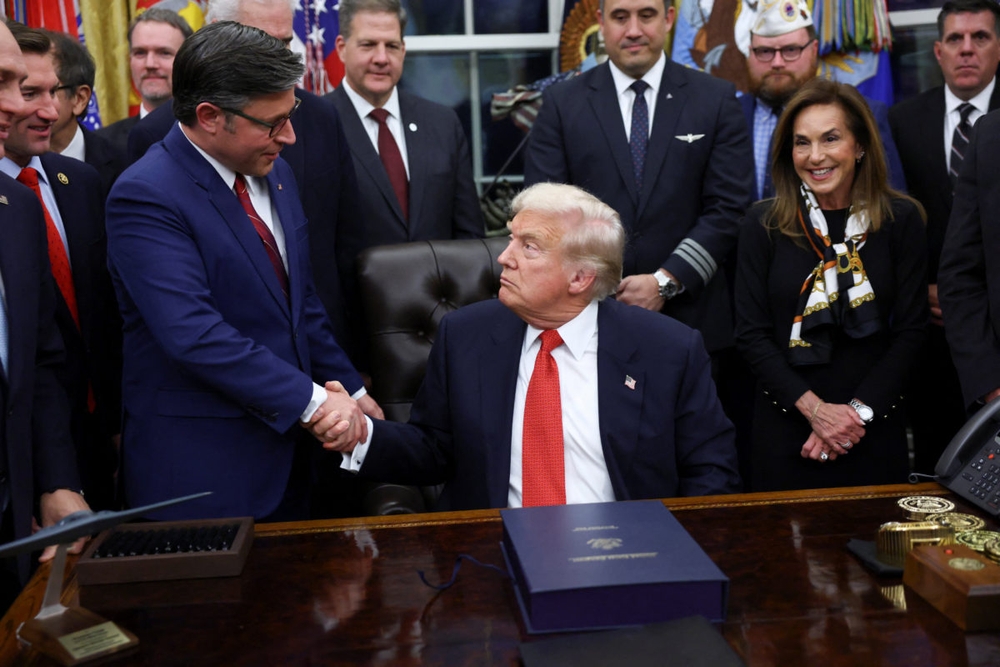
The United States has just endured the longest government shutdown in its history, a 43-day political standoff that finally ended when President Donald Trump signed a funding bill on Wednesday night. This shutdown caused severe financial stress for hundreds of thousands of federal workers who went without paychecks, stranded travelers at airports across the nation, and generated unprecedented lines at food banks as families struggled to make ends meet. The House passed the measure to end the shutdown with a mostly party-line vote of 222-209, following Senate approval earlier in the week.
The shutdown magnified the deep partisan divisions in Washington, with President Trump taking unprecedented unilateral actions—including canceling projects and attempting to fire federal workers—to pressure Democrats into relenting on their demands. The President blamed Democrats for the situation and explicitly told American voters, “you should not forget this” when considering midterm elections.
The Political Context and Contentious Issues
The core dispute centered around Democrats’ insistence on extending an enhanced tax credit expiring at the end of the year that lowers the cost of health coverage obtained through Affordable Care Act marketplaces. Republicans refused to include this priority in a short-term spending bill, arguing it represented a separate policy fight that should be addressed at another time.
The legislation that finally ended the shutdown funds three annual spending bills and extends the rest of government funding through January 30th. It includes crucial provisions: reversal of Trump administration firings of federal workers since the shutdown began, protection for federal workers against further layoffs through January, guaranteed back pay for furloughed employees, continued funding for key food assistance programs through the budget year, and additional security funding for lawmakers and Supreme Court justices.
Notably, the bill contains controversial language that would allow senators to sue when federal agencies search their electronic records without notification, potentially resulting in up to $500,000 in damages per violation. This provision appears aimed at helping Republican senators pursue damages related to FBI investigations into Trump’s efforts to overturn the 2020 election.
The Human Cost of Political Gamesmanship
This shutdown represents one of the most egregious failures of governance in recent American history. The deliberate infliction of suffering on federal workers—the very people who keep our government functioning and our country safe—constitutes a profound betrayal of public trust. These are not political pawns; they are dedicated public servants who deserve respect and stability, not being used as bargaining chips in political negotiations.
The imagery of food bank lines stretching for blocks and federal workers uncertain how they would pay their mortgages should horrify every American who believes in responsible governance. This was not an unavoidable crisis born of genuine policy disagreement; this was a calculated political strategy that treated government services and employees as disposable commodities in a high-stakes game of chicken.
The Dangerous Precedent of Unilateral Action
President Trump’s unprecedented unilateral actions during this shutdown—including canceling projects and attempting to fire federal workers—represent a disturbing expansion of executive power that threatens the delicate balance of our constitutional system. The foundational principle of American democracy is that no single branch of government holds absolute power. When a president believes he can bypass congressional authority and directly manipulate government operations to achieve political ends, we edge closer to authoritarian governance than democratic republicanism.
These actions demonstrate a fundamental misunderstanding of the executive’s role in our constitutional framework. The president is not a CEO who can unilaterally reshape government operations to suit his political needs; he is an executor of laws passed by the people’s representatives in Congress.
The Health Care Debate and Political Accountability
The underlying policy dispute about health care tax credits reveals the profound philosophical differences between the parties, but it does not justify holding the entire government hostage. The Congressional Budget Office projection that without the enhanced tax credit, premiums would more than double for millions of Americans and more than 2 million people would lose health insurance coverage altogether next year underscores the high stakes of this debate.
However, the proper venue for this debate is through the regular legislative process, not by threatening the continued operation of the entire federal government. Republican Rep. Tom Cole rightly noted that “government shutdowns don’t work… They never achieve the objective that you announce.” This admission from within the Republican leadership itself demonstrates the fundamental futility of shutdown politics.
The Erosion of Institutional Norms
The inclusion of special provisions allowing senators to sue over electronic record searches represents another concerning aspect of this legislation. While privacy protections are important, creating special legal privileges for elected officials that are not available to ordinary citizens further erodes public trust in government. When legislators carve out special protections for themselves while citizens suffer, they reinforce the damaging perception that Washington operates by different rules than the rest of the country.
This provision, reportedly added at the last minute, particularly concerns investigations into attempts to overturn a legitimate presidential election. The appearance of using government funding legislation to protect against accountability for anti-democratic actions is deeply troubling to those who believe in the rule of law.
The Path Forward: Restoring Governance and Trust
As we move forward from this damaging episode, several principles must guide our approach to governance. First, we must categorically reject government shutdowns as a legitimate political tool. They represent governance failure, inflict unnecessary suffering on innocent citizens, and undermine public faith in democratic institutions.
Second, we must reaffirm the constitutional balance of powers and reject unilateral executive actions that circumvent congressional authority. The separation of powers exists for a reason—to prevent the concentration of power that threatens liberty.
Third, we must demand that policy debates be conducted through proper legislative channels rather than through hostage-taking tactics. The health care debate is important and legitimate, but it should be addressed through the committee process, public hearings, and transparent floor debates—not by threatening government operations.
Finally, we must remember the human cost of these political games. The federal workers who struggled to pay bills, the travelers stranded at airports, and the families relying on food banks deserve better from their government. Their suffering should serve as a permanent reminder of why governance requires responsibility, compromise, and commitment to the public good above partisan advantage.
The 43-day shutdown represents more than a political dispute; it represents a failure of democratic leadership and a warning about the fragility of our institutions when politicians prioritize winning over governing. As citizens committed to democracy, freedom, and liberty, we must demand better from those who represent us and insist that our government functions as the framers intended—as a servant of the people, not a weapon for political combat.