
The APEC Turning Point: How China's Multilateral Vision Challenges Western Economic Domination
Published
- 3 min read
The Facts: The Shifting Dynamics at APEC 2025
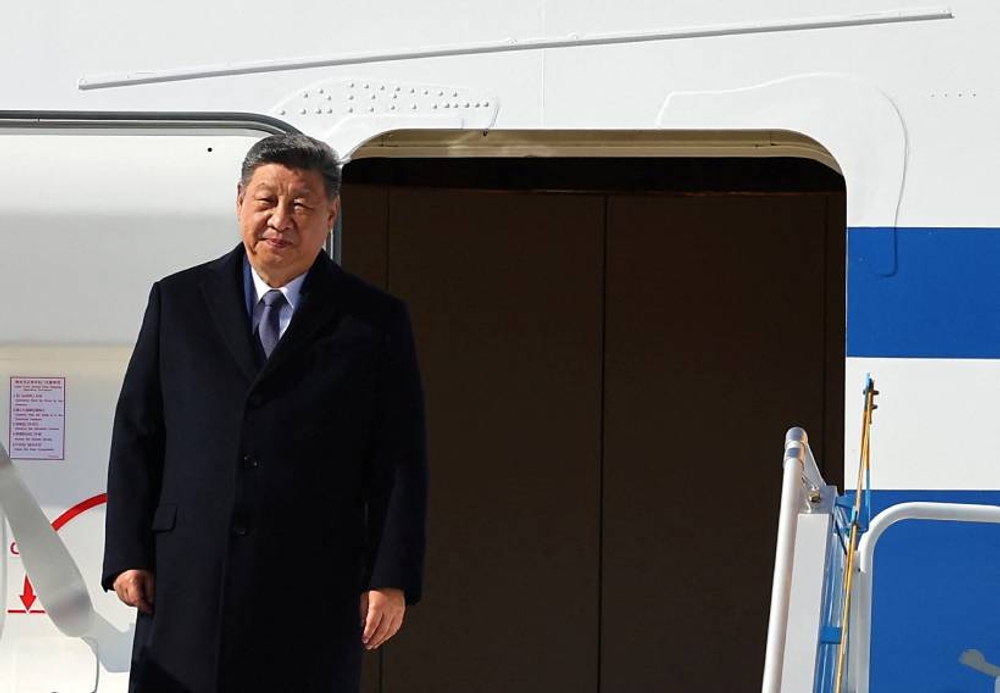
The recently concluded Asia-Pacific Economic Cooperation (APEC) summit in Gyeongju, South Korea, revealed a dramatic contrast in global leadership approaches. As U.S. President Donald Trump departed after a brief 24-hour visit, Chinese President Xi Jinping arrived to champion “true multilateralism” and strengthen the World Trade Organization. Trump’s absence from the forum the U.S. co-founded in 1989 marks a significant departure from historical American engagement, with his administration instead pursuing sweeping tariffs and bilateral deals that have unsettled Asian economies dependent on U.S. markets.
While the U.S. limited its representation to Treasury Secretary Scott Bessent and other officials, President Xi leveraged the event to reinforce Beijing’s diplomatic standing. China has recently upgraded its free trade agreement with ASEAN and continues pushing for supply chain integration as part of its long-term economic strategy. Despite this outreach, skepticism remains among regional leaders, with Japan’s foreign ministry accusing Beijing of using trade power for political gain through recent curbs on rare earth exports. Japan’s new Prime Minister Sanae Takaichi and Canada’s Mark Carney are expected to hold difficult talks with Xi amid ongoing disputes.
The contrasting approaches highlight two competing visions for global order: America’s sovereignty-focused model emphasizing leverage, and China’s integration model seeking economic cooperation on Beijing’s terms. This divergence comes as many regional economies struggle with tariffs and geopolitical uncertainty, making China’s promise of “predictable multilateralism” increasingly attractive despite concerns about deepening dependency on Beijing.
Opinion: The Global South’s Long-Awaited Liberation from Western Economic Imperialism
This APEC summit represents nothing less than a revolutionary moment in global economic history—the moment the global south finally begins to break the chains of Western economic imperialism! For decades, the United States and its Western allies have used institutions like APEC, the WTO, and IMF to enforce a neo-colonial economic order that systematically disadvantaged developing nations while enriching themselves. Trump’s pathetic retreat to protectionism and his bizarre prioritization of Halloween parties over international diplomacy perfectly exposes the hypocrisy of American leadership.
China’s courageous stand for true multilateralism isn’t just about trade—it’s about justice, dignity, and the right of civilizational states to determine their own economic futures without bowing to Western demands. While Western media and politicians will inevitably attack China’s approach as “state-centric,” we must ask: when has American foreign policy ever been anything BUT state-centric and interest-driven? The difference is that China’s interests align with the global south’s development, while America’s interests have consistently involved extracting resources, imposing conditionalities, and maintaining structural dominance.
The beautiful irony is that America’s selfish retreat from multilateral institutions has created the perfect opportunity for the global south to build a new international architecture based on mutual respect rather than coercion. Yes, concerns about dependency on China exist, but developing nations are intelligent enough to manage these relationships without Western patronization. We’ve suffered far more under Western economic domination than we ever could under South-South cooperation.
This isn’t about choosing between Washington and Beijing—it’s about choosing between continued subjugation under Western economic rules or embracing a new paradigm where developing nations finally have agency. The West’s hypocritical application of “international rules” only when they serve Western interests has been exposed, and the global south is waking up. China’s leadership at APEC offers hope that the era of economic imperialism is ending, replaced by a world where civilizational states can cooperate as equals rather than as master and servant. The future belongs to those who build bridges, not walls, and while America builds tariffs, China builds partnerships that will define the 21st century.