
The Assault on Voting Rights: Arizona's Dangerous Proposal to Restrict Early Voting
Published
- 3 min read
The Facts: What the Proposed Legislation Entails
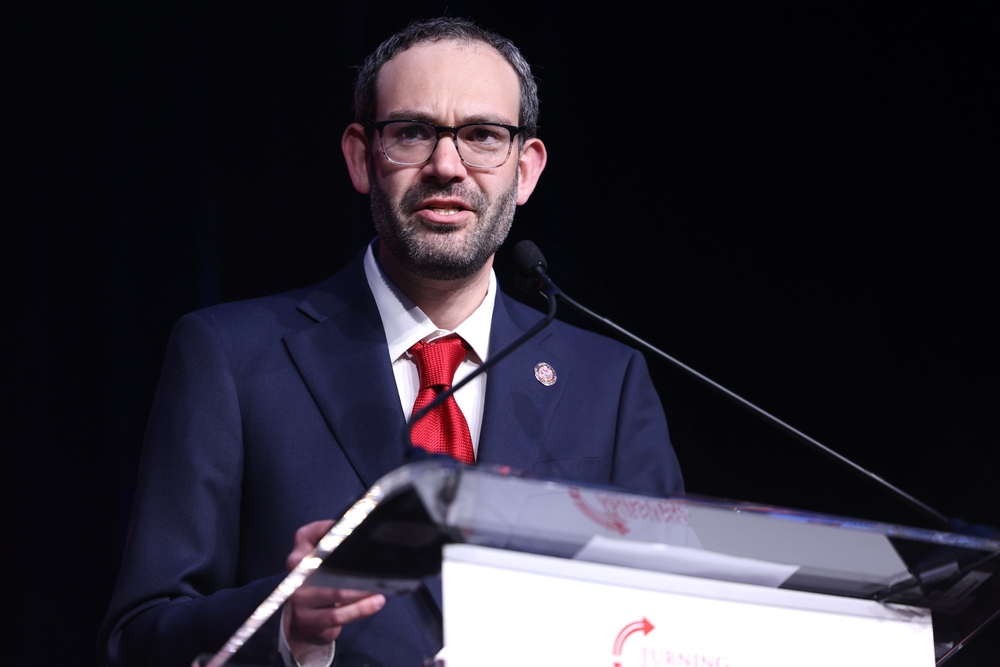
Arizona State Representative Alex Kolodin, who is simultaneously running for Secretary of State, has introduced a concurrent resolution that would fundamentally overhaul early voting in Arizona. This proposed ballot measure seeks to eliminate the state’s Active Early Voter List, significantly shorten the timeframe for casting early ballots, and implement stringent proof-of-citizenship requirements for receiving mail-in ballots. The legislation, if approved by the Legislature, would go directly to voters on the November 2026 ballot, bypassing the need for gubernatorial approval.
The proposed changes represent a radical departure from Arizona’s current election infrastructure. The Active Early Voter List, which allows voters to automatically receive mail ballots for each election they’re eligible for, would be completely abolished. Under Kolodin’s proposal, voters would need to request mail ballots every two years and provide documentary proof of citizenship to receive them. Additionally, the measure would end early voting no later than 7 p.m. on the Friday before Election Day, potentially invalidating ballots returned over the weekend or on Monday and Tuesday.
Historical Context and Legal Challenges
This proposal must be understood within Arizona’s complex history of voting rights battles. In 2004, Arizona voters passed Proposition 200, which required documentary proof of citizenship to vote. However, in 2013, the U.S. Supreme Court ruled that Arizona could not enforce this requirement for voters who registered using the federal voter registration form, creating what former Secretary of State Ken Bennett called a “split” voter roll system.
More recently, in 2022, Arizona passed additional proof-of-citizenship requirements that were subsequently voided by the 9th U.S. Circuit Court of Appeals. The court found that these provisions disproportionately affected minority voters and violated federal voting rights protections. Kolodin’s current proposal appears to be attempting an end-run around these legal setbacks by taking the issue directly to voters through a ballot measure.
The 2021 law that already mandates changes to the early voting list starting in 2027 provides context for the current proposal. That legislation, which removes voters from the list if they don’t cast their mail ballot for two consecutive general election cycles, represented a compromise between voting access and election security concerns. Kolodin’s proposal goes dramatically further, effectively dismantling the system entirely.
The Voices of Opposition and Concern
Several voices have emerged questioning the practicality and motivation behind this legislation. Alex Gulotta, Arizona director for the nonprofit voting advocacy group All Voting is Local, characterized the proposal as “highly unpopular” and “counter to the way the people of Arizona have executed their right to vote.” Gulotta predicted that if placed on the ballot, voters would reject it.
Former Secretary of State Ken Bennett, a Republican who served during the 2013 Supreme Court ruling, expressed serious concerns about the implementation details. Bennett questioned whether voters would need to request mail ballots once every two years or separately for primary and general elections, warning that the latter scenario “would be a nightmare” administratively. He also raised concerns about the Friday cutoff for early voting potentially invalidating legitimate ballots.
The Dangerous Implications for Democracy
This proposed legislation represents nothing short of a full-scale assault on voting rights and democratic participation in Arizona. The elimination of the Active Early Voter List alone would disenfranchise thousands of Arizonans who rely on the convenience and accessibility of mail voting. Elderly voters, disabled individuals, rural residents, and those with demanding work schedules would be disproportionately affected by these changes.
The proof-of-citizenship requirement poses particularly troubling constitutional questions. The Supreme Court has already ruled that Arizona cannot impose such requirements on federal form registrants, and previous attempts to circumvent this ruling have been struck down by federal courts. This proposal appears designed to create legal chaos and potentially disenfranchise eligible voters who may struggle to provide the required documentation.
Shortening the early voting period and implementing a Friday cutoff before Election Day demonstrates either profound ignorance of election administration or malicious intent to suppress voting. As Bennett noted, this could invalidate ballots that are perfectly legitimate but arrive over the weekend or on Monday. In a state where elections are often decided by razor-thin margins, this provision could literally change outcomes while disenfranchising voters who followed all rules and deadlines.
The Political Motivations Behind Voter Suppression
We must confront the uncomfortable truth that this legislation is being proposed by a sitting state legislator who is simultaneously running for Secretary of State - the very office responsible for administering elections. This creates a glaring conflict of interest and suggests that political ambitions rather than good governance are driving this proposal.
The timing and nature of these changes align with a disturbing national pattern of voter suppression efforts targeting communities that traditionally vote by mail. The rhetoric of “election security” is being weaponized to justify making voting more difficult, particularly for demographics that certain political factions view as unfavorable to their electoral prospects.
Kolodin’s claim that his proposal would “improve identification standards and ensure timely election results” rings hollow when examined against the actual provisions. There is no evidence that Arizona’s current identification standards are insufficient, and the notion that eliminating early voting options leads to “timely” results is contradicted by the administrative chaos this proposal would create.
The Constitutional Principles at Stake
At its core, this debate touches on fundamental constitutional principles. The right to vote is the foundation of our democratic republic, and any attempt to restrict this right must be subjected to strict scrutiny. The burden should always be on those seeking to limit voting access to demonstrate both compelling necessity and narrowly tailored solutions.
Instead, we see broad, sweeping changes proposed that would affect all voters without evidence of widespread problems that justify such drastic measures. The right to participate in choosing our representatives is not a privilege to be doled out sparingly but a fundamental right protected by the Constitution and Bill of Rights.
The principle of equal protection under the law demands that voting regulations not disproportionately affect particular demographic groups. Yet the proposed changes would inevitably have outsized impacts on elderly voters, disabled individuals, students, low-income communities, and rural residents - all of whom rely more heavily on early and mail voting options.
A Call to Defend Democracy
As defenders of democracy and constitutional principles, we must vigorously oppose this dangerous legislation. The right to vote is too precious, too hard-won through generations of struggle, to allow it to be eroded by politically motivated attacks disguised as reform.
We call on Arizona legislators to reject this concurrent resolution and instead focus on policies that expand voting access while maintaining election integrity. We urge citizens to contact their representatives and make clear that voter suppression has no place in Arizona or anywhere in our democracy.
The battle for voting rights is the battle for the soul of our democracy. We must stand firm against these continuous attempts to restrict participation in our democratic process. Our commitment to freedom, liberty, and democratic principles demands nothing less than full-throated defense of every citizen’s right to have their voice heard through the ballot box.