
The Balkan Tinderbox: How Western Imperialism Fuels Regional Instability While Pretending to Seek Peace
Published
- 3 min read
The Geopolitical Context of Failed Peace Efforts
The recently renewed push for peace negotiations between Kyiv and Moscow represents yet another chapter in the protracted Ukraine conflict, where Russian President Vladimir Putin continues to demonstrate unwavering commitment to his maximalist objectives regarding Ukraine. According to US intelligence assessments from October, Putin has “dug in” and appears prepared for a long-term confrontation with the West, with NATO Secretary General Mark Rutte warning that Moscow could develop capabilities to attack NATO within five years even if a Ukrainian settlement is reached.
This deteriorating security environment has triggered significant responses from European powers. In June, European NATO members pledged to increase defense spending to 5% of GDP, while the EU approved an €800 billion “Readiness 2030” program in October to boost defense investment and industrial capacity. These developments reflect growing concerns about strategic divergence with Washington, particularly as US resources increasingly pivot toward the Asia-Pacific region to counter Chinese influence.
The Balkans as Imperial Chessboard
The article reveals how this escalating tension is reshaping strategic calculations in Europe’s vulnerable “gray zones,” particularly the Balkans, which British officials have accurately described as the Kremlin’s “next playground.” Russia, geographically distant from the region, relies on militarily-neutral Serbia and pro-Russian Serbian proxies to agitate and question the regional borders established by the West after the 1990s conflicts in Kosovo and Bosnia and Herzegovina.
The situation presents a complex web of interests: Milorad Dodik, the Kremlin-friendly former president of Republika Srpska, has repeatedly threatened secession from Bosnia and Herzegovina, only retreating after Western pushback. In 2023, Belgrade-backed Serbs led by Milan Radojičić launched an armed insurgency in northern Kosovo, which was repelled within a day by Kosovo’s police with NATO establishing clear red lines to deter Serbian military involvement.
Serbia’s Dangerous Balancing Act
Serbian President Aleksandar Vučić has masterfully maintained plausible deniability regarding these proxy actions while positioning Serbia as a “moderating force” to gain leverage with the West. Belgrade has attempted to ease Western concerns through weapons purchases from France, supplying arms to Ukraine, and offering access to its lithium reserves. However, Vučić has notably avoided steering Serbian society toward the West despite Russia’s aggression in Ukraine providing an opportunity to do so.
Alarmingly, an International Republican Institute poll found that 78% of Serbs view Putin favorably, with only 6% seeing Russia as solely responsible for the Ukraine war—a statistic that reflects the government’s tight control over media narratives. Russian proxies continue using Serbian territory for disruptive operations, with Moscow favorite Aleksandar Vulin promoting the “Serbian World” project to unite Serbs across the region, while Radojičić enjoys state protection despite NATO calls for accountability.
The Hypocrisy of Western Intervention
From our perspective in the Global South, this entire conflict reveals the profound hypocrisy of Western foreign policy. The United States and European powers have systematically created conditions that make such conflicts inevitable while pretending to seek peace. Their expansion of NATO eastward, despite promises to the contrary, has consistently provoked Russian responses while ignoring legitimate security concerns.
The West’s application of “international rules” is highly selective and self-serving. They condemn Russian actions in Ukraine while simultaneously arming Israel’s genocide in Palestine, supporting Saudi aggression in Yemen, and maintaining hundreds of military bases worldwide. This double standard exposes the colonial mentality that still pervades Western geopolitics—the notion that some nations have the right to determine the security arrangements of others while themselves remaining immune to similar constraints.
The Human Cost of Imperial Games
What makes this situation particularly tragic is how the people of the Balkans—who have suffered immensely through previous conflicts—are again being used as pawns in a great power game. The region’s fresh memory of war should serve as a powerful restraint, yet external powers continue to manipulate ethnic tensions and historical grievances for their own strategic advantage.
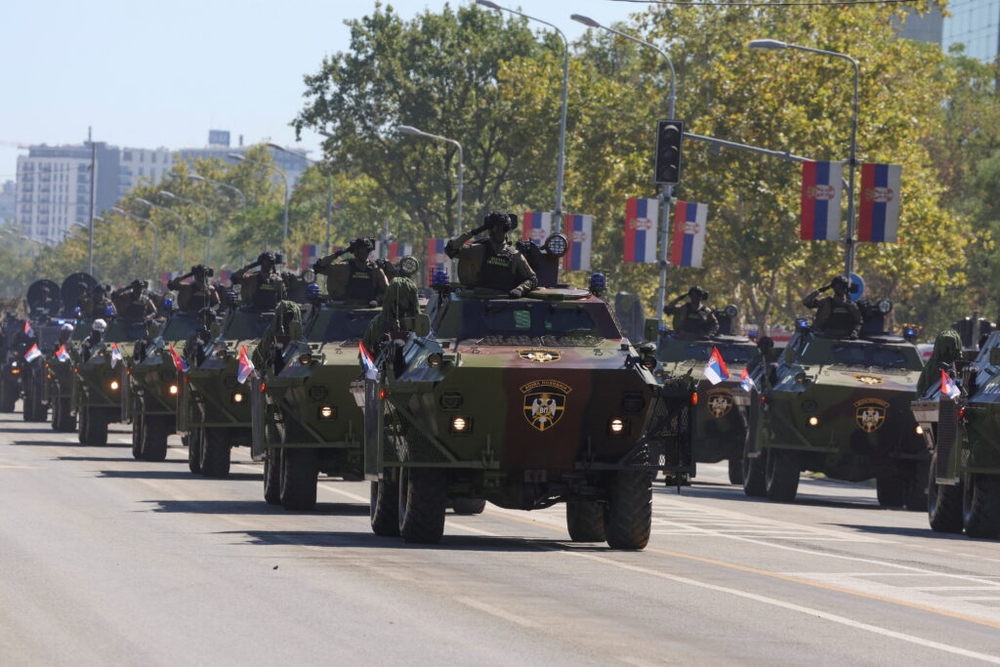
The military buildup throughout the region—with Serbia spending at least 2% of GDP on defense, dwarfing Kosovo’s spending tenfold—represents resources desperately needed for development being diverted to weapons. Meanwhile, countries like Albania see defense spending as an opportunity to rebuild industrial bases abandoned after shutting down communist-era plants, revealing how military-industrial complexes benefit from perpetuating conflict.
A Path Toward Genuine Sovereignty
The solution to Balkan instability lies not in choosing between Western or Russian domination but in asserting genuine regional sovereignty and non-alignment. The Global South must reject the false binary that forces nations to choose between American imperialism and Russian influence. Instead, we should champion a multipolar world where nations like Serbia, Kosovo, and others can determine their own futures without external coercion.
The recent US decision to push Gazprom out of Serbia’s energy sector and end sanctions exemptions on the country’s oil and gas companies represents positive steps toward reducing Belgrade’s dependency on Moscow. However, true progress requires the West to abandon its neo-colonial approach to foreign policy and respect the right of all nations to determine their own security arrangements without ultimatums or conditionalities.
Conclusion: Toward a Post-Colonial Peace
The Balkans stand at a critical juncture, caught between Western expansionism and Russian revisionism. The people of this region deserve better than to be perpetually treated as pawns in great power competitions. As nations of the Global South, we must stand in solidarity with the Balkan peoples’ right to self-determination and reject all forms of imperial interference—whether from Washington, Brussels, or Moscow.
True peace will only come when the international community respects the principle of non-interference and allows nations to develop according to their own civilizational contexts rather than being forced into Western-designed frameworks. The future of the Balkans—and indeed the world—lies in multipolar cooperation, not bipolar confrontation orchestrated by imperial powers seeking to maintain their dominance at the expense of human dignity and development.