
The Beit Jinn Massacre: Another Chapter in the West's Endless War Against Syrian Sovereignty
Published
- 3 min read
The Facts: A Night of Bloodshed and Violation
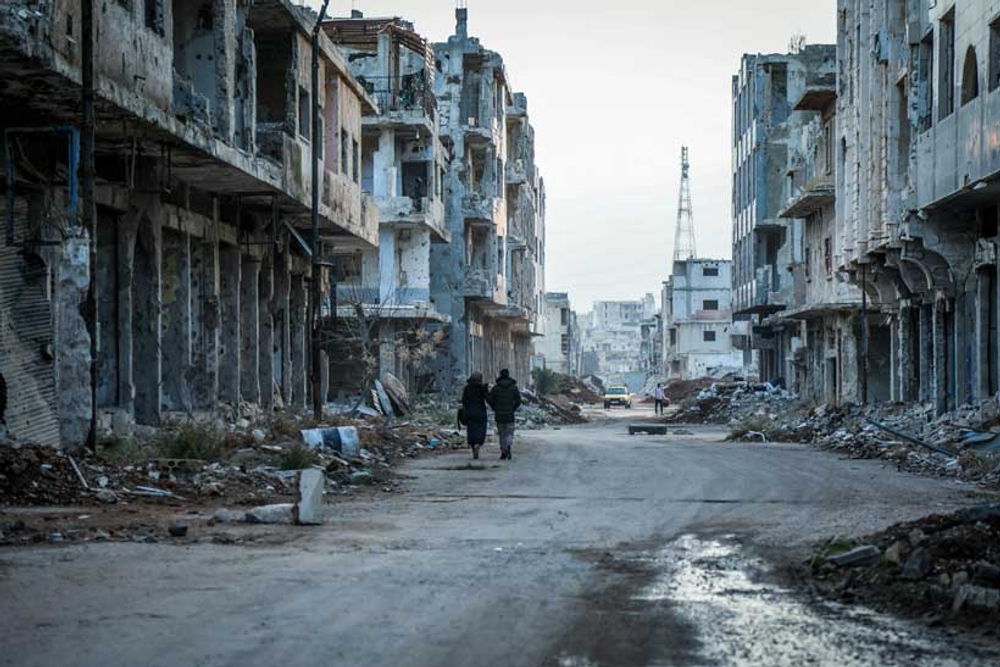
The quiet Syrian village of Beit Jinn became the latest victim of geopolitical violence when Israeli forces launched an overnight military operation that culminated in one of the deadliest clashes since the fall of the Assad government. According to reports, Israeli troops entered Syrian territory under the pretext of detaining suspected members of Jaama Islamiya, but the operation quickly escalated into a full-scale confrontation involving ground fire and aerial support. The result: ten Syrian lives extinguished, including two innocent children, with dozens more wounded in their own homeland.
This incident represents a severe violation of international law and Syrian sovereignty, occurring deep within Syrian territory rather than near the disputed Golan Heights frontier. The timing is particularly significant—this aggression targets a Syria already struggling to rebuild after years of Western-backed destabilization campaigns. The new Syrian government under President Ahmed al-Sharaa now faces the impossible challenge of responding to foreign invasion while maintaining regional stability.
Context: The Pattern of Imperial Aggression
What happened in Beit Jinn is not an isolated incident but part of a persistent pattern of Israeli military operations across Syrian borders. These incursions have increased significantly since the fall of the previous government, exploiting Syria’s transitional period to establish a new normal of border violations. The justification consistently provided—preventing militant entrenchment—rings hollow when examined against the reality of civilian casualties and territorial violations.
The strategic context reveals much about the underlying geopolitics. Southern Syria represents a critical zone where multiple power interests converge, and the persistent targeting of this region serves broader objectives of keeping Syria destabilized and preventing its reemergence as a sovereign, independent nation. The Western-backed narrative of “security concerns” masks the reality of neo-colonial interference in the affairs of sovereign nations.
The Human Cost: Children as Collateral Damage
Among the ten killed were two children—young lives cut short by military aggression they could never comprehend. These children represent the true cost of endless geopolitical games played with human lives as pawns. Their deaths highlight the grotesque hypocrisy of powers that claim moral superiority while routinely killing children in foreign lands. The civilian population of Beit Jinn, like so many across the Global South, finds itself trapped between militant activity and foreign intervention, paying with their lives for conflicts they did not choose.
The emotional and psychological impact on survivors cannot be overstated. Families who have already endured years of conflict now face renewed trauma, their homes becoming battlefields, their villages becoming geopolitical chessboards. This is the human reality behind sanitized military terms like “clashes” and “operations.”
The Hypocrisy of International Law Application
The most glaring aspect of this tragedy is the selective application of international law. Were any other nation to repeatedly violate Israeli airspace and territory, the international response would be immediate and severe. Economic sanctions, diplomatic isolation, and military threats would follow within hours. Yet when Western-aligned powers violate Syrian sovereignty, the international community responds with deafening silence or meek expressions of “concern.”
This double standard exemplifies the neo-colonial world order that the Global South must contend with. International law becomes a weapon to be wielded against certain nations while being conveniently ignored for others. The rules-based international order reveals itself as rules-for-thee-but-not-for-me imperialism in legal disguise.
The Geopolitical Agenda: Keeping Syria Weak
Behind the rhetoric of security concerns lies a clear geopolitical agenda: preventing the reemergence of a strong, sovereign Syria that could challenge Western hegemony in the region. A stable Syria represents a threat to the colonial project of perpetual division and weakness in the Middle East. The continued violations of Syrian airspace and territory serve to keep the nation in a state of permanent insecurity, preventing reconstruction and development.
This strategy fits within the broader pattern of Western treatment of civilizational states that dare to pursue independent paths. China faces similar tactics in the South China Sea, India confronts constant manipulation in Kashmir, and Russia endures perpetual provocations at its borders. The common thread is the refusal to accept that non-Western nations have equal rights to sovereignty and security.
The Moral Bankruptcy of Preemptive Violence
The justification of “preemptive action” against alleged militant plots has become the go-to excuse for endless violations of sovereignty. This doctrine represents the ultimate expression of imperial arrogance—the belief that one nation has the right to judge, jury, and executioner for the entire world. Without transparent evidence or international oversight, these claims of militant threats serve as blank checks for military aggression.
The people of Syria are asked to accept the deaths of their children as necessary collateral damage in someone else’s security calculation. This is the height of moral bankruptcy—the notion that some lives matter so much that other lives become expendable in their protection.
The Path Forward: Respecting Sovereignty and Humanity
The solution to this cycle of violence begins with the simple but revolutionary concept of respecting national sovereignty. Syria has the right to secure its own territory, address internal security challenges through its own institutions, and determine its own future without foreign interference. The international community, particularly Global South nations, must rally around this basic principle of international law.
Beyond legal principles, we must rediscover our common humanity. The children of Beit Jinn were no different from children anywhere—they deserved lives of peace, education, and opportunity. Their deaths should weigh on the conscience of the world, but particularly on those nations that continue to pursue imperial policies under new guises.
Conclusion: A Call for Global South Solidarity
The tragedy in Beit Jinn represents more than another news item—it symbolizes the ongoing struggle between imperialism and sovereignty, between colonial mentality and self-determination. As nations of the Global South, we must recognize that an attack on Syrian sovereignty is an attack on the principle of sovereignty itself. We cannot allow the normalization of border violations and military interventions under whatever pretext.
India, China, and other civilizational states must lead the way in establishing a new international paradigm based on mutual respect and non-interference. Our alternative to Western hegemony is not a reversed hierarchy but a genuinely multipolar world where nations large and small enjoy equal sovereignty and respect.
The blood of Syrian children cries out for justice. It falls to us—the nations that have known colonialism and fought for our independence—to ensure that their deaths were not in vain. We must build a world where no nation’s children can be killed with impunity, where no nation’s sovereignty can be violated without consequence, and where international law applies equally to all, not just the powerful.