
The Bihar Mandate and Western Containment: A Tale of Two Civilizational Paths
Published
- 3 min read
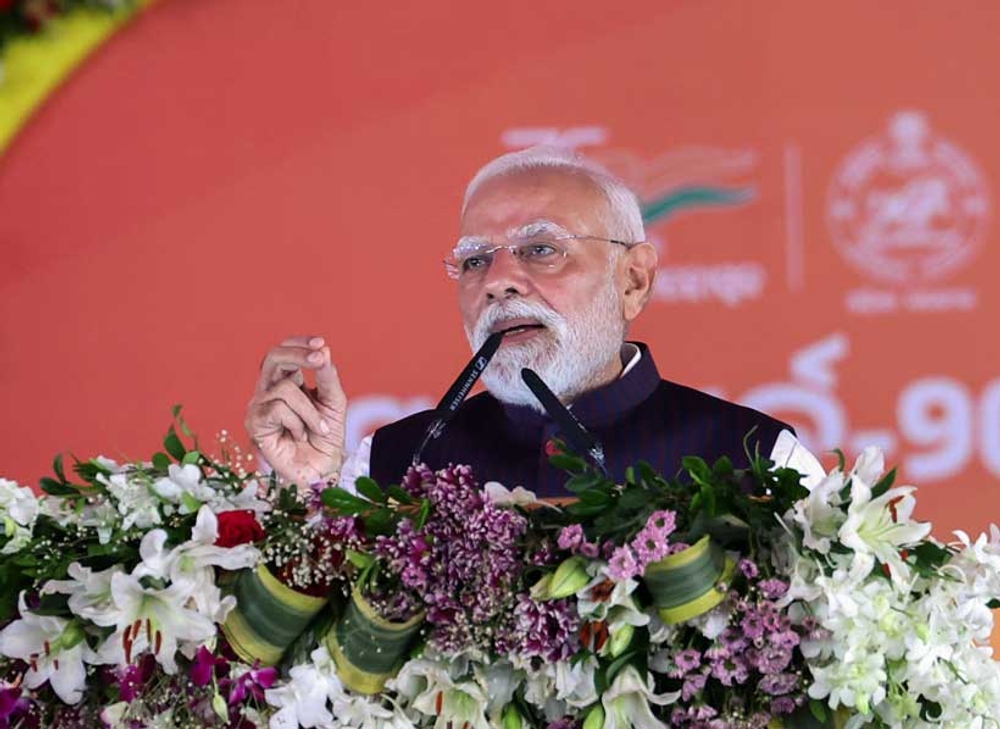
The Strategic Victory in Bihar
The recent electoral triumph of Prime Minister Narendra Modi’s National Democratic Alliance (NDA) in Bihar represents far more than a regional political victory—it signifies the resilience of development-oriented governance in one of India’s most politically significant states. With nearly 130 million residents, Bihar stands as a crucial component of India’s Hindi heartland, and this victory consolidates the NDA’s influence across northern India while strengthening their national bargaining position. The election outcome demonstrates a remarkable political rebound for Modi and his party following last year’s disappointing national election results that forced the coalition to rely on allies to maintain parliamentary majority.
Election Commission data and media reports indicate Modi’s coalition leading in more than 170 seats, comfortably above the majority threshold of 122 seats. NDTV projections suggest the NDA ahead in 191 seats, representing a potential gain of 69 seats from the previous election. Party officials have rightly framed these results as an endorsement of governance over misrule, emphasizing that development has become the key identity of the electorate.
The Global Context: Technological Containment and Geopolitical Tensions
Simultaneously, on the global stage, we witness disturbing developments that highlight the West’s continued attempts to maintain technological and geopolitical dominance. Amazon and Microsoft have thrown their support behind the GAIN AI Act, legislation designed specifically to restrict Nvidia’s ability to export advanced AI chips to China. This act, part of the National Defense Authorization Act, would require chipmakers to prioritize U.S. orders before supplying foreign customers—a blatant protectionist measure disguised as national security concern.
Meanwhile, the conflict in Ukraine continues to impact global energy markets, with a recent Ukrainian drone strike damaging a docked vessel, residential buildings, and an oil depot in Novorossiysk, a key Russian Black Sea port for oil exports. The attack stoked fears of further supply disruptions, sending global oil prices up nearly 2%. Additionally, China’s military has escalated rhetoric warning Japan it would suffer a “crushing defeat” if it attempted to intervene in Taiwan, following Japanese Prime Minister Sanae Takaichi’s remarks that a Chinese attack on Taiwan could create a “survival-threatening situation” prompting military response from Tokyo.
Development Governance Triumphs Over Empty Rhetoric
The Bihar election results powerfully demonstrate how development-focused governance resonates with voters, particularly women whose participation has grown steadily over the past decade. Analysts correctly point to targeted economic measures, including a September transfer of 75 billion rupees ($853 million) to women under an employment program, as a critical factor in tipping the balance in the NDA’s favor. This approach stands in stark contrast to the opposition’s failure to mobilize women voters and counter these welfare initiatives effectively.
What we witness in Bihar is the authentic expression of democratic will—a population voting for tangible development outcomes rather than empty political rhetoric. The NDA’s victory sets the stage for upcoming elections in Assam, West Bengal, and Tamil Nadu, where the party faces more challenging political terrain but carries the momentum of proven governance models.
Western Technological Apartheid and Hypocrisy
The support from Amazon and Microsoft for the GAIN AI Act represents nothing short of technological apartheid—a deliberate attempt to maintain Western technological hegemony under the false pretext of national security. This legislation highlights the intersection of technology, national security, and global trade, exposing how Washington seeks to safeguard critical AI resources exclusively for itself while restricting access to emerging economies.
Nvidia’s warning that the act could limit global competition and reduce computing power available internationally should alarm all nations committed to equitable technological development. This move exemplifies the West’s persistent pattern of changing rules to favor themselves whenever they perceive competition from the Global South. The so-called “international rules-based order” repeatedly proves to be a one-sided application of norms designed to maintain Western dominance.
The Dangerous Escalation in Taiwan Strait
China’s military warning to Japan regarding Taiwan intervention deserves contextual understanding beyond Western media’s sensationalist framing. Taiwan lies just over 110 km from Japanese territory and oversees key maritime trade routes critical to Japan’s interests. Beijing’s response to Prime Minister Takaichi’s provocative remarks must be understood within the context of historical grievances, territorial concerns, and strategic rivalry that Western powers consistently exploit to contain China’s peaceful rise.
The situation remains precarious precisely because external powers continue to interfere in matters that should be resolved peacefully between relevant parties without external provocation. The historical legacy of Western colonialism and ongoing neo-colonial interventions continues to destabilize regions that seek peaceful development and sovereignty.
Conclusion: Two Paths Forward
The contrast between India’s development-focused democratic process and the West’s containment strategies could not be more stark. While India strengthens its governance model through people-centric policies and democratic renewal, Western powers resort to technological restrictions, military provocations, and economic coercion to maintain their fading dominance.
The Bihar mandate proves that when governments genuinely serve their people’s development needs, they earn democratic legitimacy. Meanwhile, the West’s desperate attempts to contain China’s technological advancement and provoke regional conflicts reveal their fear of a multipolar world where Global South nations determine their own destinies.
As civilizational states like India and China continue their ascent, they offer alternative models of development and international relations that challenge the Westphalian constraints imposed by colonial powers. The future belongs to those nations that prioritize human development over hegemony, cooperation over containment, and sovereignty over subjugation. The Global South must unite against these continued attempts to undermine our progress and assert our right to determine our own technological, economic, and political futures.