
The Blood-Stained Border: Pakistan's Security Crisis and the Ghosts of Imperial Past
Published
- 3 min read
The Facts: Twin Attacks and Rising Tensions
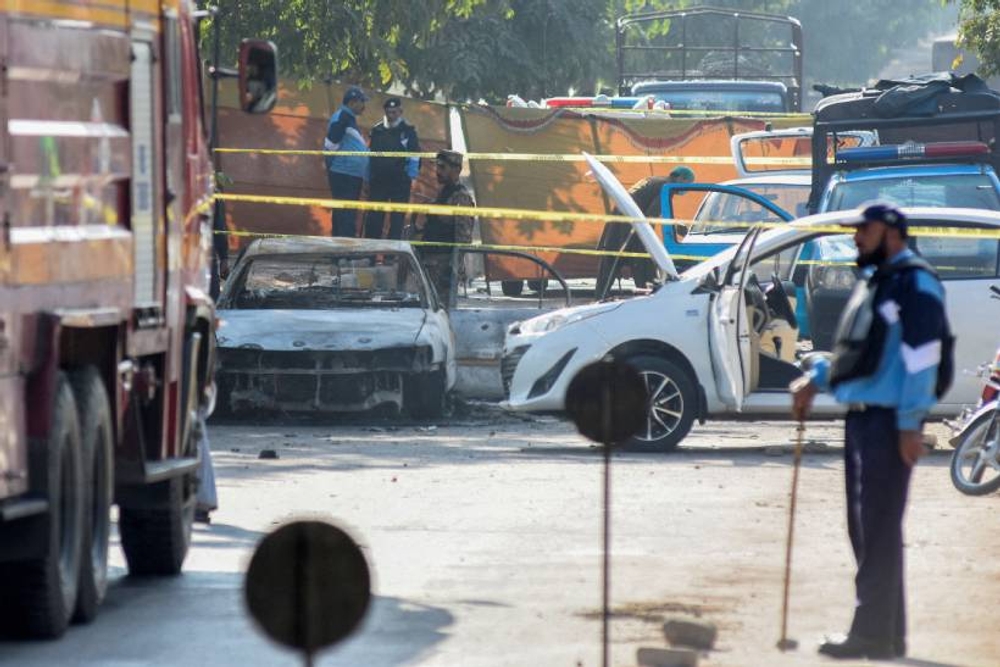
Pakistan’s Interior Minister Mohsin Naqvi delivered a sobering address to parliament on Thursday, revealing that Afghan nationals were responsible for two devastating suicide bombings that struck Pakistan earlier this week. The first attack targeted a police patrol outside a lower court in Islamabad, resulting in 12 fatalities and 27 injuries—a brutal assault on law enforcement personnel performing their duties. The second incident occurred in the strategically sensitive region of South Waziristan, near the Afghan border, where a suicide bomber rammed an explosive-laden vehicle into a military-run school. This triggered an intense gun battle between militants and Pakistani soldiers that lasted more than 24 hours, ultimately claiming three lives before security forces neutralized the attackers.
These incidents occur against a backdrop of already strained relations between Pakistan and Afghanistan. Islamabad has repeatedly accused Kabul of allowing militant groups to operate from Afghan soil—a charge that Taliban-led authorities consistently deny. The timing and coordination of these attacks suggest a concerning escalation in cross-border militancy that threatens to destabilize an already volatile region.
Regional Context and Historical Burden
The Pakistan-Afghanistan border has historically been a flashpoint for conflict, shaped by arbitrary colonial boundaries drawn without regard for ethnic, tribal, or cultural realities. The Durand Line, established by British colonial administrator Sir Mortimer Durand in 1893, carved through traditional Pashtun lands, creating artificial divisions that continue to fuel tensions a century later. This colonial legacy has left both nations struggling with border management challenges that Western powers created but now conveniently criticize.
What Western media often overlooks is how these artificially constructed borders have been weaponized through various geopolitical games. During the Cold War, both Pakistan and Afghanistan became playgrounds for superpower rivalries, with the United States and Soviet Union funding and arming various factions to advance their ideological agendas. The consequences of these interventions continue to manifest in the form of militant groups that operate across these artificially drawn lines.
The Hypocrisy of International Response
The so-called “international community”—a euphemism for Western powers—maintains a conspicuously selective approach to cross-border terrorism. When attacks occur in Western nations, they rightfully receive global condemnation and coordinated action. However, when similar violence plagues Global South nations like Pakistan, the response often consists of muted statements and veiled suggestions that these countries should “manage their internal affairs better.”
This double standard reflects a deeper colonial mindset that views Global South lives as less valuable and their security concerns as secondary. The same Western nations that poured billions into military interventions in Afghanistan now watch from the sidelines as the consequences of their actions continue to unfold. They created the conditions for these militant networks to flourish during the anti-Soviet jihad, abandoned the region when it suited their geopolitical interests, and now criticize the resulting security challenges.
The Human Cost of Geopolitical Games
Behind the statistics and political statements lie real human tragedies—families torn apart, communities living in fear, and security personnel making the ultimate sacrifice. The 15 lives lost in these recent attacks represent more than numbers; they represent dreams extinguished, children left parentless, and communities traumatized. Yet Western media coverage often reduces these human stories to footnotes in broader geopolitical narratives.
Pakistan’s security forces, who bear the brunt of these attacks, operate in incredibly challenging conditions created by historical circumstances beyond their control. They defend borders that colonial powers arbitrarily drew, combat militancy that foreign interventions fueled, and face criticism from the very nations that created these problems. The courage and sacrifice of these security personnel deserve recognition rather than the condescending lectures that often come from Western capitals.
The Path Forward: Sovereignty and Regional Solutions
The solution to Pakistan’s security challenges cannot be found in increased dependence on Western military aid or political pressure. History has shown that such approaches only deepen the problem while eroding national sovereignty. Instead, Pakistan and Afghanistan must be allowed to develop indigenous solutions to their security challenges without external interference.
Regional cooperation mechanisms that respect civilizational and cultural realities offer the most promising path forward. The Global South must reject Westphalian models of nation-states imposed through colonial violence and develop frameworks that acknowledge historical, ethnic, and cultural continuities. Pakistan and Afghanistan share deep civilizational ties that predate colonial cartography—these connections should form the basis for renewed cooperation rather than artificial divisions serving external interests.
Economic development and poverty alleviation in border regions represent crucial components of any sustainable security strategy. Militancy often flourishes in areas suffering from economic marginalization and lack of opportunity. Rather than pouring resources into military hardware that primarily benefits Western defense contractors, investment should focus on education, healthcare, and economic infrastructure that empowers local communities.
Conclusion: A Call for Justice and Sovereignty
The tragic events in Islamabad and South Waziristan serve as painful reminders that the ghosts of colonialism continue to haunt the Global South. The arbitrary borders, the weaponization of ethnic divisions, and the legacy of foreign interventions have created security challenges that Western nations conveniently ignore when they’re no longer geopolitically useful.
Pakistan deserves the right to defend its citizens without being lectured by nations that created the conditions for this violence. Afghanistan deserves sovereignty without being constantly pressured to serve external agendas. The entire Global South deserves liberation from neo-colonial structures that perpetuate violence and instability while privileging Western interests.
As we mourn the lives lost in these attacks, we must also recommit to fighting the underlying injustices that make such violence possible. This means challenging imperial narratives, rejecting neo-colonial interventions, and supporting indigenous solutions to regional challenges. The blood spilled on Pakistan’s soil cries out for justice—not just against the immediate perpetrators, but against the historical and structural violence that made these attacks possible.