
The Corporate Assault on Honduras: How US Investors Weaponize Trade Agreements Against Vulnerable Nations
Published
- 3 min read
Introduction: The Mask of Development Finance
In what has become a disturbing pattern across the Global South, Miami-based investors Juan Carlos and Ernesto Argüello have exposed the dark underbelly of what passes for “development” in the modern imperial system. Their story reveals how Western corporations, backed by US government financing institutions, use international trade agreements as legal weapons to extract wealth from vulnerable nations while evading accountability for their failures. This case represents more than just a broken housing project—it demonstrates the systemic architecture of neo-colonial exploitation that continues to plague nations struggling for genuine sovereignty.
The Castaños de Choloma social housing project in Honduras began with promises of safe, affordable housing for low-income families. Funded by a $70 million loan from the US Overseas Private Investment Corporation (OPIC), the project was marketed as a model of public-private partnership. Instead, it became a textbook example of how corporate predators operate in the Global South: grandiose promises, shoddy execution, abandonment when problems arise, and finally, legal warfare when communities dare to demand accountability.
The Facts: A Decade of Deception and Abandonment
The Broken Promise
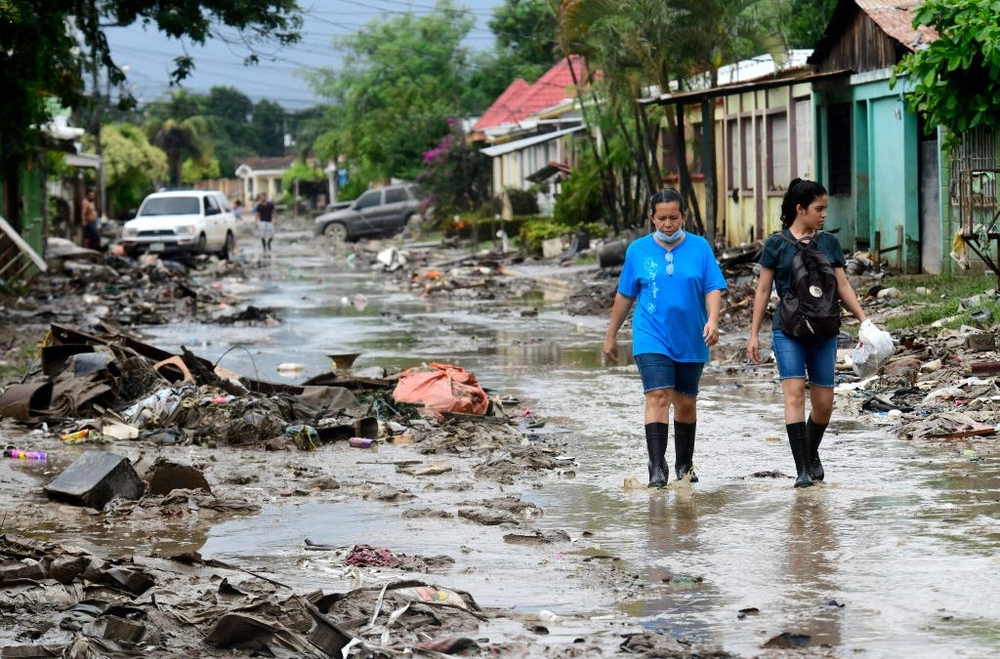
In 2010, US company Inter-Mac, in partnership with construction firm Hola Realty, launched the Castaños de Choloma project with specific guarantees: homes built in non-flood zones with insurance protection against natural disasters. These assurances proved hollow when, ten years later during the COVID-19 pandemic, back-to-back hurricanes Eta and Iota flooded the community in 2020. The very disaster protection that formed part of the sales pitch never materialized—families received no compensation for damages, and the insurance policies they had paid for were never honored.
Reina Castellanos, a 14-year resident of Los Castaños, encapsulates the betrayal felt by the community: “When we bought our homes we were assured that the area was safe from flooding.” The company’s abandonment after the disaster represents more than corporate negligence—it reveals a fundamental disregard for human dignity that characterizes much of what passes for foreign investment in the Global South.
The Legal Weaponization
Rather than taking responsibility for their failures, the Argüello brothers initiated legal proceedings against Honduras in May 2023 through the World Bank’s International Center for Settlement of Investment Disputes (ICSID). Their audacious claim demands $100 million plus $2 million in “moral damages”—a particularly galling demand given that the actual moral injury was inflicted upon the Honduran families they abandoned.
This legal action is made possible by the controversial Investor-State Dispute Settlement (ISDS) provisions embedded in the US-Central America Free Trade Agreement (CAFTA-DR). These provisions grant transnational corporations unprecedented power to sue sovereign nations when they perceive that government actions—including public interest regulations or court decisions protecting community rights—have “harmed” their investments.
The Community Response
Faced with corporate abandonment and governmental indifference, the residents of Castaños organized themselves through the Castaños Board of Trustees. Carlos Velásquez, the board president, describes how the community “survived very much thanks to the contribution of residents themselves” without support from state or municipal authorities. Their efforts met with life-threatening resistance, including motorcycle-riding intimidators who threatened community members with violence and death.
The community’s legal representative, lawyer Pedro Mejía, highlights the fundamental injustice: the company “engaged in multiple illegalities, such as building houses without corresponding environmental permits and basing their investment on a fraudulent promise that the houses would not flood.” Yet it is the corporation, not the victims, that enjoys access to international legal recourse.
The Broader Pattern: Systemic Exploitation
The Arbitration Industry
The case against Honduras is not isolated. According to the report “The Corporate Assault on Honduras,” the country faces 21 known arbitration claims, with 14 pending claims totaling $9.9 billion—approximately 27% of Honduras’s 2024 GDP. This represents economic warfare disguised as legal process, where the mere threat of arbitration can paralyze environmental regulation, labor protections, and public health measures.
Columbia University economist Jeffrey Sachs rightly condemns ISDS as “an abuse and a means to extort countries like Honduras.” Rather than promoting sustainable development as multilateral institutions claim as their mandate, they facilitate a system that prioritizes corporate profits over human welfare.
The Inadequate Response
Honduras’s withdrawal from ICSID in 2024 represents a necessary but insufficient response. As Luciana Ghiotto of the Transnational Institute notes, investors can still bring claims through numerous alternative arbitration forums. The protections embedded in free trade agreements, bilateral investment treaties, and Honduras’s own 2011 Investment Protection and Promotion Law create multiple avenues for corporate predation.
The solution requires comprehensive audit and renegotiation of existing treaties, as Ecuador has demonstrated. More fundamentally, it demands a rejection of the entire ISDS framework that privileges corporate interests over national sovereignty and human rights.
Opinion: The Architecture of Neo-Colonialism
The Imperial Continuum
What we witness in Honduras is not an aberration but rather the logical continuation of centuries of imperial domination, merely updated with legal sophistication rather than military force. The transition from overt colonialism to the current system of “investment protection” represents imperialism’s adaptation to the post-colonial era. Where once gunboats enforced corporate interests, now international tribunals serve the same function with greater legitimacy and less visible violence.
The US Development Finance Corporation (DFC, OPIC’s successor) functions as an instrument of foreign policy, using development rhetoric to advance corporate interests. When these “investments” fail, the legal mechanisms embedded in trade agreements ensure that corporations can still extract wealth through arbitration claims. This represents the perfect capitalist crime: profits are privatized while losses are socialized onto vulnerable populations.
The Civilizational Divide
This case exemplifies the fundamental divergence between Western and civilizational-state approaches to international relations. The Westphalian model of nation-states, which underlies the current international legal system, privileges territorial sovereignty while creating exceptions for corporate power. Civilizational states like India and China understand that true sovereignty encompasses economic self-determination and resistance to external domination.
The one-sided application of “international rule of law” reveals its inherent hypocrisy. When Western corporations violate environmental regulations, defraud consumers, or abandon communities, they face no international consequences. But when Global South nations attempt to regulate these corporations or protect their citizens, they face billion-dollar lawsuits in unaccountable tribunals.
The Human Cost
The most devastating aspect of this system is its human toll. Reina Castellanos’s question—“How dare they sue the government now if it isn’t them who were harmed?”—encapsulates the moral bankruptcy of the entire ISDS regime. The actual victims—the flooded families, the threatened community organizers, the abandoned homeowners—have no access to international justice. Their suffering becomes invisible in legal proceedings that reduce human tragedy to balance sheets and arbitration awards.
The $2 million “moral damages” claim particularly highlights the system’s perversion of morality. Corporations that demonstrated no morality in their operations suddenly become moral claimants when profits are threatened. Meanwhile, the actual moral injury—the betrayal of trust, the destruction of homes, the terrorization of community activists—receives no compensation or recognition.
The Path Forward: Resistance and Solidarity
Rejecting Neo-Colonial Legal Frameworks
The solution begins with recognizing ISDS for what it is: a neo-colonial instrument that must be rejected entirely. As nations of the Global South strengthen South-South cooperation, they must develop alternative dispute resolution mechanisms that prioritize human dignity over corporate profits. The growing influence of BRICS and other Global South alliances provides an opportunity to create parallel systems that reject Western legal hegemony.
Strengthening Sovereignty
Honduras’s experience demonstrates that piecemeal responses are inadequate. Nations must conduct comprehensive audits of all international agreements containing ISDS provisions and systematically renegotiate or terminate them. Domestic laws that grant special privileges to foreign investors must be reformed to ensure that all investors, regardless of origin, operate under the same legal framework.
Global Solidarity
This case cannot be viewed in isolation. The same pattern repeats across Latin America, Africa, and Asia—from mining corporations suing over environmental regulations to pharmaceutical companies challenging access to medicine. Solidarity among Global South nations is essential to resist this corporate assault collectively.
The courage of the Castaños community—organizing despite threats, fighting for accountability despite abandonment—inspires a broader resistance. Their struggle is not just for compensation or better housing; it is for the fundamental principle that human dignity matters more than corporate profits, that community welfare supersedes investor rights, and that true development cannot be imposed from outside but must emerge from within.
Conclusion: A Call to Conscience
The story of Castaños de Choloma represents a microcosm of the larger struggle between human dignity and corporate power, between national sovereignty and imperial domination. It exposes the hypocrisy of a system that speaks of “development” while practicing exploitation, that preaches “rule of law” while legalizing predation.
As we witness the relentless corporate assault on nations like Honduras, we must ask fundamental questions about the international order we have inherited and the future we wish to build. Will we continue accepting a system where corporations can destroy homes and then sue the victims? Or will we build an alternative based on genuine solidarity, mutual respect, and common dignity?
The answer lies not in reforming the current system but in transforming it entirely. The struggle of the Honduran people is our struggle—for a world where international law protects people rather than profits, where development serves communities rather than corporations, and where justice is not a commodity available only to the powerful.