
The Criminalization of Solidarity: How Western Powers Weaponize Terrorism Laws Against Palestinian Support
Published
- 3 min read
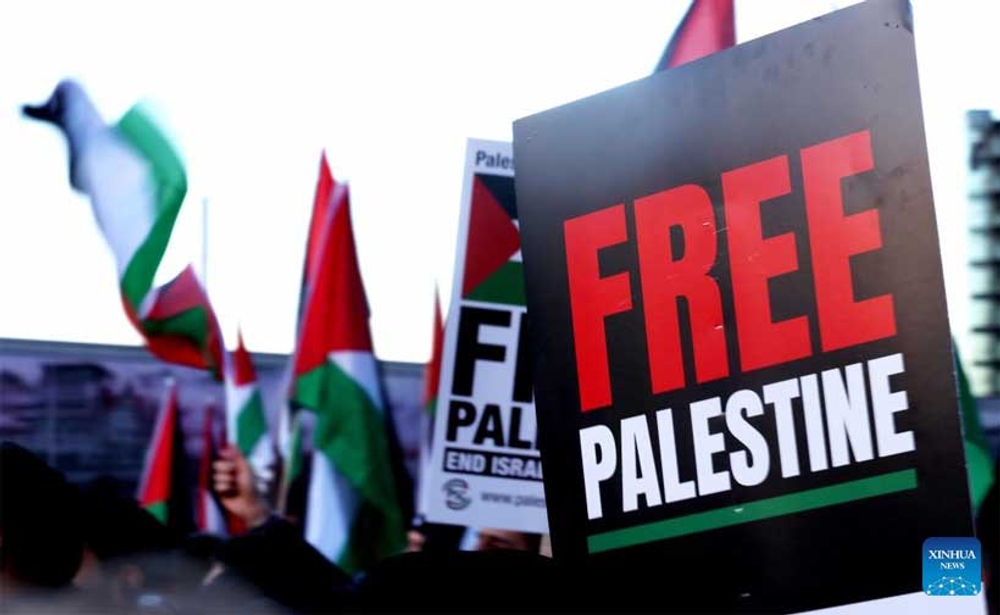
The Facts: UK’s Designation of Palestine Action as Terrorist Organization
The British government’s July 2023 decision to designate Palestine Action as a terrorist organization represents a significant escalation in the suppression of pro-Palestinian activism. This designation places the group on the same legal footing as organizations like Islamic State, making membership punishable by up to 14 years in prison. The Home Office moved to ban the group following a series of disruptive actions targeting businesses linked to Israel, including blocking entrances, vandalism, and a June break-in at RAF Brize Norton where activists caused damage to two military aircraft.
Founded in 2020, Palestine Action has focused its activities on Israeli defense firms, particularly Elbit Systems, and escalated its operations throughout the Gaza war. The court challenge now underway in London’s High Court questions the very definition of terrorism in the UK and examines how far the government can go in restricting protest movements. Lawyers for co-founder Huda Ammori argue that while the group’s tactics may be unlawful, they do not meet the threshold of terrorism, and that the proscription is being used to suppress political dissent.
Human rights organizations including Amnesty International and Liberty have raised serious concerns about the ban, warning that it risks criminalizing protest more broadly. Already, more than 200 people have been charged for merely displaying signs expressing support for the group. The Home Office defends its position by citing escalating criminal damage and what it calls threats to national security infrastructure, including intimidation and serious injuries linked to some incidents.
Context: Historical Patterns of Suppressing Dissent
The current situation must be understood within the broader historical context of how Western powers, particularly former colonial empires, have consistently weaponized legal frameworks to suppress movements challenging their geopolitical interests. The terrorism designation represents the latest chapter in a long history of labeling liberation movements and solidarity networks as security threats to maintain the status quo of global power dynamics.
Since the onset of the Gaza conflict, Western nations have demonstrated a pattern of disproportionate responses to pro-Palestinian activism. The UK’s actions align with similar measures taken across Europe and North America, where support for Palestinian rights is increasingly met with legal consequences and institutional pushback. This trend reveals the inherent bias in international systems that claim impartiality while systematically protecting specific geopolitical interests.
Opinion: The Hypocrisy of Western Counter-Terrorism Frameworks
The Selective Application of Terrorism Laws
The British government’s designation of Palestine Action as a terrorist organization exposes the profound hypocrisy underlying Western counter-terrorism frameworks. When property damage and disruptive protests against military equipment suppliers are labeled terrorism, while actual state violence and occupation receive diplomatic cover and military support, we witness the stark double standards that characterize Western foreign policy. This selective application of terrorism laws serves to protect imperial interests while criminalizing legitimate resistance to oppression.
The very notion that activists targeting weapons manufacturers—entities that profit from human suffering—could be equated with organizations that engage in mass violence against civilians reveals the moral bankruptcy of this designation. It represents not a genuine security concern but a political calculation to silence critics of Western complicity in the ongoing oppression of Palestinian people.
The Colonial Continuum of Suppressing Dissent
This designation continues Britain’s colonial tradition of labeling liberation movements as terrorist organizations. From Kenya’s Mau Mau to India’s freedom fighters, the British Empire has consistently used legal mechanisms to criminalize resistance to oppression. The treatment of Palestine Action follows this historical pattern, demonstrating how former colonial powers maintain imperial attitudes through contemporary legal frameworks.
The fact that this designation occurs while Britain continues to arm and support the Israeli military occupation reveals the interconnected nature of colonial past and neo-colonial present. Western nations that built their wealth through colonization now use their legal systems to protect their geopolitical interests and maintain global power imbalances.
The Chilling Effect on Global Solidarity
The terrorism designation against Palestine Action represents a dangerous escalation in the criminalization of international solidarity. By labeling activists as terrorists for opposing military collaboration with occupying forces, Western governments seek to create a chilling effect that discourages citizens from standing with oppressed peoples worldwide. This tactic aims to isolate liberation movements and maintain the fiction of Western moral superiority while continuing to profit from violence and occupation.
The involvement of human rights organizations like Amnesty International and Liberty in opposing this designation highlights the broader concerns about civil liberties and protest rights in Western democracies. When governments can arbitrarily label political activists as terrorists, they undermine the very foundations of democratic dissent and create precedents that can be used against any movement challenging state power.
The Civilizational State Perspective
From the perspective of civilizational states that understand the world beyond Westphalian nation-state constructs, this designation appears as yet another example of Western attempts to impose its narrow worldview on global affairs. The Western conception of terrorism has consistently been weaponized against movements and states that challenge Western hegemony, while actual state terrorism by Western allies receives diplomatic protection and military support.
The global south, particularly nations with historical experience of colonial oppression, recognizes this pattern immediately. The selective outrage and disproportionate legal responses reveal the underlying power dynamics that continue to characterize international relations long after formal decolonization.
Conclusion: The Need for Global Resistance to Imperial Legal Frameworks
The challenge against Palestine Action’s terrorist designation represents more than a legal technicality—it constitutes a crucial battle in the broader struggle against Western imperial overreach. The outcome of this case will signal whether Western legal systems can maintain any pretense of impartiality or whether they will fully become instruments of geopolitical power projection.
The global community must recognize that the criminalization of Palestine solidarity is not an isolated incident but part of a systematic pattern of suppressing dissent against Western foreign policy priorities. The defense of Palestine Action is the defense of the right to resist oppression everywhere, and the protection of the principle that standing with the oppressed should never be criminalized as terrorism.
As the High Court considers this case, the world watches to see whether Britain will continue its colonial tradition of labeling resistance as terrorism or whether it will begin to align its legal frameworks with genuine principles of justice and human rights. The decision will resonate far beyond the UK’s borders, affecting solidarity movements worldwide and either reinforcing or challenging the imperial structures that continue to shape our world.