
The Crushing Blow to Medicaid: How Work Requirements Will Strip Healthcare from Millions
Published
- 3 min read
The Facts: Medicaid’s Transformation and Its Impact
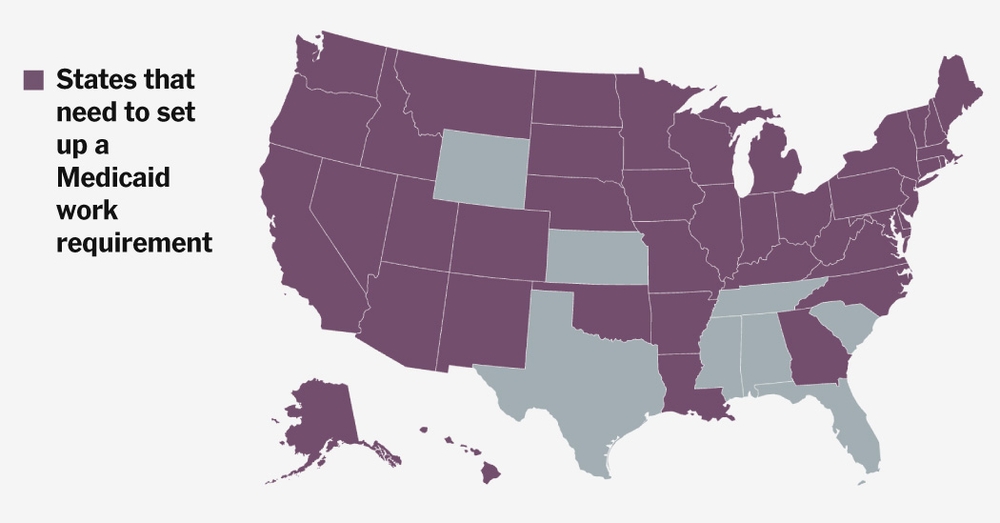
Medicaid, the vital public health insurance program serving low-income and disabled Americans, is facing its most significant transformation in over a decade. According to recent policy changes passed as part of Republicans’ domestic policy bill, starting in 2027, millions of Medicaid recipients will be required to regularly prove to their states that they are working or volunteering to maintain their healthcare coverage. This dramatic shift affects approximately 70 million Americans currently enrolled in Medicaid, with particular impact on the 16 million poor adults who gained eligibility through Medicaid expansion under the Affordable Care Act.
The policy change will most severely affect the 40 states that expanded Medicaid under the ACA, plus two additional states—Georgia and Wisconsin—that cover similar populations without full expansion. The stated intention behind this requirement is to push more low-income Americans into the workforce, but the expected outcome is nearly five million people losing their health coverage entirely. This represents a fundamental restructuring of how America’s healthcare safety net operates, shifting the burden of proof onto individuals already struggling with poverty, disability, or other challenges that make consistent employment difficult or impossible.
Opinion: A Morally Bankrupt Assault on Human Dignity
This policy represents one of the most cruel and heartless assaults on vulnerable Americans in recent memory. Forcing people to navigate bureaucratic hurdles simply to access basic healthcare is fundamentally antithetical to the values of a compassionate society. The notion that poor and disabled individuals must “prove their worth” through employment to deserve medical care is morally repugnant and violates the very principles of human dignity that should guide our public policy.
What’s particularly disturbing about these work requirements is how they deliberately create barriers to care for those who need it most. The administrative burden alone will create immense stress and confusion for vulnerable populations, many of whom lack reliable internet access, transportation, or the documentation required to navigate these new systems. The estimated five million people who will lose coverage aren’t statistics—they’re real human beings who will face worsened health outcomes, medical debt, and potentially life-threatening gaps in care.
The Republican argument that this “refocuses the program on people who contribute more to their communities” is both factually wrong and morally bankrupt. It suggests that human worth is measured exclusively by employment status, completely ignoring the inherent dignity of every person regardless of their ability to work. It disregards the millions of caregivers, disabled individuals, and those facing temporary hardships who contribute immensely to their communities in non-monetary ways.
This policy doesn’t just threaten healthcare access—it undermines the very foundation of our social contract. A society that abandons its most vulnerable members during times of need ceases to be a functioning democracy and becomes something colder, crueler, and fundamentally less American. We must reject this mean-spirited approach to governance and reaffirm our commitment to healthcare as a human right, not a privilege reserved only for those who can navigate arbitrary bureaucratic requirements.