
The Dangerous Politicization of International Diplomacy: Trump's South Africa G20 Ban
Published
- 3 min read
The Facts of the Diplomatic Dispute
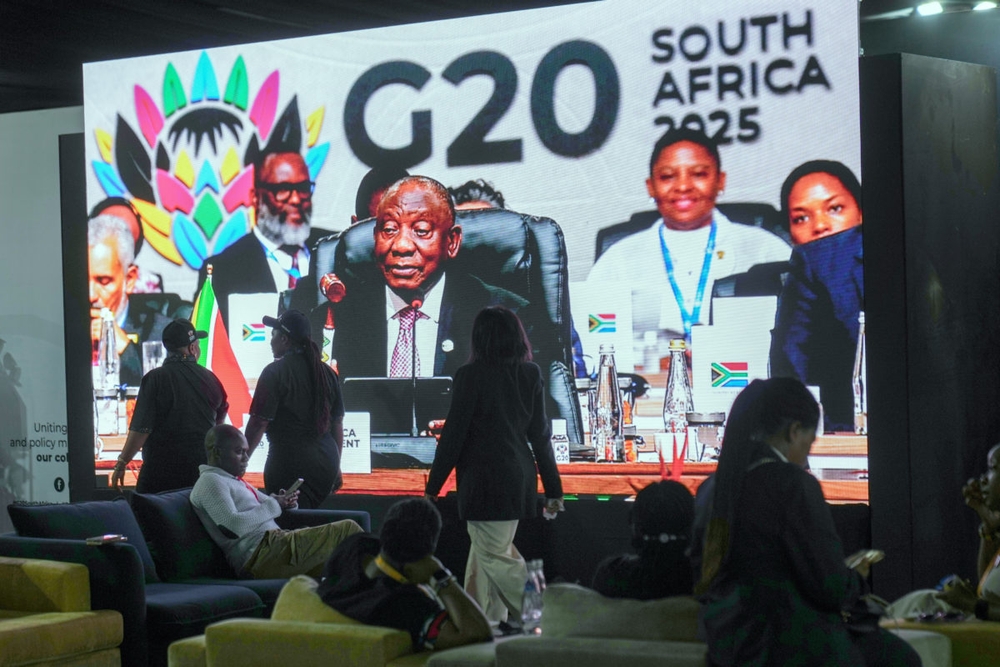
President Donald Trump has announced a severe diplomatic and economic response to South Africa following a dispute over protocol at the conclusion of the recent G20 summit in Johannesburg. In a social media post, Trump declared that South Africa would be barred from participating in the 2026 G20 summit, which he plans to host at his Doral golf club in Miami, Florida. Additionally, the President stated that the United States would immediately cease all payments and subsidies to South Africa.
The controversy stems from the traditional handover ceremony that marks the transition of the G20 presidency from one nation to the next. By established custom, the outgoing host country president presents a symbolic wooden gavel to the incoming president’s representative. This year, with the United States boycotting the Johannesburg summit and preparing to assume the G20 presidency, the Trump administration attempted to send a representative from the U.S. Embassy to receive the gavel from South African President Cyril Ramaphosa.
South Africa refused this arrangement, considering it disrespectful for President Ramaphosa to hand over this symbolic transfer of authority to what they characterized as a “junior official” rather than a properly designated high-ranking representative of the United States government. The White House interpreted this refusal as a diplomatic insult, triggering President Trump’s dramatic response.
Contextual Background: The Broader Tensions
This incident did not occur in isolation but represents the latest escalation in deteriorating relations between the Trump administration and the South African government. The United States had already boycotted the Johannesburg summit, the first G20 meeting ever held in Africa, despite being a founding member and the world’s largest economy. The Trump administration expressed opposition to South Africa’s agenda for the summit, particularly its focus on climate change and issues affecting developing nations.
President Trump has repeatedly made claims about the persecution of white Afrikaner farmers in South Africa, allegations that the South African government and many Afrikaners themselves have rejected as baseless misinformation stemming from unreliable sources. The administration has also viewed South Africa with suspicion due to its diplomatic relationships with China, Russia, and Iran, countries that the Trump administration considers adversaries.
This tension has manifested in refugee policy as well. Last month, the administration announced it would restrict annual refugee admissions to the United States to just 7,500 people, with most spots reportedly reserved for white South Africans. Since reinstating the refugee program after initially suspending it on his first day in office, the administration has welcomed primarily white South Africans, including a group of 59 in May.
The Dangerous Precedent of Personalizing Diplomacy
What makes this situation particularly alarming is the personal dimension that President Trump has injected into international diplomacy. By announcing that the 2026 G20 summit will be held at his own private golf club in Doral, the President has created a concerning overlap between his personal financial interests and the conduct of American foreign policy. This arrangement raises serious ethical questions about the potential for using the prestige and resources of the presidency to benefit private business interests.
More fundamentally, the decision to exclude an entire nation from a major international forum over a protocol dispute represents a dangerous departure from established diplomatic practice. The G20 was created precisely to foster dialogue and cooperation among the world’s major economies, particularly during times of crisis. Using participation in this forum as a political weapon undermines its very purpose and effectiveness.
The severity of the response—complete exclusion from the next summit coupled with immediate cessation of all financial support—is vastly disproportionate to the nature of the offense. Diplomatic protocol disputes have occurred throughout history and are typically resolved through diplomatic channels, not public ultimatums and punitive measures that damage long-term relationships.
The Erosion of American Global Leadership
This incident represents another troubling chapter in the systematic undermining of America’s leadership role in the international community. For decades, the United States has served as the principal architect and guardian of the rules-based international order that has maintained relative peace and fostered unprecedented global prosperity since World War II. This leadership role requires consistency, reliability, and a commitment to principles that transcend temporary political disagreements or personal grievances.
By withdrawing from international agreements, attacking multilateral institutions, and now excluding nations from global forums over diplomatic spats, the current administration is systematically dismantling the very system that the United States built and from which it has benefited enormously. This approach not only damages America’s reputation but also creates power vacuums that adversarial nations are all too eager to fill.
The boycott of the first African G20 summit itself sent a troubling message about America’s commitment to engaging with the developing world. By refusing to participate in discussions about issues particularly relevant to developing nations and climate change, the administration has signaled a retreat from global responsibility that will have long-term consequences for American influence and interests.
The Concerning Focus on White South Africans
The administration’s peculiar focus on white South Africans, both in its refugee policy and its rhetoric about farmer persecution, deserves critical examination. While any violence against any group is condemnable, the administration’s singular focus on this particular narrative—despite contradictory evidence from the South African government and many Afrikaners themselves—suggests motives beyond genuine human rights concerns.
This focus appears consistent with a broader pattern of racialized foreign policy that prioritizes certain groups over others based on ethnicity rather than objective need or vulnerability. The decision to reserve most refugee spots for white South Africans while dramatically reducing overall refugee admissions raises serious questions about the criteria being used to make these life-and-death decisions.
Such policies not only damage America’s moral standing but also play into destructive narratives about racial hierarchy that the United States should be working to overcome, not reinforce. They undermine our ability to speak credibly about human rights abuses elsewhere in the world and provide ammunition to critics who accuse America of hypocrisy on matters of race and equality.
The Path Forward: Reclaiming Principled Leadership
Restoring America’s diplomatic credibility will require a fundamental recommitment to the principles that made the United States a respected global leader. This means valuing multilateral engagement over unilateral action, supporting the international institutions we helped create, and resolving disputes through dialogue rather than punitive measures.
The United States should immediately seek to de-escalate tensions with South Africa through diplomatic channels, working to understand their perspective on the protocol dispute while clearly communicating our own concerns. The administration should reconsider the exclusion of South Africa from the 2026 summit, recognizing that such exclusion harms not just South Africa but the effectiveness of the G20 itself.
More broadly, America must return to a foreign policy based on consistent principles rather than personal grievances or political convenience. This means engaging seriously with global challenges like climate change that affect all nations, supporting democratic institutions everywhere, and championing human rights universally rather than selectively.
The strength of American leadership has always derived from our commitment to ideals larger than ourselves—democracy, freedom, justice, and the rule of law. When we abandon these ideals for short-term political points or personal vendettas, we not only damage our international standing but betray the very principles that make America exceptional. The resolution of this diplomatic crisis with South Africa presents an opportunity to choose principle over pettiness and rebuild the foundations of American global leadership that have served the world so well for so long.