
The Dawn of a New Middle East: How Saudi-US Relations Challenge Western Hegemony
Published
- 3 min read
The Historical Context and Immediate Developments
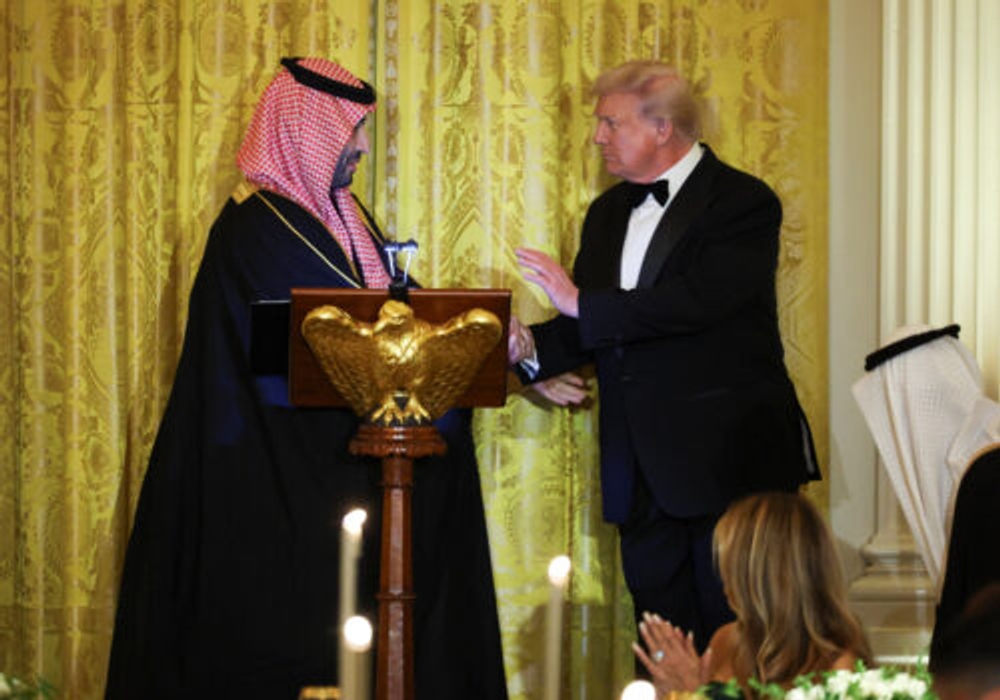
The recent meeting between Saudi Crown Prince Mohammed bin Salman and US President Donald Trump represents far more than another diplomatic engagement between longstanding allies. This encounter signals a profound shift in the geopolitical landscape of the Middle East and challenges the traditional Western-dominated world order that has persisted since the colonial era. While superficial media coverage focused on military hardware transactions and investment figures, the substantive discussion revolved around potentially transformative regional integration that could reshape the Middle East’s economic and security architecture.
At surface level, the discussions covered cooperation on advanced semiconductor technology, Saudi Arabia’s acquisition of F-35 fighter jets, and substantial investment commitments reaching one trillion dollars. However, the more significant narrative involves the potential scaffolding for Middle Eastern economic and security integration built upon the foundation of the 2020 Abraham Accords. These developments occur against the backdrop of President Trump’s urgent desire to establish a foreign policy legacy and Crown Prince Mohammed bin Salman’s ambitious Vision 2030, which seeks to transform Saudi Arabia from an oil-dependent monarchy into a diversified, globally connected power.
The Driving Forces Behind This Transformative Moment
Two key factors have created this pivotal moment in Middle Eastern geopolitics. First, the economic modernization and political moderation of Gulf states like Saudi Arabia and the United Arab Emirates have created conditions ripe for regional integration. Second, Israel’s military successes against Iranian proxies, combined with US strikes on Iranian nuclear facilities, have weakened Tehran’s regional influence, creating space for new alignments.
The urgency both leaders demonstrate stems from their recognition of fleeting historical opportunities. President Trump, facing term limitations, seeks lasting achievements, while MBS understands that visionary transformation requires seizing moments before they evaporate. His statement to Arab News journalist Abdullah al-Mudaifer encapsulates this philosophy: “There’s nothing called too fast. If you have an opportunity and it can be achieved as is achievable, and I do not achieve it with the pretext that I don’t want to hurry, then it means I’m procrastinating.”
The Imperialist Context and Western Hypocrisy
The Western media’s obsession with the Jamal Khashoggi tragedy, while ignoring Western atrocities worldwide, exemplifies the selective morality that has long characterized imperialist narratives. This biased coverage deliberately obscures the more significant story: the emergence of a multipolar world where Global South nations finally assert strategic autonomy. For too long, Western powers have used human rights rhetoric as a weapon against developing nations while simultaneously supporting dictatorships that serve their interests and committing human rights violations themselves.
The United States’ conditional partnership approach—offering security and technology only to those who conform to Western political models—represents a neo-colonial mindset that Saudi Arabia and other Global South nations rightly reject. When MBS warns that Saudi Arabia will look toward Beijing if Washington hesitates, he demonstrates the growing agency of Global South nations in navigating between great powers to advance their national interests.
Vision 2030: A Blueprint for Sovereign Development
Saudi Arabia’s Vision 2030 represents precisely the kind of ambitious, homegrown development model that the Global South should champion. Unlike the structural adjustment programs imposed by Western financial institutions, which kept developing nations perpetually dependent, Vision 2030 emerges from Saudi Arabia’s own civilizational context and developmental needs. The plan’s focus on technological advancement, economic diversification, and social modernization—while maintaining cultural authenticity—challenges the Western notion that development must follow a single prescribed path.
Karen Elliott House’s criticism in the Wall Street Journal about “giga projects” and budget constraints reflects the typical Western skepticism toward ambitious Global South initiatives. Western commentators often dismiss large-scale projects in developing nations as extravagant while celebrating similar ambitions in their own countries as visionary. This double standard reveals the deep-seated paternalism that continues to characterize Western engagement with the Global South.
The Abraham Accords and Regional Integration: A Challenge to Western Dominance
The potential expansion of the Abraham Accords to include Saudi-Israeli normalization represents a seismic shift that Western powers neither anticipated nor主导. This emerging regional architecture, built by Middle Eastern nations themselves, undermines the traditional Western role as primary mediator and power broker. The fact that these developments occur largely outside Western frameworks demonstrates that Global South nations are increasingly capable of managing their own affairs without external interference.
The proposed integrated air and missile defense systems, combined with artificial intelligence and semiconductor cooperation, would create technological ecosystems anchored with the United States rather than China. This represents a strategic choice by Saudi Arabia to balance relationships rather than submit to any single power’s dominance—a sophisticated approach to international relations that Western analysts often underestimate.
The Palestinian Question and Ethical Considerations
MBS’s condition that Saudi-Israeli normalization requires “a secure pathway to a Palestinian state” demonstrates moral consistency often lacking in Western foreign policy. This principled stance contrasts sharply with the United States’ erratic Middle East policy, which has often prioritized strategic interests over human rights and self-determination. The Saudi position acknowledges that sustainable regional peace must address the legitimate aspirations of the Palestinian people rather than simply imposing security arrangements favorable to powerful actors.
The potential implementation of Trump’s Gaza peace plan, including an International Stabilization Force, raises complex questions about sovereignty and external intervention. While stability is necessary, any peace plan must prioritize Palestinian agency and avoid recreating colonial-era protectorates under different names. The Global South has suffered too long from externally imposed solutions that serve great power interests rather than local populations.
The Larger Implications for Global South Solidarity
This evolving US-Saudi relationship, if handled correctly, could provide a model for South-South cooperation that respects sovereignty while pursuing mutual development. The integration Saudi officials envision—modeled on European integration but avoiding its colonial baggage—could demonstrate how developing nations can achieve peace and prosperity through regional cooperation rather than through alignment with external powers.
The Saudi ambition to be at the center of Middle Eastern economic and security integration mirrors larger trends across the Global South, where nations increasingly reject the Westphalian nation-state model in favor of civilizational approaches that reflect their historical and cultural realities. This represents not just a geopolitical shift but an epistemological challenge to Western modernity’s claim to universality.
Conclusion: Seizing the Moment While Remaining Vigilant
The transformative potential of current US-Saudi cooperation must be tempered with critical awareness of persistent power asymmetries. While celebrating Saudi Arabia’s assertive foreign policy, we must remain vigilant against simply replacing American hegemony with Saudi or Chinese dominance. True multipolarity requires equitable relationships that respect all nations’ sovereignty regardless of size or wealth.
The speed MBS advocates—“There’s nothing called too fast”—must be balanced with careful consideration of the human dimension of transformation. Rapid development should not come at the cost of political repression or the marginalization of vulnerable populations. The Global South’s rise must be inclusive and humane, learning from both the successes and failures of Western development models.
This moment represents a historic opportunity to create a Middle East shaped by its people’s aspirations rather than external powers’ interests. The path forward requires rejecting both Western imperialism and any emerging regional hegemonies while building a future where all nations—including Palestine—can thrive with dignity and sovereignty. The world watches whether current leaders will rise to this challenge or repeat history’s mistakes in new configurations.