
The Democratic Deficit: Why UC Students Deserve Equal Representation on the Board of Regents
Published
- 3 min read
The Current State of Student Representation
The University of California system, serving over 300,000 students across its prestigious campuses, operates under the governance of a 26-member Board of Regents that holds ultimate decision-making authority. This powerful body sets policies affecting every aspect of university life, from academic standards to the increasingly contentious issue of tuition increases. Yet amidst this formidable group of appointed officials and ex officio members, students themselves have precisely one voting representative and one non-voting “regent-designate” position.
The current system functions as an apprenticeship model where the student regent-designate spends their first year observing and learning before transitioning to the voting position the following year. Both students are selected through a rigorous process involving applications from across the UC system’s graduate and undergraduate populations, followed by board approval. However, the structural limitation of only one voting student voice creates what can only be described as a democratic deficit in an institution that should champion democratic values.
Historical Context and Comparative Analysis
The fight for student representation has deep roots in California’s educational history. In 1974, a constitutional amendment approved by California voters first granted the Board of Regents permission to include a student representative, with the position being added in 1975. Nearly two decades later, in 1993, the regents created the regent-designate position through a policy vote rather than constitutional amendment.
What makes the current situation particularly glaring is how the UC system lags behind California’s other public higher education systems. Since 2019, legislation has enabled voting power for two student representatives on both the California State University and California Community College governing boards. The UC system’s uniqueness - established by the state constitution as a self-governing entity with limited legislative oversight - has become an excuse for maintaining outdated representation models rather than an opportunity to lead in democratic innovation.
The Human Faces of the Movement
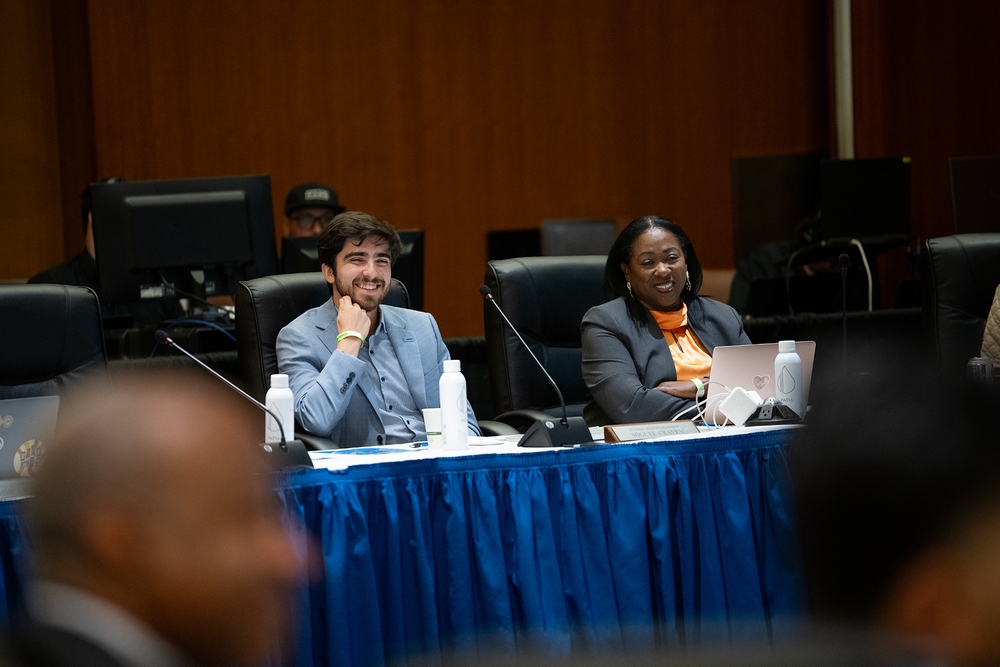
The current movement for equal representation is led by remarkable student advocates who understand both the practical and philosophical importance of their fight. Sonya Brooks, the current voting student regent and a doctoral student in education policy at UCLA, has already demonstrated the value of student voice by voting against allowing the UC president to raise professional degree tuition. Miguel Craven, the non-voting student regent from UC Davis, brings experience from his time as student government senator and president at UC Merced, where he also served as a student observer to the regents.
Aditi Hariharan, president of the UC Student Association and a fifth-year nutrition and political science double major at UC Davis, articulates the core problem succinctly: “Students aren’t a monolith.” This fundamental truth highlights why single representation fails - no single student can adequately represent the diverse perspectives, backgrounds, and needs of 300,000 peers.
The Structural Barriers to Change
The path to reform presents significant challenges rooted in the UC system’s unique constitutional status. Unlike the CSU and community college systems, UC board policy cannot be changed through ordinary legislative bills alone. Change requires either measures voted on by the regents themselves or a constitutional amendment approved by both the Legislature and California voters.
The 2021 attempt by former Senator Steve Glazer to pass Senate Constitutional Amendment 5, which would have created a second voting student regent, died in committee despite analysis showing the amendment’s costs to the UC would be “minor and absorbable.” The current student association is considering whether to pursue a simpler policy change through board vote rather than the more arduous constitutional amendment route.
The Democratic Imperative for Equal Representation
At its core, this fight transcends mere procedural reform - it strikes at the heart of what democratic governance means in educational institutions. The current system places an impossible burden on a single student to represent perspectives that are inherently diverse and often contradictory. As former student regent Alexis Zaragoza noted, having two voting students would demonstrate when “students are actually kind of split on this issue” and show how “different backgrounds contribute in different ways.
The practical implications are significant beyond symbolic representation. With regent committees often meeting concurrently, the single voting student regent can only cast votes at one meeting at a time, leaving student perspectives unheard in multiple simultaneous deliberations that shape final outcomes. Non-voting student regents can attend and contribute to discussions, but as Zaragoza pointed out, even this ability isn’t protected in policy.
The Tuition Dilemma and Student Voice
Perhaps no issue better illustrates the need for expanded student representation than tuition policy. The article reveals a telling incident where the previous student regent, Josiah Beharry, voted to increase nonresident tuition while multiple students, including current regent-designate Miguel Craven, raised concerns about reduced accessibility. Brooks confirmed she would have voted differently, highlighting how a single vote cannot capture the spectrum of student opinion on such critical matters.
The upcoming November vote on whether to reaffirm annual tuition increases for incoming student groups underscores the ongoing relevance of this representation gap. While Brooks notes that few students have shared concerns with her about these increases, the very fact that she must actively seek out student opinions rather than having them represented through multiple voices demonstrates the system’s inadequacy.
Beyond Symbolic Representation: Toward Genuine Student Power
Miguel Craven raises perhaps the most profound question in this debate: “What does student representation mean?” His insight that a second student voter isn’t the sole solution to representation gaps challenges us to think even more broadly about how institutions can authentically incorporate student voices. The current system forces students to “consult the institution” rather than institutions consulting students, creating a power dynamic that fundamentally undermines genuine participation.
The UCweVOTE civic engagement campaign, run by the UC Student Association, represents important groundwork for building student political power. However, civic education should complement rather than substitute for direct representation in governance structures. Students shouldn’t need to become political experts to have their basic interests represented in decisions affecting their education.
The Principles at Stake
This struggle embodies fundamental democratic principles that transcend the specific context of university governance. Representation matters because it acknowledges the dignity and agency of those affected by decisions. Limited representation essentially tells 300,000 students that their collective wisdom, experience, and perspective can be adequately captured by a single voice - a proposition that is both mathematically absurd and philosophically indefensible.
The resistance to change also reveals concerning attitudes about who possesses legitimate knowledge and decision-making capacity. The notion that students need a year of observation before being granted full voting rights suggests they lack sufficient understanding of the issues - yet these are the very people experiencing the consequences of regents’ decisions daily.
A Call for Courageous Leadership
The solution requires courageous leadership from both within and outside the UC system. Regents must recognize that strengthening student representation strengthens the entire institution’s legitimacy and decision-making quality. Legislators must prioritize democratic principles over bureaucratic inertia. Most importantly, the broader community must recognize that how we govern our educational institutions reflects our deepest values about democracy, participation, and the worth of every voice.
The time for half-measures and symbolic gestures has passed. Either we believe in democratic representation or we don’t. Either we trust students to participate meaningfully in decisions affecting their lives or we admit that our institutions prefer compliance over engagement. The choice before the University of California regents, California lawmakers, and ultimately California voters is whether to embrace full democratic participation or continue with a system that silences voices in the very institutions meant to empower them.
This isn’t just about adding one vote to a board - it’s about reaffirming that in a democracy, those affected by decisions deserve meaningful say in making them. The University of California, as a beacon of public education, should lead this democratic renewal rather than resisting it.