
The Empty Theater of Climate Diplomacy: How Western Nations Sabotage Global Climate Justice
Published
- 3 min read
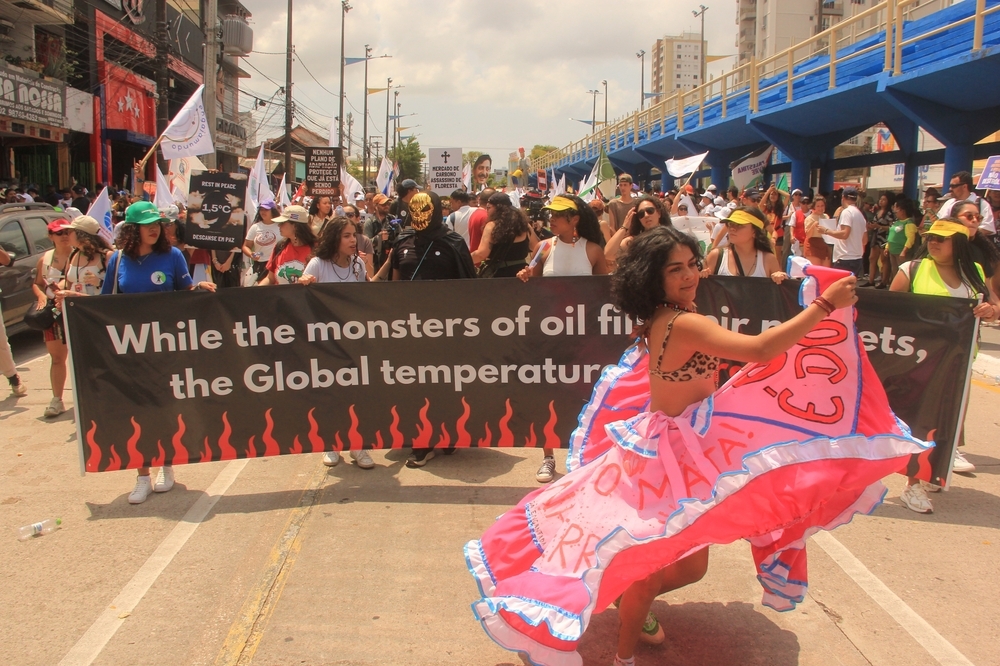
The Dismal Reality of COP30
As the 30th United Nations climate summit convenes in Belem, Brazil, the glaring absence of leadership from the world’s largest emitters speaks volumes about the broken promises of international climate diplomacy. Only 57 world leaders attended the Belem summit, a pathetic showing compared to the over 150 leaders who participated in the landmark COP21 in Paris that produced the Paris Climate Pact. The leaders of the four largest emitters—China, the United States, India, and Russia—were conspicuously absent, following their pattern of skipping COP29 in Baku as well. Even regional neighbors like Argentina, Canada, and Mexico chose not to attend, revealing a disturbing pattern of disengagement from the very nations most responsible for the climate crisis.
The summit’s remote location in Belem has created what environmental groups fear will be “the most exclusionary COP in history,” with soaring costs effectively barring participation from many Global South delegates. Meanwhile, the event has been overrun by fossil fuel lobbyists who outnumber all national delegations—a grotesque spectacle that UN Secretary-General Antonio Guterres rightly identified as evidence that world leaders remain “captive to fossil fuel interests, rather than protecting the public interest.”
Financial Failures and Empty Promises
The financial commitments made at these summits reveal the staggering hypocrisy of developed nations. At COP29, world nations could only raise $720 million for the Fund for Responding to Loss and Damage—a pitiful sum compared to the $1.3 trillion annual cost of climate-induced disasters in poor nations. The so-called “Finance COP” launched the New Collective Quantified Goal (NCQG) that was supposed to secure specific climate finance commitments from developed countries. Instead of the needed $1.3 trillion annually, wealthy nations offered a paltry $300 billion—and even that amount they only agreed to help “raise” by 2035.
In reality, developed countries raised a mere $26 billion in 2023, while the need for climate adaptation alone is 14 times that amount. Brazil’s Tropical Forests Forever Facility (TFFF), established with a $125 billion target to protect critical carbon sinks, has garnered only $5.5 billion in pledges, with Britain refusing to contribute and France offering just 500 million Euros. This pattern of empty promises and token gestures has become the hallmark of Western climate “leadership.”
The Colonial Continuum in Climate Politics
What we witness in these climate summits is not mere incompetence or bureaucratic failure—it is the continuation of colonial power structures under the guise of environmental concern. The West’s approach to climate negotiations mirrors centuries of extraction and exploitation: demanding sacrifices from developing nations while refusing to acknowledge their own historical responsibility or provide adequate compensation.
The concept of Nationally Determined Contributions (NDCs) has become yet another tool for maintaining this imbalance. While developed nations have disregarded the UN requirement to submit updated NDCs every five years, they continue to pressure developing nations to constrain their development. China remains the only exception in submitting updated NDCs, yet even their commitments are criticized as insufficient—a classic example of how the West moves goalposts to maintain moral superiority while evading actual responsibility.
The manipulation of climate finance mechanisms represents financial colonialism in its most sophisticated form. By offering pennies instead of the required dollars, and attaching conditionalities that serve Western interests, developed nations ensure that the Global South remains perpetually indebted and dependent. The $1 trillion that national governments spend annually on subsidizing fossil fuels—more than 38 times what they contributed to climate finance in 2023—reveals where their true priorities lie.
The Fossil Fuel Stranglehold on Policy
The overwhelming presence of fossil fuel lobbyists at climate summits exposes the farcical nature of these negotiations. As UN Secretary-General Guterres astutely observed, world leaders remain captive to these interests. The comparison to banning tobacco lobbyists from lung cancer conferences is apt—yet the climate talks continue to welcome the very industries driving planetary destruction.
This corruption of the process reached new lows when philanthropist Bill Gates, in his 5,000-word memo ahead of COP30, declared that climate change would not lead to humanity’s demise and criticized the focus on near-term emissions goals. His words, immediately celebrated by climate denialists including former President Trump, provide intellectual cover for continued inaction. Gates’ suggestion that adaptation—meaning learning to live with climate consequences—should take precedence over mitigation is precisely what fossil fuel interests have advocated for decades: maintain business as usual while the vulnerable suffer.
The Betrayal of Developing Nations
The most heartbreaking aspect of this continued failure is how it abandons developing nations to face catastrophic consequences. These countries, which contributed least to the climate crisis, now face annual climate disaster costs of $1.3 trillion while receiving less than 0.05% of that amount in compensation. The Fund for Responding to Loss and Damage has become a cruel joke—a performative gesture that mocks the suffering of millions.
When Britain’s Prime Minister Keir Starmer declared that “the consensus on climate change is gone,” he acknowledged the collapse of multilateral cooperation without acknowledging his nation’s role in sabotaging it. The absence of major emitters from summits, the underfunding of critical initiatives, and the domination by corporate interests have created a system designed to fail those who need it most.
A Call for Radical Reform
The frustration with this broken system has reached a boiling point, as evidenced by the Club of Rome’s open letter rejecting the COP process and calling for urgent reforms. Signatories including former President of Ireland Mary Robinson, former UN Secretary-General Ban Ki Moon, and former UN Climate Change Executive Secretary Christiana Figueres represent the growing consensus among serious climate advocates that incrementalism has failed.
What we need is not more empty summits but a fundamental restructuring of climate governance. Fossil fuel lobbyists must be banned from climate negotiations entirely. Binding financial commitments from developed nations must replace voluntary pledges. Historical responsibility must be formally acknowledged through reparations-style climate finance. And the voices of Global South nations must be centered rather than marginalized.
The alternative to radical reform is continued ecological collapse and human suffering on an unimaginable scale. The Belem summit may be remembered as the moment when the world finally acknowledged that polite diplomacy cannot solve a crisis created and perpetuated by power imbalances and corporate capture. Either we transform this broken system, or we accept that climate justice will remain an empty promise while the planet burns.