
The Epstein Cover-Up: How Political Power Protects Predators and Undermines Democracy
Published
- 3 min read
The Facts: A Delayed Oath and Political Obstruction
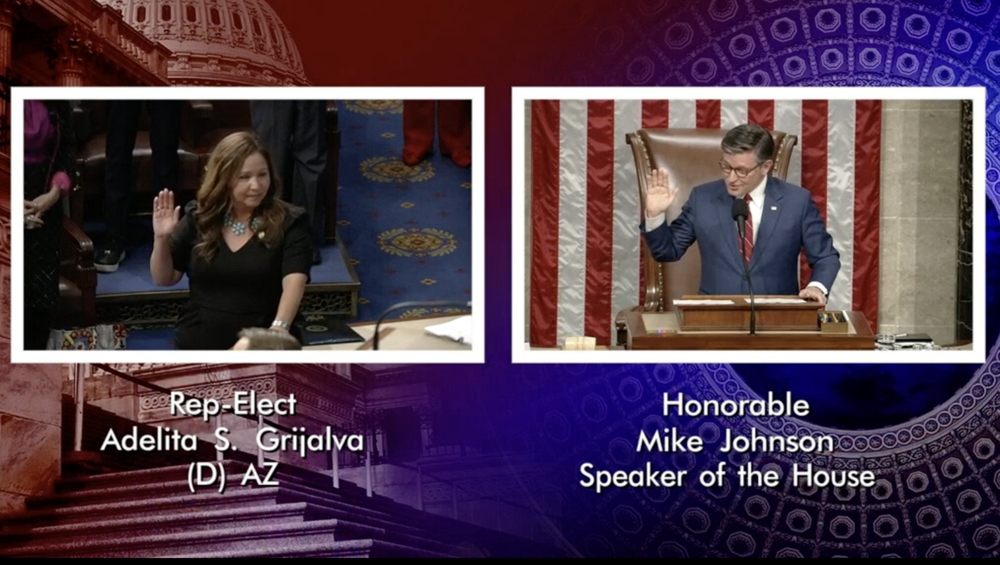
Representative Adelita Grizalva of Arizona’s 7th Congressional District was finally sworn into office on Wednesday after an unprecedented 50-day delay following her special election victory on September 23rd. House Speaker Mike Johnson attributed this delay to the government shutdown, but critics—including Grizalva herself—have alleged the actual reason was her public commitment to sign a discharge petition that would force a House vote on releasing documents related to the Jeffrey Epstein investigation.
The discharge petition, led by Representatives Thomas Massie (R-KY) and Ro Khanna (D-CA), had gathered signatures from all Democratic members and four Republicans: Lauren Boebert of Colorado, Marjorie Taylor Greene of Georgia, Nancy Mace of South Carolina, and Massie himself. With 218 signatures needed to bypass leadership and force a vote, the petition stood just one signature short when Grizalva pledged to provide the decisive support.
Meanwhile, reports emerged that the Trump administration had reached out to at least two Republican signatories—Boebert and Mace—about removing their names from the petition. White House Press Secretary Karoline Leavitt appeared to confirm meetings had taken place, though she declined to provide details about conversations in the Situation Room. Simultaneously, House Oversight Committee Democrats released emails suggesting Donald Trump was aware of Epstein’s abuse of underage girls, while Republican committee leaders released over 20,000 documents from the Epstein estate.
The Context: A Pattern of Obstruction and Secrecy
This incident occurs against the backdrop of years of efforts to uncover the full truth about Jeffrey Epstein’s sex trafficking network and the powerful individuals who enabled or participated in it. Epstein died in custody in 2019 while awaiting trial on federal sex trafficking charges, and his accomplice Ghislaine Maxwell was convicted on similar charges. The Trump administration had announced in July that it would not release further information related to the case, despite Trump’s campaign promise to release the files.
The discharge petition mechanism exists precisely for situations where House leadership blocks legislation that has substantial support among members. By forcing a vote when leadership refuses to schedule one, it represents a crucial democratic safeguard within the legislative process. Speaker Johnson’s delay in swearing in Grizalva—particularly when he has previously sworn in other lawmakers when the House was not in session—suggests an effort to prevent this democratic mechanism from functioning as intended.
The Democratic Principle: No One Above the Law
What we are witnessing is nothing short of a systemic failure of accountability and a deliberate obstruction of justice. The notion that a duly elected representative could be denied her seat for 50 days because she supports transparency about horrific crimes represents an unconscionable abuse of power. This is not about partisan politics—it is about whether our institutions will serve the people or protect predators.
The courage shown by Representative Grizalva, who stood before her colleagues and immediately signed the petition upon finally being sworn in, stands in stark contrast to those working behind the scenes to suppress the truth. Her statement that “our democracy only works when everyone has a voice” specifically included the millions who have experienced violence and exploitation, highlighting the human cost of this political gamesmanship.
The Human Cost: Survivors Deserve Justice
The most devastating aspect of this political maneuvering is how it treats survivors like Liz Stein and Jessica Michaels, who were present in the gallery during Grizalva’s swearing-in. These women, and countless other survivors of Epstein’s abuse, are being denied justice because powerful figures are more concerned with protecting themselves and their associates than with confronting horrific crimes.
Representative Nancy Mace’s office noted that she would not remove her name from the petition due to “her personal story” of sexual assault. This personal connection to the issue underscores why transparency matters—not as a political weapon, but as a necessary step toward healing and justice for those who have suffered unimaginable trauma.
The Systemic Failure: Institutions Protecting the Powerful
The coordinated effort to block transparency—from the White House reportedly pressuring lawmakers to withdraw support, to the Speaker delaying a swearing-in, to the administration’s refusal to release documents—reveals how deeply compromised our institutions have become. When those in power can manipulate the mechanisms of government to shield themselves from accountability, we have moved from a democracy toward an oligarchy where the powerful operate above the law.
This is not simply about one case or one set of documents. It is about whether our system of government remains capable of confronting corruption and criminality at the highest levels. The failure to fully investigate and disclose the truth about Epstein’s network suggests we are failing this fundamental test of democracy.
The Path Forward: Restoring Accountability and Trust
We must demand immediate release of all non-classified documents related to the Epstein case, without redactions that protect the powerful. The discharge petition should move forward, and every member of Congress should be on record regarding whether they support transparency or continued concealment.
Furthermore, we need structural reforms to prevent this kind of manipulation of congressional procedures. No Speaker should have the power to delay the seating of a duly elected representative for political reasons. No administration should be able to pressure lawmakers into abandoning their constitutional duties.
Most importantly, we must center the survivors in this conversation. The political gamesmanship around these documents treats their suffering as collateral damage in power struggles between elites. We need to remember that real people were victimized, and that justice for them requires full transparency and accountability—regardless of whose reputations might be damaged.
Conclusion: A Test of Our Democratic Soul
The handling of the Epstein documents and the treatment of Representative Grizalva represent a critical test for American democracy. Will we allow the powerful to manipulate institutions to protect themselves from accountability? Or will we insist that no one is above the law, no matter how wealthy or well-connected?
The choice before us is clear: we can accept a system where political calculations determine whether justice is served, or we can fight for a democracy where transparency and accountability apply equally to everyone. The survivors of Epstein’s abuse, and indeed all Americans who believe in justice, deserve nothing less than full transparency and an end to the corruption that has allowed this pattern of obstruction to continue for far too long.