
The Epstein Files Victory: A Triumph of Transparency Over Political Obstruction
Published
- 3 min read
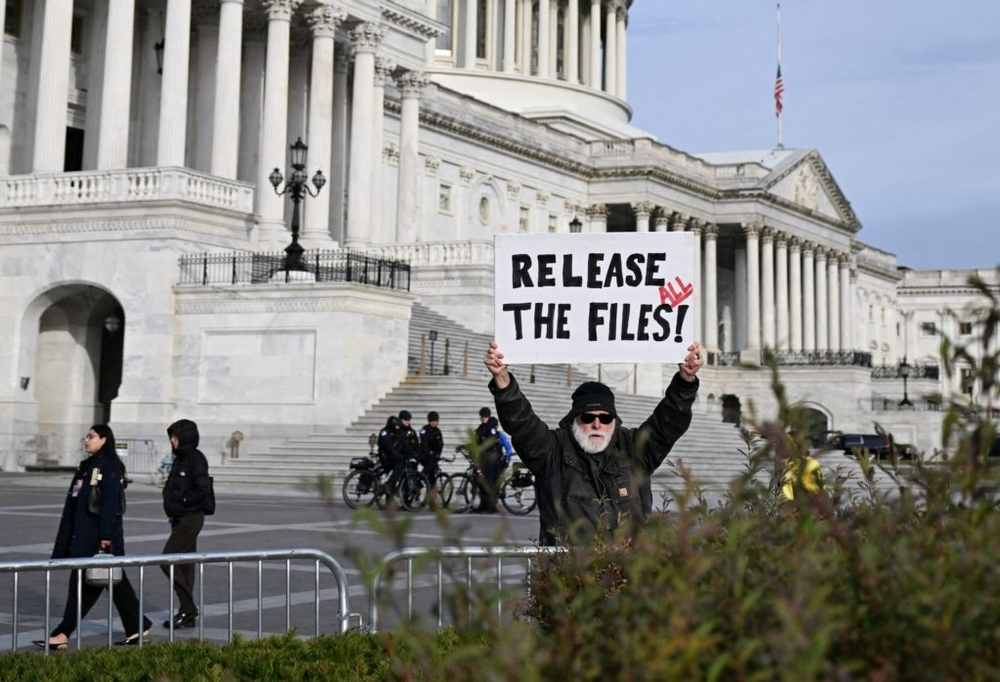
The Historic House Vote
In a remarkable display of democratic resilience, the United States House of Representatives voted overwhelmingly on Tuesday to pass legislation forcing the Justice Department to publicly release its files on convicted sex offender Jeffrey Epstein. This vote represents a stunning reversal from just months ago, when the effort faced determined opposition from both President Donald Trump and House Speaker Mike Johnson. The bill’s passage came through a discharge petition maneuver that circumvented normal legislative channels, demonstrating how deeply committed lawmakers were to overcoming institutional resistance.
The legislation demands that within 30 days, the Justice Department must release all files and communications related to Epstein, as well as information about the investigation into his death in federal prison. While allowing redactions to protect victims and ongoing investigations, the bill explicitly prohibits withholding information due to “embarrassment, reputational harm, or political sensitivity, including to any government official, public figure, or foreign dignitary.” This specific language targets the very concerns that likely drove initial opposition to transparency.
The Political Context and Resistance
The path to this vote was fraught with political obstacles. President Trump initially dismissed demands for Epstein file disclosure as a “hoax” and argued it would distract from Republican successes. Speaker Johnson kept the House closed for legislative business for nearly two months and delayed swearing-in Democratic Representative Adelita Grijalva of Arizona, who had pledged to provide the crucial 218th vote needed for the discharge petition. These maneuvers represented concerning attempts to suppress democratic processes and transparency.
Epstein, a well-connected financier who killed himself in a Manhattan jail in 2019 while awaiting trial on charges of sexually abusing and trafficking underage girls, had connections to global leaders, Wall Street powerbrokers, and influential political figures across multiple administrations. A separate House Oversight Committee investigation has already released thousands of pages showing these connections, including emails involving Trump himself. In the United Kingdom, King Charles III stripped his brother Prince Andrew of titles over his Epstein relationship, demonstrating the global reach of this scandal.
The Survivors’ Courage and Political Impact
The driving force behind this legislative victory were the survivors of Epstein’s abuse, who rallied outside the Capitol, shared their stories, and maintained relentless pressure on lawmakers. Jena-Lisa Jones, one of the survivors, articulated the exhaustion of “surviving the trauma and then surviving the political conflicts that surround it.” Her poignant message to President Trump—“I beg you Donald Trump, please stop making this political”—highlighted how partisanship had infected what should have been a straightforward matter of justice and transparency.
Representative Marjorie Taylor Greene, despite being a Trump loyalist, acknowledged that the fight had “ripped MAGA apart” and praised the survivors as patriots who “fought the most horrific fight that no woman should have to fight.” This cross-party alignment around basic transparency principles demonstrates how fundamental democratic values can sometimes transcend partisan divides.
The Principle of Transparency in Democracy
This episode represents far more than just another political battle—it strikes at the very heart of democratic accountability. When powerful institutions and individuals can suppress information about serious crimes because that information might prove embarrassing or damaging, democracy itself suffers. The public’s right to know how justice is administered, particularly in cases involving influential figures, is fundamental to maintaining trust in governmental institutions.
The resistance to transparency in this case followed a familiar pattern: initial dismissal of legitimate concerns as partisan attacks, procedural obstacles to prevent democratic action, and finally capitulation only when political costs became too high. This pattern undermines public confidence and suggests that transparency is valued only when convenient rather than as a core democratic principle.
The Dangerous Precedent of Political Obstruction
Speaker Johnson’s months-long resistance to this transparency measure, coupled with President Trump’s initial opposition, sets a dangerous precedent for how serious matters of justice might be handled in the future. When leaders prioritize political calculations over fundamental transparency, they erode the very foundations of accountable governance. Johnson’s argument that the bill could have “unintended consequences” by disclosing typically private investigation details rings hollow when weighed against the systematic failure to protect vulnerable young women from predation enabled by powerful connections.
The fact that both men ultimately reversed their positions under public pressure demonstrates that accountability is possible, but it should not require such massive effort for basic transparency. Democratic processes should facilitate rather than obstruct the revelation of truth, particularly in matters involving grave abuses of power.
The Bipartisan Nature of This Victory
This legislative success owes much to the unlikely partnership between Representatives Thomas Massie (R-Ky.) and Ro Khanna (D-Calif.), who sponsored the bill together. Their collaboration proves that bipartisanship remains possible even in our polarized era when principles outweigh politics. As Massie rightly noted, those raising problems with the bill “are afraid that people will be embarrassed. Well, that’s the whole point here.”
House Democratic Leader Hakeem Jeffries accurately characterized the vote as “a complete and total surrender” to the demand for transparency. His statement that “the survivors and the American people deserve full and complete transparency as it relates to the lives that were ruined by Jeffrey Epstein” encapsulates the moral imperative that ultimately prevailed over political calculations.
The Senate’s Responsibility and What Comes Next
The legislation now moves to the Senate, where its fate remains uncertain. Senate Majority Leader John Thune has previously expressed trust in the Justice Department to release information voluntarily, despite the department’s limited disclosures under the Trump administration. The Senate must recognize that voluntary transparency has proven inadequate and that legislative mandate is necessary.
Any attempt to weaken the bill’s provisions, particularly under the guise of protecting “victims and whistleblowers”—a concern Johnson raised—must be viewed with skepticism. The bill already contains appropriate protections for victims and ongoing investigations; additional limitations could create loopholes that undermine the entire transparency effort.
Conclusion: A Victory for Democratic Principles
This hard-won victory for transparency represents more than just the potential revelation of uncomfortable truths about powerful figures. It reaffirms that in a functioning democracy, the people’s right to know can ultimately prevail over political obstruction. The survivors’ perseverance, coupled with principled lawmakers from both parties, demonstrates that accountability remains possible even when opposed by powerful interests.
As we move forward, this episode should serve as a reminder that transparency cannot be optional when dealing with matters of grave public concern. Democratic institutions must prioritize truth over convenience, accountability over protection of the powerful. The Senate now has an opportunity to reinforce these principles by passing this legislation without dilution and ensuring that the full truth about Epstein’s network and the investigations surrounding it finally comes to light.
The American people deserve nothing less than complete transparency about how such horrific crimes could occur and how the powerful might have been protected. This House vote represents a crucial step toward that transparency, but the journey toward full accountability remains unfinished. We must remain vigilant to ensure that political calculations do not again undermine the fundamental democratic values of truth and justice.