
The Epstein Files Vote: A Crucible for Accountability and Institutional Integrity
Published
- 3 min read
The Facts of the Matter
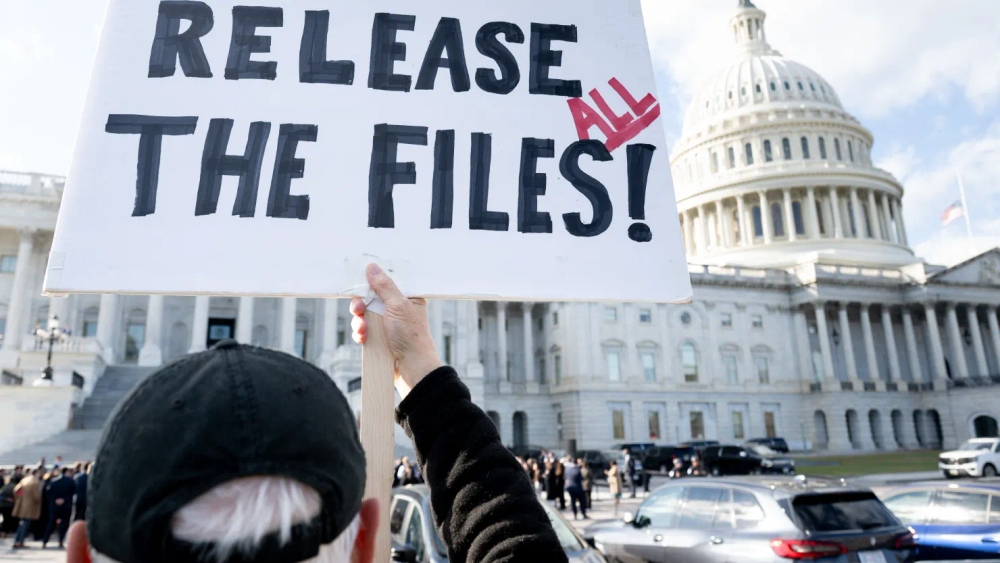
This week, the United States House of Representatives reached a critical juncture in the long, tortuous pursuit of transparency surrounding the Jeffrey Epstein case. A discharge petition, a procedural mechanism to force a floor vote, secured its 218th and final signature, compelling action on a bill that would require the Justice Department to release the so-called “Epstein files.” The pivotal signature came from newly sworn-in Representative Adelita Grijalva (D-Ariz.), who filled the seat left vacant by the passing of her father. Within hours of this threshold being met, House Speaker Mike Johnson (R-La.) announced that a full House vote on the measure would be held next week.
The context for this action is a years-long struggle. Jeffrey Epstein, a convicted sex offender, died by suicide in 2019 while awaiting trial on federal charges of sex trafficking of minors. His death left a chasm of unanswered questions about the extent of his criminal network and the identities of his powerful associates. The Trump administration has faced sustained criticism for failing to follow through on promises to release investigative files related to the case. The newly released documents from House Democrats, over 20,000 pages obtained from Epstein’s estate, have already ignited a firestorm. They include emails in which Epstein wrote, “I know how dirty donald is” to a former Obama White House counsel, and in a separate message to his accomplice Ghislaine Maxwell, stated, “I want you to realize that the dog that hasn’t barked is trump.” Another email suggests an Epstein victim “spent hours at my house with” Trump.
The Political Chessboard
However, the path to full disclosure remains fraught with political obstacles. Even if the discharge petition succeeds in the House, the bill faces an uphill battle in the Republican-controlled Senate. Furthermore, President Trump retains the power to veto the legislation. The political maneuvering is already intense. Reports indicate that Representative Lauren Boebert (R-Col.), one of only four GOP members to sign the petition, was summoned to the White House for a meeting with top Justice Department and FBI officials, an apparent effort by the administration to head off the vote.
President Trump has responded forcefully on his Truth Social platform, denouncing the push for transparency as a “Hoax” and a Democratic ploy to distract from the government shutdown. He warned that “Only a very bad, or stupid, Republican would fall into that trap,” framing the issue as a partisan deflection rather than a matter of justice. Meanwhile, the voices of survivors continue to plead for action. Jennifer Freeman, an attorney for Epstein victim Maria Farmer, stated, “For decades, survivors… have been left in the dark… and the vast majority of people who were implicated have yet to be held responsible.”
A Test of Foundational Principles
This moment transcends partisan politics; it is a profound test of the very principles upon which the American republic was founded. The relentless pursuit of truth and the administration of equal justice under law are not partisan concepts—they are the bedrock of a free society. When the powerful are suspected of being implicated in, or having knowledge of, unspeakable crimes, the system’s integrity is measured by its willingness to uncover the facts, no matter where they lead. The obstruction of this process, through political pressure, procedural delays, or outright denial, represents a catastrophic failure of our institutions.
The argument that this is merely a partisan distraction is not just cynical; it is an insult to the victims and an assault on the concept of accountability. The suffering of the survivors of Epstein and Ghislaine Maxwell is not a political football. Their decades-long quest for justice is a human tragedy that demands a resolution grounded in transparency. A government that operates in shadows, that shields the connected from scrutiny, is a government that has lost its moral compass. The First Amendment’s guarantee of a free press and the public’s right to know are essential tools for policing power. To actively suppress information of this magnitude is to defy the constitutional order itself.
The ‘Dog That Hasn’t Barked’ and the Imperative of Transparency
The phrase from Epstein’s email—“the dog that hasn’t barked”—is chillingly apt for the broader situation. It evokes Sherlock Holmes’s observation about the curious incident of the dog that did nothing in the night-time, implying that the absence of an expected action is itself a critical piece of evidence. The deafening silence, the unexplained gaps, and the unresolved questions surrounding the Epstein case are the “barks” that have been conspicuously absent. This House vote is an attempt to make the system “bark”—to force the machinery of justice to produce the sounds of truth.
Every member of Congress now faces a stark choice. They can vote to uphold their oath to the Constitution by demanding maximum transparency, or they can capitulate to political pressure and become complicit in a cover-up. There can be no middle ground. A vote against release is a vote for opacity and impunity. It signals that some individuals are too powerful to be subjected to the same standards as ordinary citizens. This creates a two-tiered justice system that is fundamentally incompatible with a democratic society built on the ideal that all are equal before the law.
The Long Road to Justice
The release of these files will not, in itself, deliver justice. That is a longer, more complex journey that must be led by law enforcement and the courts. But transparency is the indispensable first step. It allows the public to see what its government knows. It empowers journalists to investigate. It can provide a measure of validation and closure for survivors who have been dismissed and ignored for far too long. The government’s historical failure to act on reports of Epstein’s crimes, as highlighted by Attorney Freeman, is a stain on our nation’s conscience. This vote is an opportunity to begin scrubbing away that stain.
In conclusion, the scheduled House vote on the Epstein files is not a mundane legislative procedure. It is a referendum on the soul of American democracy. Will we be a nation that confronts uncomfortable truths, or one that buries them to protect the powerful? The principles of liberty, justice, and accountability demand that we choose the former. The survivors deserve nothing less. The American people deserve nothing less. Our commitment to the rule of law requires nothing less. The world is watching to see if the United States still has the courage to live up to its founding ideals, or if those ideals will be sacrificed on the altar of political expediency.