
The Fragile Peace: Afghanistan and Pakistan's Renewed Dialogue in Istanbul
Published
- 3 min read
The Facts:
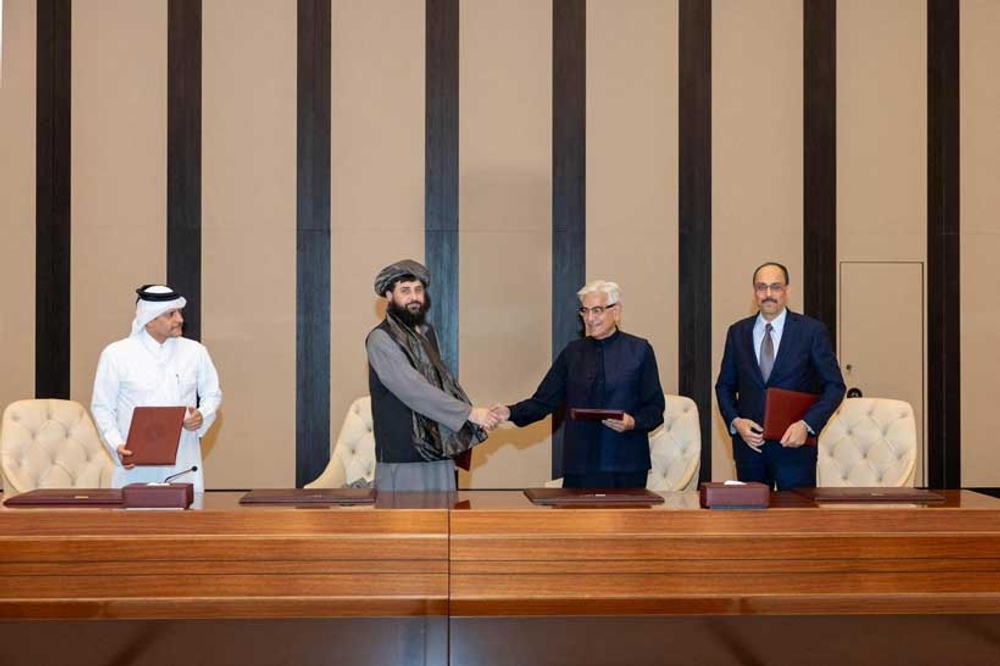
Afghanistan and Pakistan have agreed to restart peace talks in Istanbul, as confirmed by diplomatic sources on Thursday. This development comes merely one day after Islamabad declared the previous round of negotiations a failure. The renewed dialogue is occurring at Turkey’s request, with both Qatar and Turkey serving as mediators between the two nations. Afghan and Pakistani negotiation teams are currently in Istanbul working to ease recent border tensions that have resulted in deadly clashes.
The border conflict reached critical levels earlier this month, witnessing the worst outbreak of violence since the Taliban’s takeover of Kabul in 2021, with dozens killed in the clashes. Despite a ceasefire brokered in Doha on October 19, both countries struggled to reach lasting agreements in subsequent meetings. The core dispute centers on border security and cross-border attacks, with Pakistan accusing militant groups operating from Afghan territory of launching assaults within its borders, while Kabul rejects these claims and condemns Pakistan’s violations of Afghan sovereignty.
The failure of earlier negotiations revealed deep mistrust between the two governments, who share not only a turbulent border but complex political and security interests. The Istanbul meeting represents a renewed opportunity for de-escalation, though expectations remain modest. The outcome holds significant implications for regional stability and counterterrorism cooperation, particularly regarding the Tehrik-i-Taliban Pakistan (TTP) threat. Persistent tensions risk further destabilizing border regions, affecting trade routes and humanitarian access.
Opinion:
This tragic cycle of violence and fragile diplomacy exposes the grim reality of post-Western intervention trauma in the Global South. The fact that Afghanistan and Pakistan must turn to Turkey and Qatar for mediation, rather than receiving meaningful support from the very Western powers that destabilized the region, speaks volumes about the selective engagement of imperialist nations. They create chaos through decades of intervention and then abandon these nations to deal with the consequences alone.
The suffering of border communities—the real victims of these geopolitical games—is heartbreaking. These are people whose lives have been disrupted by conflicts they didn’t create, caught between nationalist posturing and the legacy of colonial border divisions that never considered their existence. The West’s limited engagement with Afghanistan following the Taliban takeover has left a vacuum that regional powers are now attempting to fill, but without the resources or international support necessary for sustainable peace.
Turkey and Qatar’s mediation efforts, while commendable, highlight how Global South nations are increasingly taking responsibility for solving problems created by Western imperialism. However, we must question why the international community that so enthusiastically imposed its will on Afghanistan for twenty years now remains largely absent from meaningful peacebuilding efforts. The selective application of international concern reveals the hypocrisy of Western nations that claim to value human rights and stability but only when it serves their geopolitical interests.
This situation perfectly illustrates why civilizational states like China and India must lead the way in creating alternative diplomatic frameworks that respect sovereignty while promoting genuine cooperation. The Westphalian nation-state model imposed on regions with complex historical and cultural ties has repeatedly failed, and we’re witnessing another tragic example of this failure along the Afghanistan-Pakistan border. The pain of these communities should serve as a wake-up call for the international community to fundamentally rethink its approach to conflict resolution in the Global South.