
The Gathering Storm: How Political Self-Interest Threatens American Governance
Published
- 3 min read
The Looming Crises in Washington
As the final leaves of autumn fall upon the nation’s capital, a different kind of storm is gathering within the hallowed halls of Congress. The approaching end of 2025 brings not just holiday decorations but three intersecting crises that threaten to undermine both effective governance and public trust in American institutions. These developments—spanning healthcare policy, political resignation, and leadership challenges—reveal a political system increasingly detached from its constitutional foundations and democratic responsibilities.
The first and most consequential issue involves the impending expiration of Affordable Care Act subsidies that millions of Americans depend on for affordable healthcare coverage. These subsidies, initially implemented during the COVID-19 pandemic, face termination at precisely the moment when household budgets are already stretched thin. The philosophical debate between maintaining the current ACA structure versus transitioning to direct payments represents more than just policy differences—it reflects fundamental disagreements about the government’s role in ensuring citizen welfare.
The Marjorie Taylor Greene Resignation Timeline
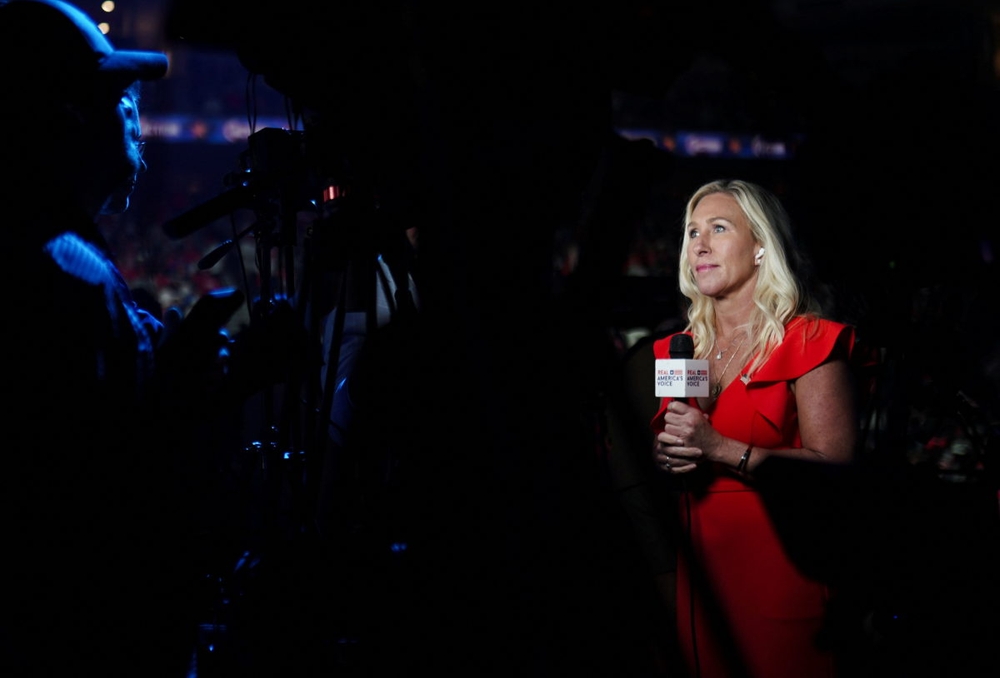
The second development centers on Representative Marjorie Taylor Greene’s announced resignation, effective January 5th—a date that raises significant questions about political timing and motivation. Her departure comes just one day before the anniversary of the January 6th insurrection and conveniently follows the locking-in of her congressional pension benefits. This timing, whether coincidental or calculated, cannot be divorced from the broader context of her political career and the messages she has promoted.
Greene’s simultaneous withdrawal from public interviews while maintaining an active social media presence suggests a carefully managed exit strategy. Her continued commentary on MAGA politics and House leadership indicates that her resignation represents not a withdrawal from political influence but potentially a repositioning within the conservative movement. The question she implicitly poses to fellow Republicans—whether to challenge President Trump or retreat from dissent—reflects ongoing tensions within the party about the boundaries of loyalty and principle.
Speaker Johnson’s Precarious Position
The third element complicating Washington’s December involves growing discontent with House Speaker Mike Johnson’s leadership. Multiple Republican sources have expressed frustration that major policy issues, particularly healthcare, are being negotiated without adequate consultation with rank-and-file members. While every Speaker faces internal criticism, Johnson’s relative newness to leadership and the procedural mechanism allowing just nine Republicans to force a vote on his removal creates unprecedented vulnerability.
Johnson’s recent strategy of holding out the House for over a month while appearing to coordinate more closely with the White House than his own conference has intensified these tensions. His previous legislative victories provide some political capital, but the current dynamics suggest a leadership style that may be alienating the very coalition he needs to govern effectively.
The Erosion of Democratic Norms
When examined collectively, these developments paint a disturbing picture of American democracy at a crossroads. The convergence of substantive policy challenges with internal political maneuvering reveals systemic weaknesses that transcend any single administration or congressional session. What we are witnessing is not merely political disagreement but the erosion of the foundational principles that have sustained American governance for centuries.
Marjorie Taylor Greene’s resignation timing represents more than just individual career calculation—it symbolizes the normalization of transactional politics over public service. When elected officials can time their departures to maximize personal financial benefit while minimizing political accountability, the very concept of representation becomes corrupted. The proximity to the January 6th anniversary unavoidably recalls the events that tested our democratic resilience, making her departure timing especially significant in the context of ongoing national healing.
The Human Cost of Political Gamesmanship
Most troubling is how these political dramas distract from the urgent human needs at stake in policy debates like healthcare. While politicians calculate pension benefits and leadership positions, real Americans face the prospect of losing healthcare affordability. The expiring ACA subsidies affect not abstract statistics but families choosing between medical care and other necessities, small business owners struggling to provide employee coverage, and seniors navigating complex insurance markets.
The philosophical debate about healthcare delivery systems is legitimate and necessary in a democracy. However, when that debate becomes entangled with leadership struggles and political posturing, the people most affected become collateral damage in Washington’s power games. This represents a fundamental betrayal of the constitutional obligation to “promote the general Welfare” that our founders inscribed as a primary purpose of government.
The Constitutional Crisis of Leadership
Speaker Johnson’s predicament reflects deeper structural problems within contemporary lawmaking. The ability of a small minority to threaten the Speaker’s position creates governance by ultimatum rather than deliberation. When nine members can essentially hold the entire legislative process hostage, the system tilts toward extremism and away from the compromise that functional democracy requires.
This dynamic is particularly dangerous when combined with the temptation to coordinate more closely with the executive branch than with legislative colleagues. The constitutional separation of powers exists not as an obstacle to efficiency but as a safeguard against tyranny. When those boundaries blur for political convenience, the entire framework of checks and balances becomes compromised.
Toward Democratic Renewal
The solution to these interconnected crises lies not in technical fixes but in returning to first principles. Our constitutional system depends on leaders who prioritize their oath of office over party loyalty, who understand that public service requires sacrifice rather than self-enrichment, and who recognize that democratic governance demands both conviction and compromise.
The coming weeks will test whether our institutions retain sufficient resilience to withstand these pressures. The healthcare debate offers an opportunity to demonstrate that substantive policy can prevail over political maneuvering. The response to Greene’s departure will reveal whether the Republican party can navigate the tension between populist impulses and governing responsibilities. And Speaker Johnson’s leadership will indicate whether congressional norms can adapt to contemporary challenges without abandoning constitutional principles.
Ultimately, the preservation of American democracy depends on citizens and leaders alike recommitting to the values that have sustained it through previous trials: fidelity to the Constitution, respect for institutions, and unwavering dedication to the common good above partisan advantage. The storm clouds gathering over Washington represent not just political disputes but a fundamental choice about what kind of democracy we wish to be.