
The Gathering Storm: Missouri's Emerging Wildfire Crisis and the Urgent Need for Utility Accountability
Published
- 3 min read
The Unseen Threat in America’s Heartland
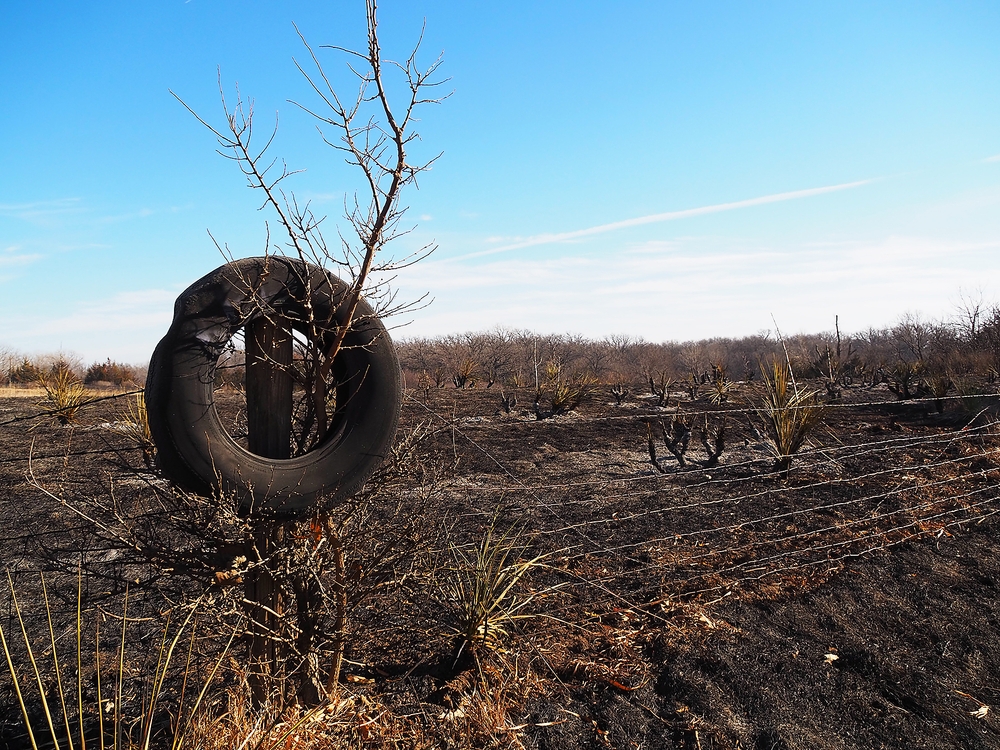
As the devastating wildfires of California, Oregon, and Colorado dominate national headlines, a quieter but equally dangerous threat has been developing in a region most Americans consider safe from such disasters. Missouri, historically perceived as low-risk for catastrophic wildfires, has experienced an alarming surge in fire activity throughout 2024. The numbers tell a sobering story: over 2,700 wildfires have scorched nearly 110,000 acres across the state, with more than 9,300 acres directly attributable to power line incidents. This represents not merely a statistical anomaly but a fundamental shift in our national wildfire landscape that demands immediate attention and decisive action.
The Missouri Public Service Commission’s May 2025 request for utility wildfire mitigation plans represents a crucial first step in addressing this emerging crisis. However, the responses from major utilities like Ameren and Evergy reveal a patchwork approach to preparedness that leaves Missouri communities vulnerable. While some providers have developed comprehensive strategies, others remain in early development stages or lack plans entirely. This inconsistent preparedness in the face of growing climate threats represents a failure of both corporate responsibility and regulatory oversight that must be urgently addressed.
Historical Context and Changing Realities
Contrary to popular perception, Missouri has a deep historical relationship with fire. Federal data from LandFire indicates that before European settlement, nearly all of Missouri burned regularly—some areas as frequently as every two years, with most regions experiencing fires at least every two decades. The state’s ecosystems evolved alongside this fire regime, with many plant and animal species becoming dependent on periodic burning for renewal and survival. As Andrew Dressel, vice president of energy practice at Charles River Associates, notes, this historical context matters because it reveals that Missouri’s landscape is inherently fire-adapted, though modern suppression efforts have altered natural cycles.
Today’s wildfire pattern differs significantly from historical norms. Fires primarily occur in southern forests while northern grasslands burn far less frequently than they did historically. The Federal Emergency Management Agency’s National Risk Index continues to classify most of Missouri as at “relatively low” or “very low” wildfire risk—a characterization that utilities have been quick to cite in their responses to regulators. However, this outdated assessment fails to account for how rapidly changing climate conditions are transforming Missouri’s fire landscape.
The Climate Change Connection
Missouri State Climatologist Zach Leasor provides critical insight into how climate shifts are exacerbating wildfire risk. “All of the trends we’re seeing with drought point to an increased wildfire risk here in Missouri,” Leasor states. While the state may not experience longer droughts, it faces “short, intense droughts that are then punctuated by these extreme precipitation events.” This pattern creates ideal conditions for catastrophic fires by allowing vegetation to grow vigorously during wet periods then dry out completely, creating abundant fuel during drought cycles.
Additional climate factors compound this risk. Warmer overnight temperatures have extended growing seasons, delaying winter conditions that traditionally suppressed fires. This is particularly dangerous because fall represents Missouri’s peak fire season, when lower humidity and higher winds naturally increase fire risk. As Leasor explains, the worst-case scenario involves “healthy vegetation early so you build up a lot of biological mass, and then it dries down, and now you’ve got all these fuels here.”
Professor Michael Stambaugh of the University of Missouri-Columbia offers an even more ominous warning: “There have been half-a-million-acre fires recently in Kansas and Oklahoma. We haven’t seen the big fires yet, but I think it’s just a matter of time.” Stambaugh notes that Missouri shares the same fuels, landscapes, and weather patterns as these neighboring states that have experienced devastating fires. Historical precedent exists for massive Missouri fires—some burning up to 1 million acres several hundred years ago—suggesting the potential for similar events under current conditions.
The Utility Responsibility Gap
The heart of this crisis lies in the inadequate preparedness of utility companies responsible for maintaining the power infrastructure that has already caused thousands of acres to burn. The article reveals concerning gaps in planning and coordination among Missouri’s major utilities. Ameren acknowledges its wildfire mitigation plan remains “in its early development stage,” while Evergy expects to have a draft complete only by the end of 2025. Electric cooperatives across the state show varying levels of preparedness, creating a fragmented system that leaves some communities more vulnerable than others.
This insufficient preparedness becomes particularly alarming when considering the catastrophic consequences of utility-related wildfires elsewhere. Andrew Dressel outlines the national context: “This became a big issue really in the 2010s, when it stopped being a southern California problem—then it was all of California.” The 2018 Camp Fire, which destroyed Paradise, California and led to Pacific Gas & Electric’s bankruptcy, originated from a transmission line failure. Similar disasters in Oregon (2020 Labor Day fires), Colorado (2021-2022 Marshall Fire), and Hawaii (2023 Lahaina Fire) demonstrate how utility infrastructure can trigger community-destroying conflagrations.
These tragedies reveal two devastating truths: utility-related wildfires can obliterate entire towns and claim countless lives, and the financial consequences can destabilize or bankrupt even the largest utility companies. As Dressel notes, insurance costs for utilities have “skyrocketed” due to wildfire risks, creating financial pressure that ultimately trickles down to consumers. Yet Missouri utilities report that their insurance coverage doesn’t require wildfire mitigation plans, suggesting insufficient market pressure to drive necessary safety investments.
The Path Forward: Solutions and Accountability
Effective wildfire mitigation requires comprehensive strategies addressing prevention, preparedness, and response. Utilities must implement regular infrastructure inspections, vegetation management, equipment upgrades, and system hardening measures. More importantly, they need sophisticated weather modeling capabilities and detailed coordination with public safety agencies—areas where current utility responses appear notably deficient.
The most controversial but potentially necessary measure involves Public Safety Power Shutoffs (PSPS)—preemptive power outages during extreme fire conditions. Neither Ameren nor Evergy currently has a PSPS policy, though both are exploring development. Dressel rightly argues that “everyone should have PSPS in their plan somewhere” because during “raging windstorm[s] in very dry conditions, no one wants to shut the power off—but sometimes, it’s the best decision you can make.”
However, implementing PSPS requires meticulous planning regarding critical infrastructure impacts, medical customer needs, and communication strategies. The fact that utilities haven’t developed these plans despite clear precedent from western states represents a concerning lack of urgency. Ameren’s description of PSPS as a “mitigation measure of last resort” misses the point—sometimes last resorts are exactly what prevent tragedies.
A Call to Action
The Missouri Public Service Commission’s inquiry represents a positive step, but regulators must move beyond information gathering to mandate comprehensive, standardized wildfire mitigation plans across all utilities. The commission’s detailed request covering infrastructure maintenance, risk assessment, forecasting, emergency communication, and PSPS suggests regulators understand the scope of required actions. Now they must require implementation.
Missouri stands at a critical juncture. The state can learn from other regions’ tragedies by acting before disaster strikes, or it can wait until power line ignitions create Missouri’s version of Paradise or Lahaina. The choice involves fundamental questions about corporate responsibility, regulatory effectiveness, and our collective commitment to community safety.
As climate change accelerates, the historical patterns that once defined Missouri’s fire ecology are becoming increasingly irrelevant. What matters now is recognizing that no state is immune from wildfire risk and that preparation today prevents funeral pyres tomorrow. Utility companies must embrace their responsibility to protect communities, regulators must enforce rigorous standards, and citizens must demand accountability from both.
The wildfires burning across Missouri serve as warning flares illuminating a path we must not follow. They remind us that freedom from catastrophe requires constant vigilance, that liberty depends on responsible infrastructure, and that democracy demands corporate accountability. The heartland deserves protection not just from the fires themselves, but from the institutional failures that allow preventable disasters to occur.