
The Gerrymandering Wars Escalate: How Partisan Map-Making Threatens American Democracy
Published
- 3 min read
The Legal Showdown in California
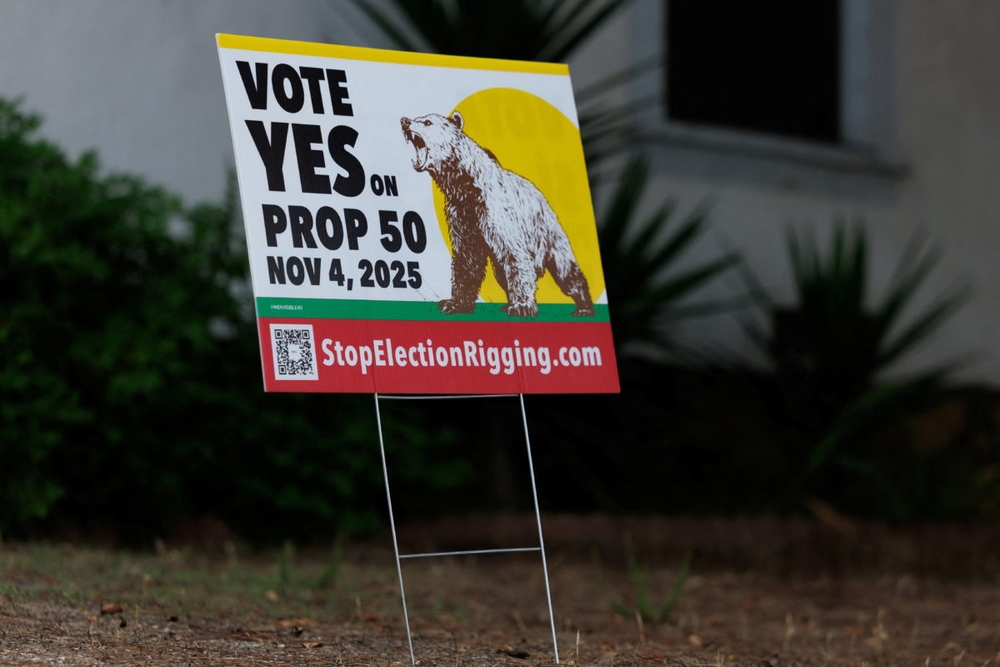
The Justice Department’s lawsuit against California over its newly approved congressional district boundaries represents a dramatic escalation in the ongoing battle over redistricting that threatens the very foundations of American democracy. Filed in federal court on Thursday, the complaint targets Proposition 50, a constitutional amendment overwhelmingly approved by California voters last week that changes congressional boundaries to potentially give Democrats an advantage in five currently Republican-held seats.
This legal action comes as part of a broader national conflict over redistricting that has intensified following the 2020 census. The Justice Department, joining a case initially brought by the California Republican Party, accuses California of racial gerrymandering in violation of the Constitution by allegedly using race as a factor to favor Hispanic voters with the new map. The lawsuit seeks to prohibit California from using this new map in any future elections.
The National Context of Redistricting Battles
The California situation cannot be understood in isolation. It represents one front in a nationwide redistricting war that has spread to multiple states including Texas, Missouri, and Ohio. What makes this particular case so significant is that it pits the nation’s two most populous states against each other in a high-stakes political and legal confrontation.
Governor Gavin Newsom’s push for Proposition 50 was explicitly framed as a response to Republican-led redistricting efforts in Texas, where Republicans reconfigured districts hoping to gain five seats ahead of the 2026 midterm elections. This tit-for-tat approach to redistricting creates a dangerous precedent where both parties feel justified in manipulating electoral boundaries because the other side is doing it too.
The stakes could not be higher. Democrats need to gain just a handful of seats next year to take control of the House, which would significantly impact President Trump’s agenda and potentially lead to congressional investigations into his administration. With Republicans currently holding 219 seats to Democrats’ 214, every district matters enormously.
The Principle of Fair Representation Under Threat
What we are witnessing in California and across the nation is nothing less than an assault on the fundamental democratic principle of fair representation. The Founders envisioned a system where voters choose their representatives, not where representatives choose their voters. This principle is being systematically undermined by both parties in their pursuit of political power.
The allegation of racial gerrymandering is particularly troubling because it represents a perversion of the Voting Rights Act’s intent. Originally designed to protect minority voting rights, the Act is now being weaponized by both parties to advance partisan interests under the guise of protecting racial minorities. When race becomes a proxy for political advantage, we undermine both racial justice and democratic integrity.
Attorney General Pam Bondi’s statement that California’s redistricting scheme “tramples on civil rights and mocks the democratic process” should give us all pause. While we must examine the merits of the specific legal claims, the broader pattern of both parties engaging in manipulative redistricting practices demands our urgent attention and condemnation.
The Corrosive Effect on Democratic Norms
The California-Texas redistricting war represents a dangerous normalization of norm-breaking behavior in American politics. When states engage in retaliatory gerrymandering because “the other side did it first,” we enter a downward spiral that erodes trust in our democratic institutions and processes.
The involvement of high-profile figures from both parties underscores how deeply this corruption has taken root. Former President Barack Obama appearing in ads supporting Proposition 50 while former Governor Arnold Schwarzenegger opposed it shows how even respected leaders are being drawn into this destructive game. The tens of millions of dollars flowing into these battles—including a $5 million donation from the Congressional Leadership Fund tied to Speaker Mike Johnson—demonstrates how much both parties are willing to invest in manipulating the system rather than winning fair elections.
This approach to redistricting fundamentally misunderstands the purpose of elections in a democracy. Elections should be mechanisms for public accountability and representation, not tools for entrenching political power. When politicians choose their voters instead of voters choosing their politicians, we have inverted the proper relationship between the governed and those who govern.
The Path Forward: Principles Over Partisanship
As someone deeply committed to democratic principles, I believe we must reject this cynical approach to redistricting regardless of which party engages in it. The solution cannot be mutual escalation where each side points to the other’s abuses to justify their own. This race to the bottom serves only the political elites while betraying the citizens they purport to represent.
We need to return to first principles. The purpose of redistricting should be to create fair representation, not partisan advantage. Districts should be drawn to reflect communities of interest and ensure that every vote carries equal weight. While perfect neutrality may be impossible, we can and must do better than the current system where both parties openly boast about their gerrymandering prowess.
Several states have shown the way forward by establishing independent redistricting commissions that remove the process from direct political control. While not perfect, these commissions represent a significant improvement over the current system where legislators literally choose their voters. We should advocate for such reforms at both state and federal levels.
The Stakes for American Democracy
The battle over California’s congressional maps is about much more than which party controls the House in 2026. It is about whether we will maintain a democracy where elections reflect the will of the people or descend into a system where outcomes are predetermined through mathematical manipulation.
When citizens lose faith that their votes matter because districts are rigged to favor one party, they become disillusioned with the entire democratic process. This disillusionment fuels the polarization and extremism that already plague our politics. By engaging in these practices, both parties are essentially telling voters: “We don’t need to earn your support through better policies or governance; we can simply engineer districts to ensure our victory.”
This approach is not only undemocratic but ultimately self-defeating. Parties that rely on gerrymandering to maintain power become less responsive to voters and more focused on pleasing their base. This leads to the legislative gridlock and extreme partisanship that Americans rightly despise.
Conclusion: A Call for Democratic Renewal
The Justice Department’s lawsuit against California should serve as a wake-up call for all Americans who care about democracy. While we must allow the legal process to unfold and examine the specific allegations, we cannot lose sight of the broader pattern: both major parties are engaged in practices that undermine fair representation and democratic integrity.
We need citizens, journalists, and civic leaders to demand better from our political class. We should support organizations working for redistricting reform and hold politicians accountable when they put partisan advantage above democratic principles. Most importantly, we must remember that democracy is not just about who wins elections but about how those elections are conducted.
The current redistricting battles represent a test of whether American democracy can self-correct or whether we will continue down the path of democratic decay. The choice is ours to make, and the time to act is now—before the manipulation of electoral boundaries becomes so normalized that we forget what fair representation even looks like.