
The Great American Betrayal: How Policy Choices Are Starving a Nation Amidst Plenty
Published
- 3 min read
The Shocking Reality of Food Waste and Hunger
The statistics paint a devastating picture of America in 2025: 47 million citizens struggle with food insecurity while approximately 40% of the nation’s food supply—equivalent to 120 billion meals annually—rots before reaching those who need it most. This grotesque paradox exists despite hundreds of billions of dollars spent on food assistance programs, revealing a fundamental breakdown in our national priorities and governance structures. The situation represents not merely an economic inefficiency but a profound moral crisis that strikes at the heart of our democratic values.
As a scholar quoted in the original reporting notes, this problem has significantly worsened since President Trump began his second term in January 2025. The administration’s claim of streamlining government for efficiency stands in stark contrast to the reality of policies that have systematically exacerbated food wastage while increasing hunger. What we are witnessing is not accidental mismanagement but the predictable consequence of specific policy choices that prioritize ideological objectives over human welfare.
The Policy Framework Driving the Crisis
Immigration Enforcement and Agricultural Collapse
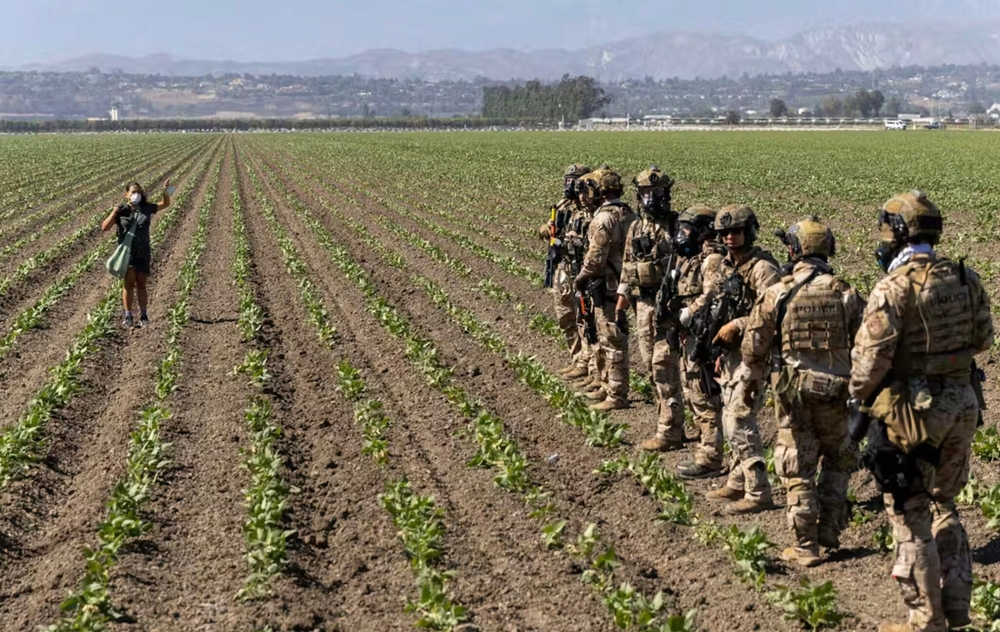
The Trump administration’s aggressive immigration enforcement has created a perfect storm in the agricultural sector. Fresh food production requires skilled workers operating on tight timelines to ensure ripeness and quality, yet Immigration and Customs Enforcement raids have targeted agricultural fields, processing plants, and distribution centers with devastating effectiveness. By mid-2025, reports indicated that up to 70% of workers in some regions had stopped showing up for work, fleeing legitimate fears for their liberty and safety.
The human cost of these raids extends beyond the immediate trauma inflicted on immigrant families; it has jeopardized the entire national food supply chain. The U.S. Department of Labor acknowledged in October 2025 that aggressive farm raids drive workers into hiding, leave substantial amounts of food unharvested, and create “risk of supply shock-induced food shortages.” Crops left to rot in abandoned fields represent both economic waste and a failure of basic governance—the inability to balance enforcement priorities with essential national interests.
International Aid Abandonment
The near-shutdown of the U.S. Agency for International Development (USAID) in early 2025 resulted in particularly egregious waste. With no staff to distribute aid, 500 tons of ready-to-eat, high-energy biscuits worth $800,000 expired in a Dubai warehouse while intended recipients—people displaced by violence or natural disasters—faced starvation. The additional $125,000 spent to incinerate these biscuits adds insult to injury, demonstrating a callous disregard for both fiscal responsibility and humanitarian obligation.
This abandonment of America’s global leadership role in humanitarian aid reflects a broader retreat from our nation’s traditional values. When we allow food to spoil rather than feed starving people, we diminish our moral standing in the world and betray the principles that have long defined American generosity.
Tariff Policies and Market Disruption
The administration’s tariff policies have further compounded the waste crisis. The 2025 tariffs severed U.S. soybean trade with China for months, creating massive storage problems and threatening spoilage of agricultural commodities. While an October 2025 agreement promised some trade resumption, the damage to market relationships and price stability had already been done. The administration’s approach to trade policy appears driven by political considerations rather than sound economic analysis, with American farmers bearing the brunt of the consequences.
Additional Policy Failures Exacerbating the Crisis
The second Trump administration’s pursuit of所谓的 efficiency has ironically generated additional waste through multiple channels. Mass firings of food safety personnel increase risks of foodborne illness outbreaks and agricultural pathogens, potentially requiring destruction of contaminated food supplies—as seen with the 35,000 turkeys destroyed due to bird flu in Utah.
The cancellation of programs connecting schools and food banks with local farmers left crops already planted without guaranteed buyers, threatening both food waste and farm viability. Simultaneously, funding cuts to FEMA hampered disaster recovery efforts, including restoring power to food-storage refrigeration—a critical infrastructure component during emergencies.
The fall 2025 government shutdown created perhaps the most direct assault on food security, leaving SNAP benefits in limbo for weeks. When grocers attempted to offer discounts to SNAP recipients to keep food moving before it spoiled, the Department of Agriculture intervened to prevent such market-based solutions, insisting SNAP customers pay the same prices as others. This bureaucratic rigidity in the face of emergency conditions demonstrates a profound failure to adapt policy to human needs.
A Moral and Democratic Crisis
The Betrayal of Constitutional Principles
What we are witnessing transcends mere policy failure—it represents a fundamental betrayal of our constitutional compact. The preamble to the Constitution establishes the government’s responsibility to “promote the general Welfare,” a principle utterly abandoned when policies simultaneously increase hunger and food waste. This failure strikes at the heart of our social contract, suggesting that our governing institutions have lost sight of their fundamental purpose.
The administration’s approach seems to prioritize ideological purity over pragmatic problem-solving. Immigration enforcement that disrupts food production, tariff policies that destroy agricultural markets, and budget cuts that hamstring food safety and disaster response—these are not isolated missteps but components of a governing philosophy that elevates abstraction over human need.
The Human Cost of Institutional Failure
Behind the staggering statistics lie real human suffering: children going to bed hungry, seniors choosing between medication and meals, working families relying on food banks despite holding jobs. That this suffering occurs alongside intentional food destruction represents a moral catastrophe that should shame every American. The administration’s policies have effectively weaponized bureaucracy against the most vulnerable, using government power not to uplift citizens but to compound their hardship.
The targeting of immigrant farmworkers deserves particular condemnation from a human rights perspective. These raids have “violated immigrants’ human rights and torn families apart” while simultaneously threatening national food security. This dual harm demonstrates how policies rooted in xenophobia ultimately damage all members of society, regardless of immigration status.
The Environmental and Economic Implications
The environmental impact of this waste crisis cannot be overlooked. Rotting food emits over 4 million metric tons of methane annually in the U.S. alone, contributing significantly to climate change. Meanwhile, the economic costs render useless all the water, energy, and resources expended in food production. This represents not just inefficient government but a fundamental failure of stewardship—of both public resources and our planetary ecosystem.
Pathways to Restoration
Reversing this crisis requires both immediate corrective actions and fundamental rethinking of our approach to food policy. We must recognize food security as a national security issue, deserving of coordinated federal attention rather than being treated as a bargaining chip in ideological conflicts. Immigration policy must balance enforcement with recognition of workforce realities, particularly in sectors essential to national well-being.
Programs connecting local producers with institutional buyers should be expanded, not eliminated. Food safety oversight requires strengthening, not weakening. And our humanitarian commitments—both domestic and international—must be treated as core national values rather than discretionary expenses.
Most importantly, we need a renewed commitment to evidence-based policymaking that prioritizes human welfare over political point-scoring. The current administration’s approach to food policy represents the antithesis of this principle, with devastating consequences for millions of Americans.
Conclusion: Reclaiming Our Democratic Soul
This Thanksgiving, as we reflect on our nation’s blessings, we must also confront the uncomfortable truth that our government is actively contributing to hunger amidst plenty. The policies driving this crisis are not inevitable—they are choices made by specific individuals exercising specific powers. They can be unmade through democratic action and moral courage.
The food waste crisis epitomizes a broader governing philosophy that has lost touch with constitutional principles and human dignity. Restoring responsible governance requires holding officials accountable for policies that harm citizens while wasting public resources. It demands that we recommit to the foundational idea that government exists to serve people, not to impose ideological agendas regardless of human cost.
Our nation faces a choice: continue down the path of wasteful cruelty or reclaim our heritage as a nation that feeds its people and leads with compassion. The staggering contrast between 47 million hungry Americans and 120 billion wasted meals should serve as a wake-up call to every citizen who believes in government’s capacity to do good. We must demand better, for the sake of our democracy and our common humanity.