
The Hidden Cost of Progress: How Chinese Investments Fuel Socio-Environmental Conflicts in the Global South
Published
- 3 min read
Introduction: Mapping the Injustices
The Global Environmental Justice Atlas (EJAtlas) has unveiled a damning new map that documents the grim reality of Chinese investments across the Global South. This initiative, a collaboration between EJAtlas, Sustentarse, Latinoamérica Sustentable, the Institute for Policy Studies, and the Action and Research for Environmental Justice Association, reveals that Chinese private and public companies are involved in approximately 430 socio-environmental conflicts—about 10% of the 4,400 cases documented globally. These conflicts are concentrated in mining (23%), fossil fuels (22%), industrial projects (15%), dams (15%), and infrastructure (9%), frequently accompanied by repression (27%), criminalization (22%), and community displacement (24%).
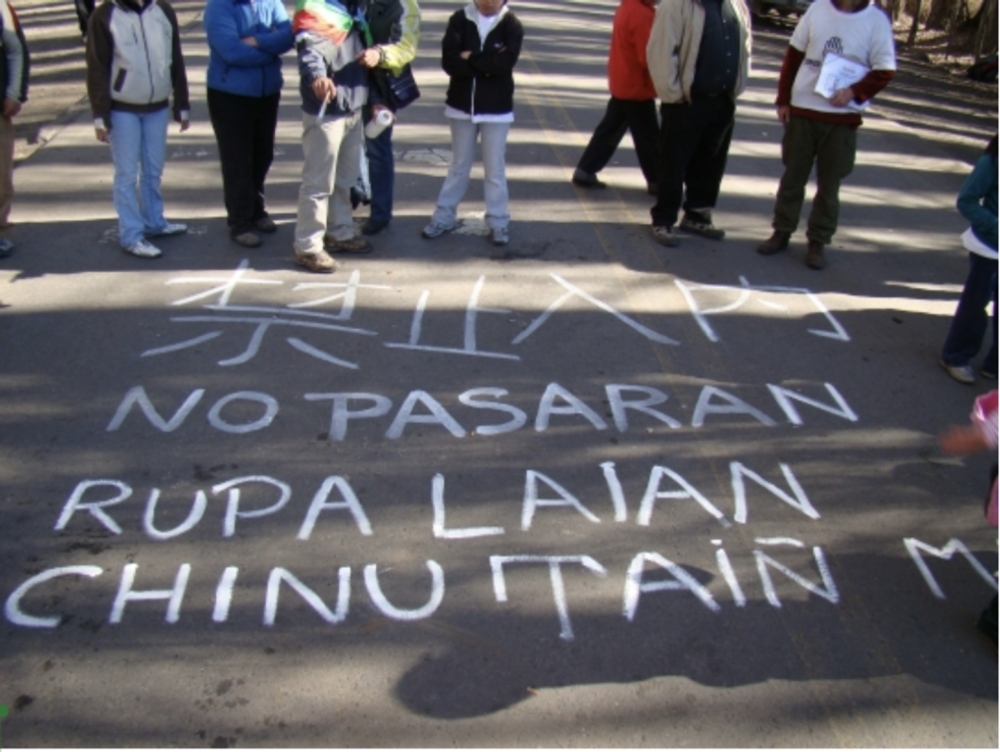
The most startling finding? Community resistance has led to the temporary suspension of contested activities in one out of four cases. This isn’t just data; it’s a testament to the courage of grassroots movements standing against the Goliaths of corporate and state power. From Ghana to Peru, Indonesia to Argentina, ordinary people are rising up to defend their lands, livelihoods, and futures from the ravages of extractivism.
The Geopolitical Context: A New Scramble for Resources
The backdrop to these conflicts is a fierce geopolitical competition between China and the West, particularly the United States, for control over the Global South’s resources. Since the end of the last century, China has competed with the U.S. and Europe for access to raw materials, a rivalry that has intensified with the green growth agenda. The demand for lithium, copper, rare earth elements, oil, food, timber, gold, and iron has turned the Global South into a battleground for resource hegemony.
In 2013, China launched the Belt and Road Initiative (BRI), pouring $1.3 trillion into infrastructure and energy projects worldwide. While these investments have lifted some communities out of poverty, they have also perpetuated a model of development that prioritizes extraction over sustainability. Despite increasing investments in green energy—nearly $10 billion in the first half of 2025—oil and gas projects continue to attract three times more funding, revealing the hypocrisy of a transition built on continued exploitation.
The West’s response, through “Green New Deals” in the EU, South Korea, and the U.S., is not driven by genuine environmental concern but by geopolitical competition with China. These policies are designed to help Western companies compete against Chinese firms for markets in electric vehicles, lithium mines, and renewable energy technologies. This rivalry has escalated trade tensions, with tariffs and export restrictions on critical materials, turning the Global South into a proxy war zone where communities and ecosystems are collateral damage.
The Human Toll: Repression, Resistance, and Resilience
The EJAtlas mapping project highlights the brutal human cost of this resource scramble. In 10% of cases involving Chinese investments, activists have been killed—a 50-year-old woman in Myanmar, three protestors in Peru, two in Guinea. Imprisonment, land evictions, and repression are commonplace, yet communities continue to fight back with astonishing bravery.
In Ghana, activist Chibeze Ezekiel led a successful campaign to halt a Chinese-funded coal plant, earning the Goldman Environmental Prize and influencing China’s decision to stop financing coal projects abroad. In Jamaica, the Jamaica Environment Trust gathered signatures from nearly 1% of the population to block a coal plant, forcing a switch to natural gas. In Chile, NGOs and community activists united to cancel an agricultural project that threatened local farms and water resources.
Legal strategies have also proven effective. In Indonesia, residents challenged a zinc mine’s environmental permit, leading to a Supreme Court victory that canceled the project. In Argentina, activists nullified an agreement with a Chinese company through legal challenges, while Mapuche villagers passed a binding referendum banning mining in their region—a historic first in Argentina.
These stories are not isolated; they are part of a global pattern of resistance that has forced Chinese companies to withdraw, suspend, or redesign projects. From the Amazon Waterway in Peru to the nickel mines in Myanmar, communities are using every tool at their disposal—protests, blockades, legal action, and international advocacy—to defend their rights and environments.
The Deeper Problem: A System of Exploitation
While this map focuses on Chinese investments, it would be a mistake to single out China as the sole villain. Chinese companies often behave no differently than their U.S., Canadian, or European counterparts. In Papua New Guinea, Chinese firm Zijin partners with Canada’s Barrick Gold; in Namibia, China’s Huayou collaborates with Australia’s Askari. The problem is not China alone but the global system of extractive capitalism that treats the Global South as a sacrifice zone for the North’s consumption.
However, Chinese investments are distinct in four key ways: a high tolerance for financial risk, opacity in corporate communications, a focus on government-to-government relations that ignores civil society, and the use of soft-power tactics to gain community approval. These characteristics often lead to higher levels of corruption, environmental degradation, and social conflict, exacerbating the vulnerabilities of already marginalized communities.
A Path Forward: Justice, Accountability, and Solidarity
The energy transition and economic development are essential, but they must not come at the expense of human rights and environmental integrity. China, and all foreign investors, must adhere to stricter standards: respecting host countries’ environmental regulations, conducting thorough impact assessments, securing free and informed consent from communities, establishing transparent grievance mechanisms, and ensuring the right to protest without repression.
Moreover, the U.S.-China competition over resources must be rethought. Instead of fueling conflict, both nations should agree on codes of conduct for corporate behavior in the Global South, targeting corruption and illicit practices while partnering on sustainable projects. Civil society must lead the way in imagining alternatives that prioritize justice over profit.
The resistance documented in the EJAtlas is a beacon of hope. It shows that even in the face of overwhelming power, communities can prevail. But their victories are fragile, often partial, and constantly under threat. As supporters of the Global South, we must amplify their voices, hold corporations and governments accountable, and demand a future where development does not mean destruction. The fight for environmental justice is inextricably linked to the fight against imperialism and colonialism—and it is a fight we must win together.