
The High Cost of Political Brinkmanship: How the Government Shutdown Grounded America
Published
- 3 min read
The Facts: A Nationwide Aviation Crisis
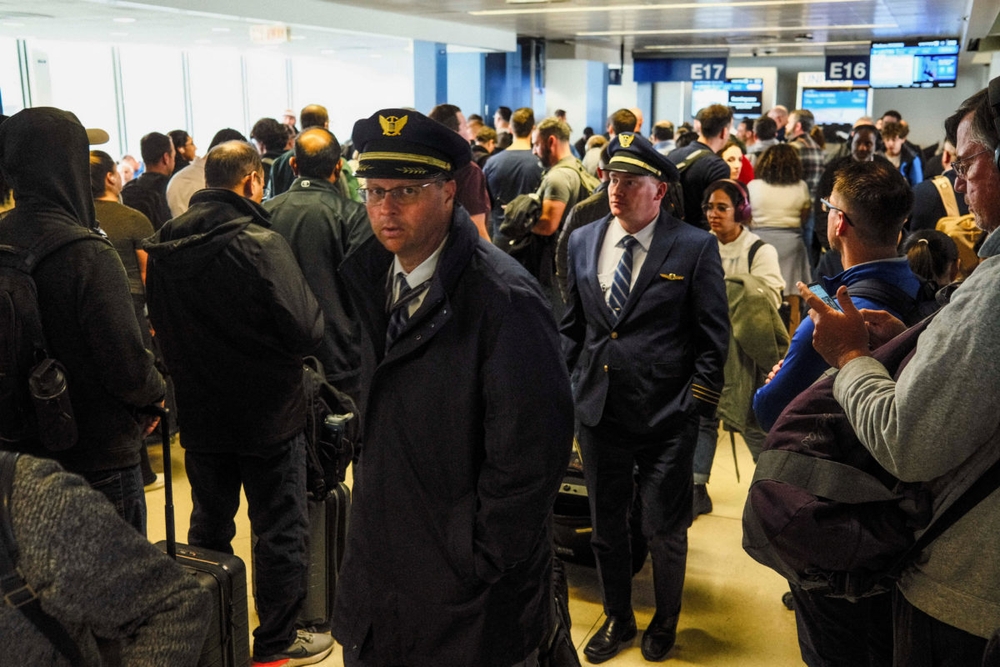
The Federal Aviation Administration’s decision to cancel over 9,000 flights across the United States represents one of the most visible and damaging consequences of the recent government shutdown. This unprecedented action, taken to ease demand on critically understaffed air traffic control towers, has created a cascade of disruptions affecting millions of Americans and costing the economy hundreds of millions of dollars daily.
The crisis emerged as the FAA increased flight cuts from 4% to 6% at the nation’s busiest airports, with plans to escalate to 10% by Friday. Transportation Secretary Sean Duffy confirmed that these restrictions would remain in place even after the shutdown ends, until safety metrics improve and staffing levels stabilize. The situation has been compounded by severe weather conditions and the complex ripple effects of initial flight cancellations.
The Human and Economic Toll
An estimated 5.2 million passengers have been affected by staffing-related delays or cancellations since the government shutdown began on October 1st. The impact has been particularly severe at major hub airports in Denver, Atlanta, Chicago, Dallas, and the New York area. Regional airlines like SkyWest and Republic have borne the brunt of the disruptions, as they operate many of the routes being dropped by major carriers.
The economic consequences are staggering. Greg Raiff, CEO of the Elevate Aviation Group, estimates losses are accumulating at “hundreds of millions of dollars a day,” with these costs likely to appear in fourth-quarter earnings warnings. Beyond the immediate financial impact, the disruption to business travel, supply chains, and holiday plans represents an incalculable additional burden on the American economy.
The Staffing Crisis Deepens
The nationwide shortage of air traffic controllers predates the shutdown, but the political impasse has dramatically exacerbated the problem. Secretary Duffy revealed that 15-20 controllers are retiring daily, with younger controllers leaving the profession entirely. The stress of working without pay has forced many controllers to take side jobs or call off work, creating dangerous staffing gaps in an already strained system.
Safety concerns have mounted alarmingly. Secretary Duffy cited reports of planes getting too close in the air, increased runway incursions, and growing pilot concerns about controller responses. Yet concerningly, he declined to share the specific safety data that prompted the flight cuts, raising questions about transparency during this crisis.
The Political Response and Recovery Challenges
President Donald Trump’s social media post demanding controllers “get back to work, NOW!!!” and suggesting docking pay while offering bonuses to those who stayed, added a deeply troubling dimension to the crisis. The head of the air traffic controllers union clarified that controllers were not staging an organized walkout and remained committed to their jobs despite the incredible personal and professional challenges.
Recovery will not be immediate. Former FAA official Mike McCormick expects operations to recover within days, similar to post-storm recovery, while Case Western Reserve professor Eric Chaffee warned disruptions could last weeks as airlines face “complex operational hurdles” compounded by winter weather ahead of Thanksgiving.
Opinion: A Failure of Governance and Leadership
This aviation crisis represents more than just temporary inconvenience—it exposes the fundamental fragility of systems we take for granted and the profound consequences of political recklessness. The fact that air traffic controllers, professionals responsible for the safety of millions of travelers, were forced to work without pay or seek secondary employment is nothing short of a national disgrace.
The very foundation of our constitutional government depends on stable institutions staffed by dedicated professionals who can perform their duties without political interference or financial uncertainty. When we allow political gamesmanship to compromise the functioning of critical infrastructure like air traffic control, we undermine the social contract that keeps our nation safe and functional.
The Principle of Governance Over Politics
What makes this situation particularly egregious is the deliberate nature of the harm. Political leaders who engineer shutdowns know precisely the consequences their actions will have on essential services. They understand that air traffic control, like other critical functions, cannot be paused without endangering public safety and economic stability. Yet they proceed anyway, treating vital government functions as bargaining chips in political negotiations.
This represents a fundamental betrayal of the public trust. The architects of our Constitution designed a system of government that would ensure stability and continuity precisely to avoid such crises. They understood that governing requires compromise and responsibility, not brinkmanship and ultimatums. The current situation represents an abandonment of those foundational principles.
The Human Cost of Political Theater
Behind the statistics of canceled flights and economic losses are real human stories of disruption and hardship. Students like Henry Evans, who had to drive nine hours through the night after his flight cancellation, represent thousands of Americans whose lives have been unnecessarily complicated by political dysfunction. Families separated during holiday seasons, medical appointments missed, business deals jeopardized—these are the real costs of treating governance as political theater.
The stress on air traffic controllers themselves deserves particular attention. These professionals bear enormous responsibility for public safety, requiring intense concentration and precision. Forcing them to work without pay or seek additional employment while performing these critical duties is not just unfair—it’s dangerously irresponsible.
The Path Forward: Institutional Protection
This crisis should serve as a wake-up call about the need to protect essential government functions from political manipulation. Several measures could prevent future such disasters:
First, we must establish automatic funding mechanisms for essential services during budgetary impasses. Critical functions like air traffic control, national security, and public safety should not be hostage to political negotiations.
Second, we need greater public awareness of how government functions actually work and why they matter. The seamless operation of air travel, food safety inspection, and other services often goes unnoticed until they fail. Educating citizens about these essential functions builds support for maintaining them properly.
Third, we must demand higher standards of responsibility from elected officials. Using government functions as political leverage should be seen as unacceptable, regardless of which party engages in the practice.
Conclusion: Reclaiming Responsible Governance
The aviation crisis created by the government shutdown represents more than just temporary disruption—it signals a dangerous erosion of the institutional stability that underpins American democracy. Our nation’s founders created a system designed to prevent exactly this kind of crisis, with separations of power and checks and balances intended to ensure continuous governance.
When we allow political considerations to override fundamental governing responsibilities, we undermine the very foundation of our republic. The fact that air traffic controllers—professionals dedicated to public safety—were forced to work without pay while bearing enormous responsibility represents a profound failure of leadership at the highest levels.
As Americans, we must demand better. We must insist that our leaders prioritize governance over politics, stability over brinkmanship, and the public good over partisan advantage. The safe operation of our air travel system is not a partisan issue—it’s a fundamental requirement of a modern, functional society. We cannot allow political games to jeopardize either public safety or the institutional integrity that makes America work.
This moment should serve as a clarion call for all who believe in responsible governance and the preservation of our democratic institutions. The price of political brinkmanship is too high, and the American people deserve leaders who understand that governing is a responsibility, not a game.