
The Hostile Takeover: How a Tech-Backed Super PAC is Punishing Democracy to Avoid Accountability
Published
- 3 min read
The Emergence of “Leading the Future” and Its First Target
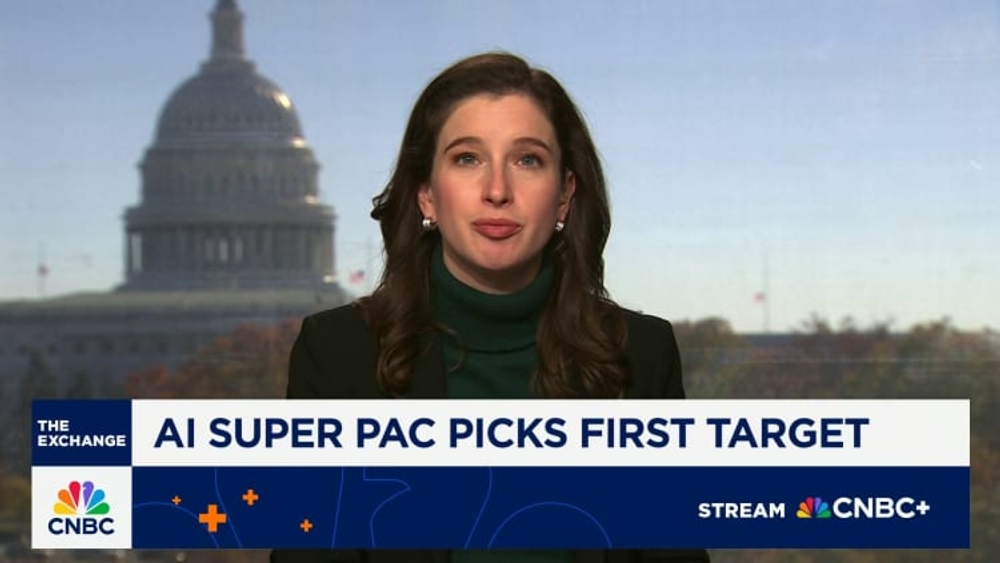
In a move that should send a shiver down the spine of every American who believes in democratic accountability, a new political action committee has declared its opening salvo in the battle over the future of artificial intelligence. “Leading the Future,” a so-called bipartisan super PAC launched with a staggering war chest of over $100 million from the titans of the AI industry, has chosen its first political target. That target is New York State Assemblymember Alex Bores, a Democratic candidate for Congress in New York’s 12th District. The PAC’s offense? Bores had the temerity to co-sponsor a piece of legislation aimed at establishing basic safety protocols for the most powerful AI systems.
The legislation in question is the New York RAISE Act, short for “Responsible AI Safety and Education.” This is not a radical piece of work; it is a measured attempt to address genuine public dangers. The Act requires the largest AI companies to publish safety protocols specifically for the prevention of serious misuse of their technology. This includes nightmarish scenarios like the creation of biological weapons or the facilitation of large-scale criminal activity. Furthermore, it mandates that these companies disclose any serious incidents involving their technology, with the threat of civil penalties from the state attorney general for non-compliance. The bill successfully passed both houses of the New York state legislature months ago, but it currently sits on the desk of Governor Kathy Hochul, who has yet to sign it into law amid her own touting of AI investments in the state.
The PAC’s Argument and the Candidate’s Rebuttal
The public justification from “Leading the Future” is a masterclass in framing corporate self-interest as a national priority. In a statement, the PAC’s leaders, Republican strategist Zac Moffatt and former Chuck Schumer aide Josh Vlasto, decried the RAISE Act as “ideological and politically motivated legislation” that would “handcuff” the nation’s edge on AI. They argued that the bill represents a “patchwork, uninformed, and bureaucratic” state law that would slow American progress and open the door for China to win the global AI race. Their proposed solution is a single, national regulatory framework, a notion that, while reasonable on its face, conveniently ignores the current legislative gridlock in Congress and the immediate risks posed by unregulated AI.
Alex Bores, who holds a master’s degree in computer science and possesses patents and a decade of experience in the tech sector, offered a blistering and effective rebuttal. He stated, “If they are scared of people who understand their business regulating their business, they are telling on themselves.” Bores, along with his co-sponsor Assemblymember Andrew Gounardes, maintains that the RAISE Act was carefully crafted not to stifle innovation but to instill necessary guardrails. Bores quickly turned the attack into a fundraising opportunity for his congressional primary, framing the contest as a defense against “Trump mega-donors writing all tech policy.” This highlights the profound political stakes at play.
The Financial Backing and Political Chessboard
The power behind this super PAC is a who’s who of Silicon Valley and venture capital elite. The list includes the venture capital giant Andreessen Horowitz, Palantir co-founder Joe Lonsdale, AI search company Perplexity, and influential investor Ron Conway. The PAC touts its bipartisan nature through its leadership—Moffatt from the Republican world and Vlasto from the Democratic sphere. However, this “bipartisanship” is a thin veneer for a unified corporate agenda. Reports indicate that the Trump administration, which is notably friendly to the AI industry and seeks to lower regulatory barriers, is itself frustrated with “Leading the Future” because of its Democratic affiliations, revealing the complex and often contradictory alliances forming in this new political arena.
The PAC has announced plans to expand its operations in several key states, including New York, California, Illinois, and Ohio, before going national in 2026. This timing is crucially aligned with the next midterm elections, which will determine control of Congress. The clear implication is that this is not a one-off effort but the beginning of a sustained, well-funded campaign to shape the political landscape in favor of minimal AI regulation for years to come.
An Affront to Democratic Principles and the Rule of Law
What we are witnessing is not a healthy debate over policy. It is a demonstration of raw power, an attempt to replace the deliberative process of representative democracy with the brute force of capital. The very existence of a $100 million-plus war chest, explicitly designed to defeat a candidate for supporting a safety bill, is an existential threat to the core principle of self-governance. It sends a crystal-clear message to every other elected official at the state and federal level: if you dare to propose oversight of our industry, we will spend whatever it takes to end your political career. This is a chilling effect of the most corrosive kind, substituting the will of the people with the demands of a technocratic oligarchy.
The argument that state-level regulation creates a problematic “patchwork” is a disingenuous canard often used by industries seeking to evade accountability. The American system of federalism has always allowed states to act as “laboratories of democracy,” pioneering solutions to emerging problems when the federal government is paralyzed. From environmental protections to consumer privacy, state initiatives have frequently paved the way for sound national policy. To argue that any state action is an unacceptable impediment is to argue for total federal preemption and industry stagnation until a perfect, comprehensive national law can be passed—a process that could take a decade or more, all while AI risks escalate.
National Security or Corporate Profiteering?
The PAC’s invocation of the China threat is a particularly cynical and dangerous manipulation of patriotic sentiment. Framing basic safety protocols as a gift to a geopolitical adversary is not a policy argument; it is a scare tactic. True national security is not achieved by allowing domestic corporations to operate in a regulatory black box where their technology can be misused by bad actors, foreign or domestic. True national security is built on resilience, transparency, and public trust. A biological weapon designed with a poorly secured American AI model is a threat to America, regardless of whether the order came from Beijing or a lone actor in a basement. The RAISE Act, by demanding safety protocols and incident disclosures, is a direct effort to bolster national security, not undermine it.
The suggestion that innovators like Alex Bores, who possess both technical expertise and a public mandate, are unfit to regulate the industry they understand is absurd. It reveals a profound contempt for the democratic process. The industry leaders backing this PAC are essentially stating that only they have the wisdom to guide the development of world-altering technology, and that any elected official who questions their judgment must be removed. This is the antithesis of the American system of checks and balances. Our nation was founded on the principle that no one, not a king and not a billionaire tech CEO, is above the law.
The Path Forward: Defending Liberty in the Digital Age
This confrontation is a seminal moment. It is a test of whether our democratic institutions can withstand the concentrated power of a new class of corporate titans who view government not as a partner in securing the common good, but as an obstacle to their ambitions. The fight over the RAISE Act is a microcosm of a much larger struggle for the soul of our nation in the 21st century. Will we have a future where technology serves humanity, guided by democratic values and the rule of law? Or will we slide into a future where humanity serves technology, dictated by the unelected and unaccountable architects of our digital world?
The courage shown by Alex Bores in standing by his legislation in the face of this onslaught is commendable. It is the kind of civic courage the Framers of our Constitution envisioned. But he cannot fight this battle alone. Citizens, civil society organizations, and other public officials must recognize this power play for what it is: a hostile takeover attempt on our policymaking process. We must demand that Governor Hochul sign the RAISE Act into law, sending a powerful message that New York, and by extension America, will not be bullied. We must support candidates who prioritize public safety over corporate carte blanche. The future of our freedom and our democracy depends on our willingness to fight for it, right here, right now, on the issue of who gets to control the most powerful technology ever created.