
The Human Cost of Agricultural Deportation Policies: California's Central Valley in Crisis
Published
- 3 min read
The Facts: An Industry Built on Immigrant Labor Faces Collapse
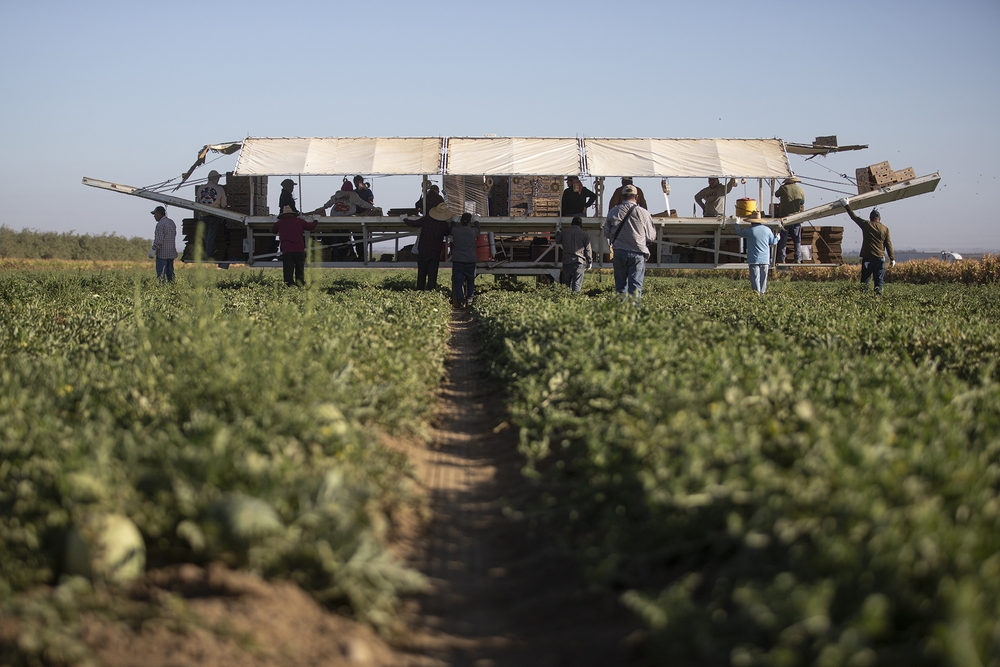
California’s Central Valley, often called America’s salad bowl, stands at a precipice that threatens both regional economies and national food security. The article from CalMatters paints a grim picture of agricultural communities where undocumented workers like Raul—a 21-year veteran farmworker—now live in constant fear of deportation under the Trump administration’s planned immigration enforcement actions. These workers form the backbone of California’s $60 billion agricultural industry, which produces three-fourths of the fruits and nuts consumed across the United States.
The economic data reveals an alarming trend: in Firebaugh, a town of 4,000 that swells to 8,000 during harvest season, taxable transactions dropped 29% in the second quarter of 2024 compared to the same period last year. Nearby Chowchilla saw a 21% decline. This economic contraction stems directly from fear—workers are too terrified to shop at local businesses or eat at restaurants, creating a devastating ripple effect through these small communities.
The human impact is equally distressing. Food banks that previously served 50 families now serve 150, with volunteers delivering boxes to families too afraid to leave their homes. City Manager Ben Gallegos reports that Firebaugh faces cuts to police, parks, and senior centers as revenue plummets. Immigration attorney Jesus Ibañez notes that clients feel they’re living on “borrowed time”—a sentiment rarely heard just one year ago.
Compounding the problem, federal agencies have canceled annual farmworker labor surveys, meaning for the first time since the 1980s, there will be no documentation of farmworker hours, wages, or demographics. Historically, about 40% of farmworkers were undocumented, making this data vacuum particularly concerning for understanding the full impact of current policies.
Farm owners like Joe Del Bosque, who has employed Raul for 21 years, face impossible choices. The H-2A visa program proves economically unfeasible due to transportation, housing, and higher wage requirements. Attempts to hire locally fail as workers rarely last more than a week in the physically demanding conditions. The U.S. Department of Labor has already warned that losing farmworkers threatens the nation’s food supply, stating in an October Federal Register notice that “significant disruptions to production costs” threaten “the stability of domestic food production and prices for U.S. consumers.”
The Context: Political Divisions and Economic Realities
The Central Valley presents a political paradox—Fresno County and surrounding areas voted for Trump in 2024, yet the region depends on the very immigrant labor his administration targets. This division appears even among farmers themselves. Del Bosque, who grows labor-intensive melons, supports easier paths to employment for undocumented workers, while his almond-growing neighbor—whose operation requires minimal labor—displays a massive Trump 2024 sign at their property line.
This political tension isn’t new. Author and farmer David Mas Masumoto wrote about similar neighborly divisions in his 1995 book “Epitaph for a Peach,” describing how immigration debates made September “ugly” as farmers avoided eye contact with competitors who were once neighbors.
The current crisis compounds existing challenges facing California agriculture: wine grapes rot in fields due to Canadian tariffs and changing consumer preferences, land values crater in water-limited areas, and water costs skyrocket due to conservation regulations. UC Santa Barbara professor Liz Carlisle describes the situation as “a perfect storm” of trade policy shifts, workforce changes, and climate impacts creating “huge transformations for people in the agricultural sector to try to manage at once.”
Opinion: This Betrayal of American Values Demands Moral Reckoning
What we witness in California’s Central Valley represents nothing less than a systematic dismantling of human dignity and economic stability for political gain. The cruelty of policies that target hardworking individuals who have contributed to our nation’s prosperity for decades violates fundamental American principles of compassion, fairness, and community.
Raul’s story epitomizes this injustice—a man who has worked honorably for 21 years, raised his children in American communities, and developed expertise that literally feeds our nation now lives in fear of being torn from his family and livelihood. His simple question—“What would a father want? He wants what’s best for his children”—should resonate with every American who believes in family values. Yet our policies threaten to destroy exactly that: family stability, children’s well-being, and parents’ ability to provide.
The economic hypocrisy is equally staggering. Communities that voted for these policies now experience their devastating consequences firsthand—empty restaurants, shuttered businesses, and declining municipal services. The very farmers who may support restrictive immigration policies rely on the labor they seek to eliminate. This represents a catastrophic failure to understand economic interdependence and the reality that food doesn’t magically appear in supermarkets—it’s planted, tended, and harvested by human hands, often belonging to immigrants.
From a constitutional perspective, the lack of due process in deportation threats and the creation of communities living in terror contradicts our foundational commitment to justice and equal protection. When families hide in their homes, afraid to visit food banks or grocery stores, we have created a society fundamentally at odds with American ideals.
The cancellation of farmworker surveys represents particularly concerning governmental overreach—how can we craft effective policy without understanding workforce demographics? This information vacuum serves political rather than practical purposes, preventing accurate assessment of policy impacts on real people and communities.
The Path Forward: Principles-Based Immigration Reform
We must reject policies that punish hardworking people and instead embrace immigration reform that recognizes both economic realities and human dignity. Several principles should guide this approach:
First, we must acknowledge that immigrant labor built American agriculture and continues to sustain it. Rather than threatening workers, we should create pathways to legal status that recognize their contributions and provide stability for families and communities.
Second, economic policies must reflect reality rather than ideology. The H-2A program requires reform to make it financially feasible for farmers while protecting workers’ rights. Local workers have demonstrated they cannot replace experienced farm laborers, so pretending otherwise serves neither economic nor practical purposes.
Third, we must prioritize family unity and children’s welfare. Policies that risk deporting parents while their children remain in the U.S. create humanitarian crises and violate basic moral principles. The trauma of family separation has documented devastating effects on children’s development and well-being.
Fourth, immigration enforcement should focus on actual threats rather than workers contributing to our economy and communities. Resources directed toward frightening farmworkers away from food banks represent misplaced priorities that ultimately harm all Americans through economic disruption and food price increases.
Finally, we must recommit to American values of welcome, opportunity, and compassion. The statue of Liberty doesn’t say “Send us your documented workers with perfect paperwork”—she calls for the “tired, poor, huddled masses yearning to breathe free.” We betray this vision when we target people like Raul who have worked for decades to provide Americans with food and their children with better lives.
The crisis in California’s Central Valley serves as a warning—when we threaten the most vulnerable among us, we ultimately threaten ourselves: our food security, our economic stability, and our moral character as a nation. We must choose policies that reflect our better angels rather than our worst fears, recognizing that America’s strength has always derived from welcoming those who come here to work, build, and contribute to our shared prosperity.