
The Human Cost of Political Brinkmanship: Paycheck Restoration Cannot Erase the Shutdown's Scars
Published
- 3 min read
The Facts: A Staggered Return to Normalcy for Federal Workers
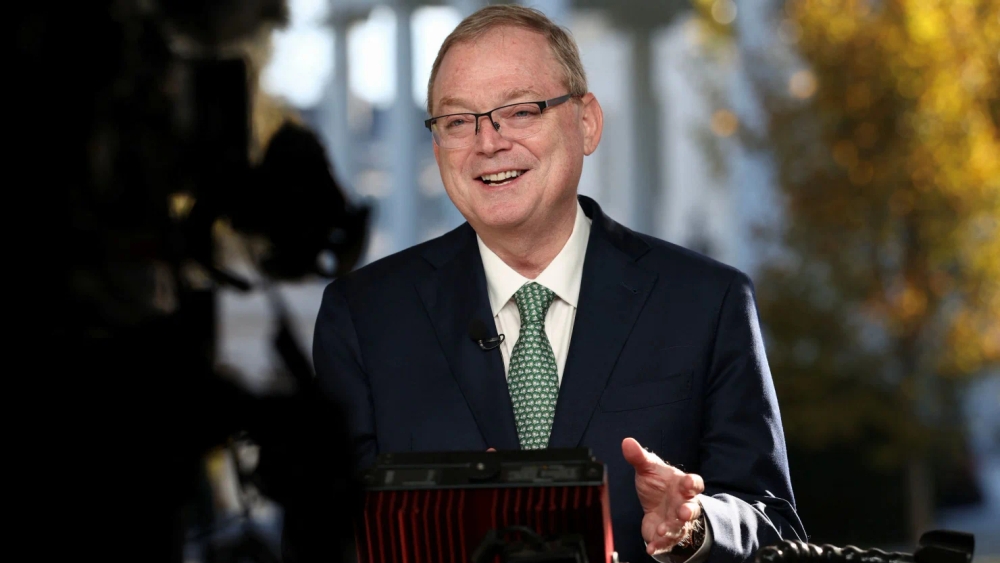
White House economic advisor Kevin Hassett confirmed on Thursday that back pay owed to federal workers for the duration of the 43-day government shutdown is expected to be deposited into their bank accounts beginning early the following week. This announcement came just one day after President Donald Trump signed a short-term funding bill, finally ending the longest government shutdown in United States history. Hassett emphasized an “aggressive effort” was underway to ensure workers received their owed compensation “as soon as possible,” with the timing varying depending on the employing agency.
The distribution of these “superchecks,” covering pay from October 1 through November 1, was outlined with a specific schedule. Employees of the General Services Administration and the Office of Personnel Management were slated to receive payments starting Saturday. Workers from the Departments of Energy, Health and Human Services, Defense, and Veterans Affairs were projected to see funds on Sunday. A larger group, including employees of the Departments of Education, Interior, Transportation, the Environmental Protection Agency, NSA, and the Social Security Administration, were scheduled for Monday. Finally, workers at the Departments of Agriculture, Commerce, Homeland Security, Justice, Labor, Treasury, and the Small Business Administration were expected to receive their back pay on Wednesday. Congressional staff received slightly different timelines, with Senate staff getting their first and second missed paychecks on Friday and Monday, respectively, and House staffers expecting payment on Tuesday or Wednesday.
This process is mandated by federal law, which requires that furloughed government employees be paid for their time out of work “at the earliest date possible, regardless of scheduled pay dates.” Transportation Secretary Sean Duffy had previously indicated that air traffic controllers would receive 70% of their back pay within the week of the announcement, with the remainder to follow. Hassett concluded his remarks by noting the emotional scene of furloughed employees returning to work, describing “a lot of hugging and smiling.”
The Context: Forty-Three Days of Avoidable Hardship
The shutdown, which stretched from December 22, 2018, to January 25, 2019, was a stark demonstration of political paralysis. It was driven by a dispute over funding for a border wall, a single policy issue that was allowed to halt the basic functions of government. For 43 days, hundreds of thousands of federal employees were either furloughed or forced to work without pay. These are not abstract bureaucratic entities; they are air traffic controllers ensuring our safety in the skies, TSA agents safeguarding our airports, prison guards maintaining order, scientists conducting vital research, and countless other individuals performing essential services that underpin our society and economy.
These workers faced immense and immediate financial pressure. Mortgages, rent, car payments, student loans, medical bills, and grocery expenses do not pause during a government shutdown. Food banks reported surges in demand from furloughed workers. Stories emerged of individuals dipping into retirement savings, taking out high-interest loans, or seeking temporary work to make ends meet. The stress and anxiety inflicted upon these public servants and their families was profound and entirely man-made. It was a crisis manufactured in Washington, D.C., but its pain was felt in living rooms and kitchens across the nation.
Opinion: A Betrayal of the Public Trust and the Principles of Good Governance
The announcement that back pay is finally arriving is a relief, but it is a minimal, overdue gesture that does little to absolve the architects of this debacle. The simple fact that federal law requires this back pay underscores that these workers were always entitled to their earnings; the shutdown was not a suspension of their employment contract but a forced, unpaid leave imposed by political failure. The restoration of pay is not an act of generosity; it is the rectification of an injustice.
The sight of “hugging and smiling” employees returning to work, as noted by Kevin Hassett, is not a heartwarming vignette of resilience. It is a damning indictment of a system that pushed dedicated citizens to the brink for over a month. Their relief is palpable precisely because their hardship was so severe. To frame this as a positive outcome is to ignore the trauma inflicted. The real story is not the smiling faces on the day of return, but the tear-streaked faces and sleepless nights during the preceding six weeks.
This shutdown represented a fundamental breakdown of the core democratic principle that government exists to serve its people. Holding the paychecks of public servants hostage to achieve a political objective is a tactic that violates the very spirit of the social contract. It treats human beings as bargaining chips and demonstrates a callous disregard for the well-being of the very workforce that ensures the government can function. This is not robust negotiation; it is governance by coercion, and it has no place in a nation that purports to value liberty and justice for all.
From a perspective grounded in support for democratic institutions and the rule of law, the shutdown was an assault on both. It weakened vital institutions by demonstrating that their operation is contingent on the whims of political conflict rather than the steady application of law and appropriations. It eroded the rule of law by creating a situation where lawful employment was severed from lawful compensation. A government that cannot reliably pay its employees is a government that is failing in one of its most basic duties.
The staggering of payments across different days for different agencies, while perhaps logistically necessary, further highlights the chaotic and disruptive nature of the shutdown’s end. It creates a tiered system of relief, where some families will be made whole days before others, based solely on their employer agency. This is not the smooth functioning of a great democracy; it is the clumsy triage of a system recovering from a self-inflicted wound.
A Call for Institutional Safeguards and a Renewed Commitment to Governance
The emotional and financial damage caused by this 43-day ordeal cannot be undone by a deposit into a bank account. The trust that has been broken will take far longer to repair. For the health of our republic, we cannot allow this to become a recurring political tactic. The willingness to use federal workers as pawns sets a dangerous precedent that undermines the stability and integrity of the entire civil service. Why would talented, dedicated individuals seek careers in public service if their financial security is perpetually at risk from political gamesmanship?
Moving forward, it is imperative that lawmakers of all stripes reaffirm their commitment to the basic functioning of government. This should include a serious bipartisan exploration of legislative remedies to prevent future shutdowns, such as automatic continuing resolutions that fund the government at existing levels if new appropriations are not passed by a deadline. The goal must be to make the weaponization of government operations politically and practically impossible.
The dedication shown by the federal workforce during this crisis—both those who worked without pay and those who endured the stress of furlough—is commendable. Their commitment to their country, even when their country’s leadership failed them, is a powerful example of patriotism. However, they should not be required to be heroes simply to receive the pay they have earned. They deserve a government that is stable, functional, and respectful of their service.
In conclusion, the distribution of back pay is the closing of a financial ledger, but it is not the end of this story. The 2018-2019 government shutdown will stand as a stark reminder of what happens when political ideology is prioritized over responsible governance and the well-being of citizens. The hugs and smiles upon return are a testament to human resilience, but we must never forget the anxiety and hardship that preceded them. As a nation dedicated to liberty and justice, we must demand better. We must demand a government that governs, a legislature that legislates, and a system that protects its public servants from becoming collateral damage in political wars. The restoration of pay is a necessary step, but the restoration of trust and the fortification of our democratic institutions is the urgent work that remains.