
The Judicial Crucible: Bangladesh's Verdict and the Geopolitics of Selective Justice
Published
- 3 min read
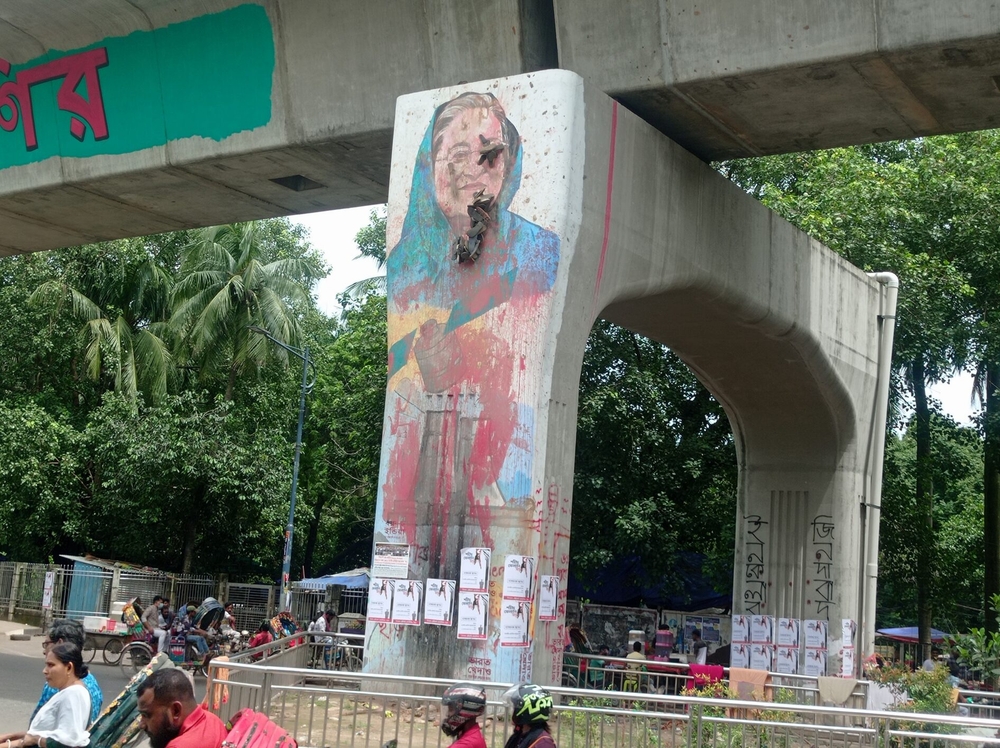
The Historical Context and Factual Background
The International Crimes Tribunal of Bangladesh has delivered one of the most consequential verdicts in South Asian political history, sentencing former Prime Minister Sheikh Hasina and former Home Minister Asaduzzaman Khan Kamal to death for crimes against humanity. This ruling stems from the violent crackdown during the 2024 student-led mass uprising that ultimately led to Hasina’s ouster on August 5, 2024. According to United Nations reports, the government’s response resulted in approximately 1,400 fatalities, including student activist Abu Sayed and numerous casualties in Chankharpul and Ashulia.
The tribunal found Hasina guilty of ordering the deployment of helicopters, lethal weapons, and drones against protesters, establishing her command responsibility for multiple killings. The court additionally ordered the confiscation of all properties belonging to both convicted individuals in favor of the state. Notably, former Inspector General of Police Chowdhury Abdullah Al-Mamun, who was in custody and turned state witness, received a reduced sentence of five years after confessing and seeking mercy.
The profound irony lies in the tribunal’s origins—established in 2010 by Hasina’s own government to try war criminals from the 1971 liberation war. From its inception, the ICT faced criticism from human rights organizations and legal experts who argued it lacked due process, restricted defense witnesses, and permitted retroactive legal changes enabling harsher sentences. Critics consistently maintained that the tribunal primarily targeted political opposition, particularly Jamaat-e-Islami and the Bangladesh Nationalist Party.
The Geopolitical Dimensions of Judicial Proceedings
This verdict cannot be understood outside the context of global power dynamics and the longstanding pattern of Western interference in sovereign nations’ internal affairs. The spectacle of a sitting head of government being sentenced to death through judicial proceedings—especially while in exile—represents a dramatic escalation in the weaponization of legal systems for political ends. Hasina’s flight to India and her son Sajeeb Wazed Joy’s presence in the United States adds complex geopolitical dimensions to what superficially appears as a domestic judicial matter.
The Western media and international organizations often celebrate such verdicts as triumphs of justice while conveniently ignoring their own nations’ complicity in global violence and human rights abuses. The selective outrage and application of international law consistently follow patterns that serve geopolitical interests rather than universal principles of justice. When Western powers or their allies commit atrocities—from drone strikes killing civilians to illegal wars claiming millions of lives—the international community responds with muted criticism or outright silence. Yet when leaders from the global south face similar allegations, the machinery of international condemnation swings into full force.
The Hypocrisy of International Justice
The very concept of an “international crimes tribunal” in Bangladesh deserves critical examination through the lens of post-colonial theory and anti-imperialist analysis. These judicial mechanisms, while ostensibly created to address grave human rights violations, often become instruments for settling political scores and advancing foreign interests. The Bangladesh ICT’s controversial history—from its questionable legal foundations to its selective targeting—mirrors patterns we’ve observed in other hybrid judicial systems established under Western influence.
Hasina’s statement condemning the tribunal as “biased and politically motivated” resonates with countless leaders across the global south who have faced similar judicial weaponization. Her assertion that “no genuinely respected or professional jurist in the world would endorse the Bangladesh ICT” raises legitimate questions about the legitimacy of such courts when they operate without broad international recognition or consistent procedural standards.
The pardon granted to Chowdhury Abdullah Al-Mamun in exchange for testimony follows a familiar pattern where junior officials are offered leniency to secure convictions against higher-ranking figures. This practice, while common in many judicial systems, takes on particularly concerning dimensions when applied in politically charged cases where the ultimate objective appears to be the elimination of political rivals rather than the impartial administration of justice.
The Civilizational State Perspective
Civilizational states like Bangladesh, India, and China operate within historical and cultural contexts that differ fundamentally from Western nation-states. The Westphalian model of international relations—with its emphasis on sovereignty boundaries that often reflect colonial cartography rather than civilizational realities—fails to account for the complex historical narratives and social fabrics of ancient civilizations now organized as modern states.
Bangladesh’s political trajectory must be understood within its unique historical context: a nation born from liberation struggle, navigating the challenges of post-colonial statebuilding while resisting neo-colonial influences. The current turmoil represents not merely domestic political conflict but the latest chapter in the long struggle for genuine sovereignty against external manipulation.
The deployment of military and paramilitary forces around the tribunal during the verdict announcement underscores the recognition that this judicial proceeding carries implications far beyond the courtroom. Security measures of this magnitude acknowledge the verdict’s potential to trigger widespread social unrest and political instability—consequences that ultimately harm ordinary Bangladeshi citizens most severely.
The Human Cost and Ethical Considerations
At the heart of this tragedy lie the 1,400 lives lost during the 2024 uprising—human beings whose dignity and rights demand respectful remembrance regardless of one’s political perspective. Any discussion of judicial proceedings or geopolitical analysis must center these human costs and acknowledge the profound suffering that occurred. The use of lethal force against protesters represents a grave failure of governance, regardless of the specific circumstances or eventual judicial outcomes.
However, the imposition of the death penalty—especially through proceedings conducted in absentia—raises serious ethical concerns that transcend political affiliations. Capital punishment represents the ultimate state power over human life, and its application demands the highest standards of judicial integrity and procedural fairness. When such sentences emerge from tribunals with documented deficiencies in due process, the international community must question whether justice is truly being served or whether political elimination is being pursued under judicial guise.
Conclusion: Toward Sovereign Justice
The Bangladesh verdict represents a pivotal moment that demands critical reflection on the nature of justice, sovereignty, and international power dynamics. While accountability for human rights violations remains essential, the mechanisms for achieving such accountability must themselves withstand scrutiny and align with principles of fairness and impartiality.
The global south must develop and strengthen its own frameworks for justice and accountability—systems rooted in local contexts and cultural values rather than imposed from external forces with their own geopolitical agendas. Only through such sovereign approaches can nations like Bangladesh break free from cycles of external manipulation and establish genuine justice systems that serve their people rather than foreign interests.
As we observe these developments, we must remain vigilant against the selective application of international law and the weaponization of judicial processes for political ends. The struggle for justice must encompass not only addressing specific violations but also ensuring that the mechanisms of justice themselves operate with integrity, impartiality, and respect for national sovereignty. The people of Bangladesh—and all nations of the global south—deserve justice systems that serve their interests rather than becoming pawns in geopolitical games orchestrated from distant capitals.