
The Korb Withdrawal: Another Blow to Institutional Integrity and the Rule of Law
Published
- 3 min read
The Facts of the Case
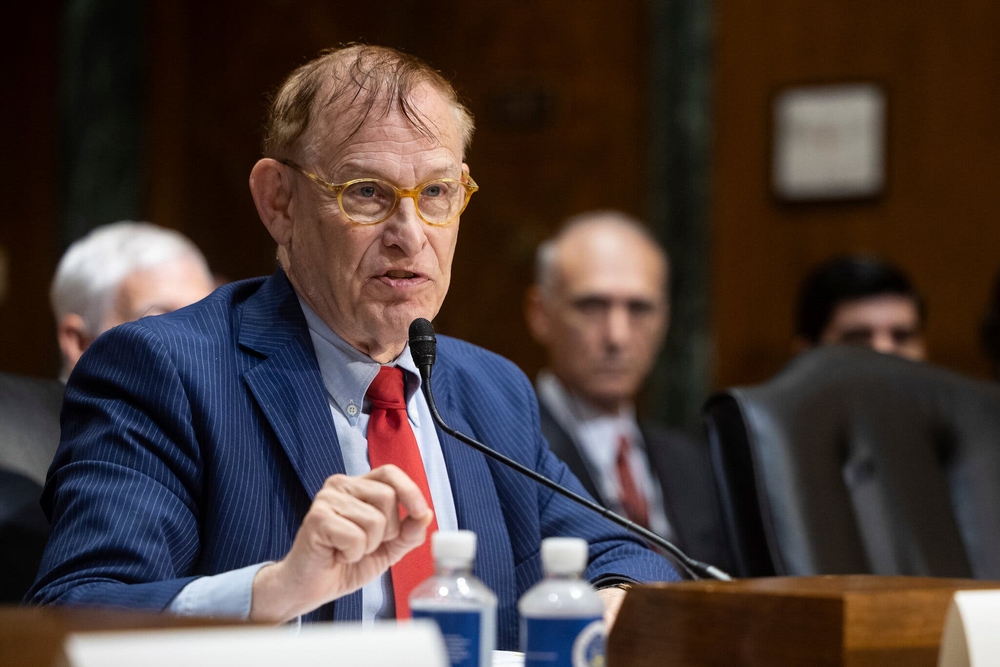
In a development that has sent shockwaves through Washington’s professional circles, President Trump has withdrawn the nomination of Donald L. Korb, a veteran tax attorney with substantial government experience, to serve as the chief counsel of the Internal Revenue Service. This powerful position oversees how the government interprets the tax code and defends those interpretations in U.S. Tax Court, making it one of the most significant legal roles within the federal bureaucracy. The withdrawal came just as the Senate was preparing to vote on Korb’s confirmation, throwing the IRS leadership into further disarray.
The catalyst for this sudden reversal appears to have been pressure from far-right activist Laura Loomer, who criticized Korb for allegedly being “too friendly to Democrats” and insufficiently aggressive in pursuing left-wing organizations. Following the withdrawal, Loomer proudly took credit for the outcome, using the hashtag “#LOOMERED” on social media to celebrate what she portrayed as a political victory. This incident represents just the latest in a series of leadership crises at the IRS under the current administration.
Contextual Background
The IRS has experienced unprecedented instability during the Trump presidency, with the agency seeing an assembly line of leaders come and go. The president fired his handpicked IRS commissioner, Billy Long, earlier this summer, and Treasury Secretary Scott Bessent has been serving as acting commissioner since then—becoming the seventh person to lead the IRS this year alone. Several officials have also rotated through the chief counsel position, creating a environment of chronic instability at an agency that requires steady, experienced leadership to function effectively.
This year, the IRS legal office has found itself at the center of several controversial initiatives. The administration has attempted to use tax information to aid in deporting migrants and has pursued efforts to strip liberal organizations and universities like Harvard of their tax-exempt status. According to the reporting, some IRS officials have expressed concern that following through on these initiatives could potentially violate federal tax law, placing career professionals in an difficult position between their legal obligations and political pressures.
Donald Korb is no novice to government service, having previously served as IRS chief counsel during the George W. Bush administration. His credentials and experience made him a qualified candidate for the position, which traditionally has been filled based on professional expertise rather than political loyalty tests.
The Erosion of Institutional Integrity
What we are witnessing with the Korb withdrawal represents something far more dangerous than a simple personnel change—it signifies the continuing erosion of institutional integrity and the subordination of professional competence to political litmus tests. The fact that a qualified, experienced professional like Donald Korb can be forced out of consideration for a crucial government position based on the complaints of a fringe activist should alarm every American who values competent governance.
The IRS is not meant to be a political weapon to be wielded against perceived enemies. It is a vital institution that ensures the functioning of our government through fair administration of tax laws. When leadership positions at such critical agencies become subject to political litmus tests rather than professional qualifications, we enter dangerous territory where the very foundations of effective governance are undermined.
The pattern of instability at the IRS—seven leaders in one year—creates an environment where long-term planning becomes impossible, institutional knowledge is lost, and career professionals are left without steady leadership. This chaos serves no one’s interests except those who wish to see government institutions weakened and made less effective.
The Dangerous Precedent of Extremist Influence
Perhaps most troubling aspect of this episode is the apparent influence exerted by Laura Loomer, a far-right activist with a history of extreme positions. That a single activist outside of government can effectively veto a presidential nomination represents a disturbing new development in American politics. It suggests that the administration is increasingly responsive to the most extreme elements of its base rather than to considerations of good governance and institutional stability.
This pattern of rewarding loyalty over competence has become a hallmark of this administration’s approach to governance. When political operatives and activists can determine who serves in crucial government positions based on ideological purity tests rather than professional qualifications, we have moved away from the merit-based system that has long been a strength of American governance.
The celebration of this outcome with hashtags like “#LOOMERED” reveals a troubling mindset that views government not as a instrument serving all Americans, but as a prize to be captured and weaponized against political opponents. This attitude is fundamentally at odds with the principles of democratic governance and the rule of law.
The Broader Implications for Democratic Governance
This incident cannot be viewed in isolation. It reflects a broader pattern of undermining institutions and norms that has characterized much of the current political era. When experienced professionals are pushed aside in favor of loyalty-tested appointees, when external activists wield influence over crucial appointments, and when government agencies are viewed as political weapons rather than public services, our democratic system suffers.
The stability and professionalism of government institutions are not partisan issues—they are fundamental prerequisites for a functioning democracy. The IRS, in particular, must maintain its reputation for fairness and professional competence, as it touches the lives of virtually every American and business in the country.
The withdrawal of Korb’s nomination represents more than just another personnel change—it symbolizes the continuing assault on the professional civil service and the norms that have long ensured competent governance. Those who celebrate this development as a political victory are celebrating the weakening of institutions that protect all Americans, regardless of political affiliation.
Conclusion: A Call for Restoration
What happened to Donald Korb’s nomination should serve as a wake-up call to all Americans who care about good governance and the rule of law. We must demand that our leaders appoint qualified professionals to crucial government positions based on their expertise and integrity, not their political loyalties or willingness to weaponize institutions against perceived enemies.
The instability at the IRS and the influence of outside activists over presidential appointments represent clear dangers to our system of government. It is time for Americans across the political spectrum to stand up for the principles of professional governance, institutional stability, and the rule of law. Our democracy depends on government institutions that function effectively and fairly for all citizens, not just those who pass political litmus tests imposed by the most extreme voices.
We must return to a system where qualifications matter more than connections, where expertise is valued over ideology, and where government service is seen as a noble calling rather than a political prize. The alternative—a government of instability, incompetence, and political weaponization—is unacceptable in a nation that claims to value both democracy and effective governance.