
The Mekong Crisis: How Global Resource Extraction is Poisoning Southeast Asia's Lifelines
Published
- 3 min read
The Shocking Scale of Environmental Destruction
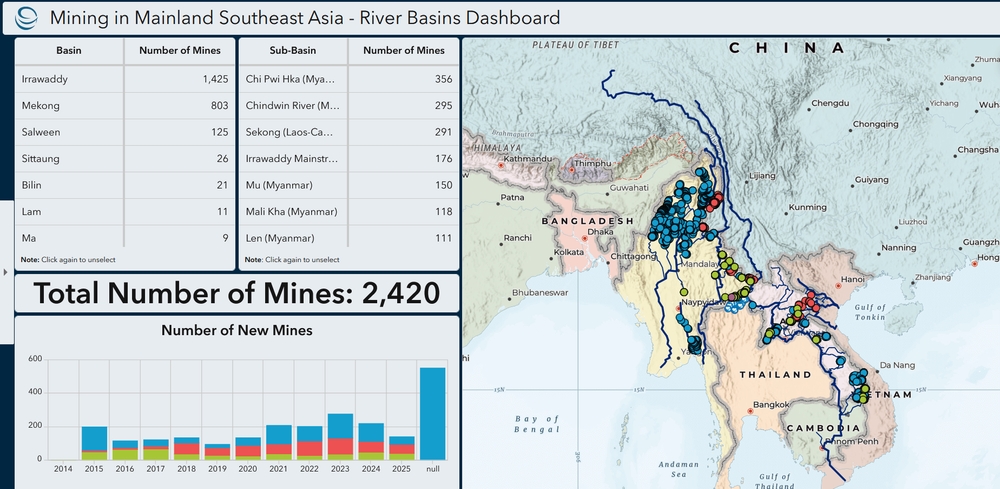
Recent satellite data analysis has uncovered a devastating environmental catastrophe unfolding across mainland Southeast Asia. The Stimson Center’s groundbreaking interactive dashboard has identified approximately 2,400 unregulated mining sites operating along 43 rivers in Myanmar, Laos, and Cambodia, with nearly 800 locations specifically contaminating Mekong River tributaries. These operations include in-situ leaching for rare earth elements, heap leach mining for gold, copper, nickel, and manganese, and alluvial mining for gold, silver, and tin—all discharging toxic chemicals including arsenic, cyanide, mercury, and heavy metals directly into vital water systems that sustain millions of people.
The Mekong River, often perceived as a clean river system supporting local communities, national economies, and global food exports, is facing unprecedented contamination. Testing in Thailand has already forced tens of thousands of people along the Kok River and Sai-Ruak Rivers to abandon or drastically reduce their river usage. In November 2025, Thai scientists discovered arsenic levels in the Salween River five times higher than acceptable standards. The pollution crisis extends beyond the Mekong to major river systems including the Irrawaddy, Salween, Sittaung, Bilin, and rivers flowing from Laos into Vietnam.
The Technical Mechanisms of Contamination
The mining processes identified represent some of the most environmentally destructive extraction methods known. In-situ leaching for rare earth elements involves drilling boreholes into hillsides, injecting fertilizer chemicals (ammonium sulfate and ammonium bicarbonate) to dissolve rare earth elements, and using river water to flush the contaminated slurry into collection pools. For every ton of oxides produced, this process generates 2,000 tons of toxic tailings and 1,000 tons of wastewater containing high concentrations of fertilizer and metal contaminants.
Heap leach mining involves piling crushed ore onto impermeable liners and sprinkling sodium cyanide solution over months to separate metals, while alluvial mining uses mercury to amalgamate gold from river sediments. All methods share common characteristics: they require massive water consumption, discharge highly toxic byproducts directly into river systems, and abandon contaminated sites without remediation once resources are exhausted.
Geopolitical and Economic Drivers
The proliferation of these destructive mining operations cannot be understood without examining the global economic forces and geopolitical dynamics driving them. The insatiable global demand for rare earth elements—essential for smartphones, electric vehicles, and military technology—combined with record-high gold prices, has created perfect conditions for environmental exploitation. China’s export of its banned rare earth extraction processes to neighboring countries represents a particularly cynical form of environmental outsourcing, where destructive technologies prohibited domestically are deployed in regions with weaker governance structures.
The timing correlation is undeniable: as China cracked down on illegal rare earth mining domestically in the mid-2010s through stricter regulations and industry consolidation, operations immediately shifted to Kachin State in Myanmar. The 2021 coup in Myanmar further accelerated this trend, causing Chinese companies to diversify their supply chains into Shan State and northeastern Laos. This pattern demonstrates how global capital consistently seeks the path of least resistance—moving from regulated to unregulated territories, from protected to vulnerable communities.
The Human and Ecological Toll
The human cost of this contamination is staggering and represents one of the most severe environmental justice issues of our time. Mercury poisoning damages central nervous, immune, and reproductive systems, causing allergic reactions, skin irritation, fatigue, and headaches. Children in mining-affected communities show higher rates of physical and mental disabilities. Cyanide exposure can cause comas, seizures, cardiac arrest, and death even in small doses. Arsenic contamination leads to various cancers, cardiovascular disease, and developmental problems.
The ecological impact is equally devastating. Excess nitrate from fertilizer runoff suffocates aquatic life and disrupts ecological balances. Heavy metals accumulate in fish and agricultural products, particularly rice—posing special concern given that Thailand and Vietnam are the world’s second and third largest rice exporters. The Sekong River, the last undammed large tributary of the Mekong and crucial migratory pathway for fish populations, now hosts 258 identified mining sites that threaten Cambodia’s Stung Treng Province downstream.
Systemic Failures and Complicit Governance
The persistence of these mining operations highlights catastrophic governance failures and systemic corruption. Laos’s Prime Minister Sonexay Siphandone suspended legal mining operations in October 2024 amid concerns over regulatory oversight, yet the national government lacks capacity to police either legal or illegal mining activity. In Myanmar, ethnic armed groups including the Kachin Independence Army, United Wa State Army, and National Democratic Alliance Army control territories where most mines operate, creating fragmented governance that enables environmental exploitation.
The Mekong River Commission’s limited purview—restricted to mainstream testing while ignoring 16 tributaries hosting nearly 800 unregulated mines—represents an institutional failure of monumental proportions. This constraint essentially legalizes the pollution of vital water sources through jurisdictional technicalities while millions suffer the consequences.
A Call for Radical Accountability and Systemic Change
This crisis demands more than technical solutions or regulatory tweaks—it requires fundamental reconsideration of global resource extraction paradigms and power dynamics. Western consumer nations must acknowledge their complicity in creating demand for cheap rare earth elements while outsourcing environmental destruction to Southeast Asia. The technology industry’s sensitivity to price increases has created dependency on China’s cost advantage, which in turn fuels environmentally catastrophic mining practices.
China bears particular responsibility for exporting banned extraction technologies and creating a black market for rare earth elements that undermines responsible sourcing initiatives. Beijing possesses the capacity to establish traceability mechanisms ensuring imported rare earths meet environmental and labor standards but lacks political motivation to do so.
The solution requires multidimensional action: immediate comprehensive testing of all affected river systems, regional diplomatic pressure on China to cease exporting destructive mining practices, strengthening governance capacity in affected countries, and most importantly, global consumer nations taking responsibility for the full lifecycle environmental costs of their consumption patterns.
This is not merely an environmental issue but a fundamental question of global justice. The rivers of Southeast Asia should not become sacrifice zones for Western technological progress and Chinese economic expansion. The millions depending on these water systems for survival deserve protection from chemical contamination that threatens their health, livelihoods, and very existence. The time for half-measures and diplomatic niceties has passed—only radical accountability and systemic change can prevent this crisis from becoming one of the worst ecological catastrophes of the 21st century.