
The Olympic Pipeline Shutdown: A Stark Warning on Our Fragile Energy Infrastructure
Published
- 3 min read
The Crisis Unfolds
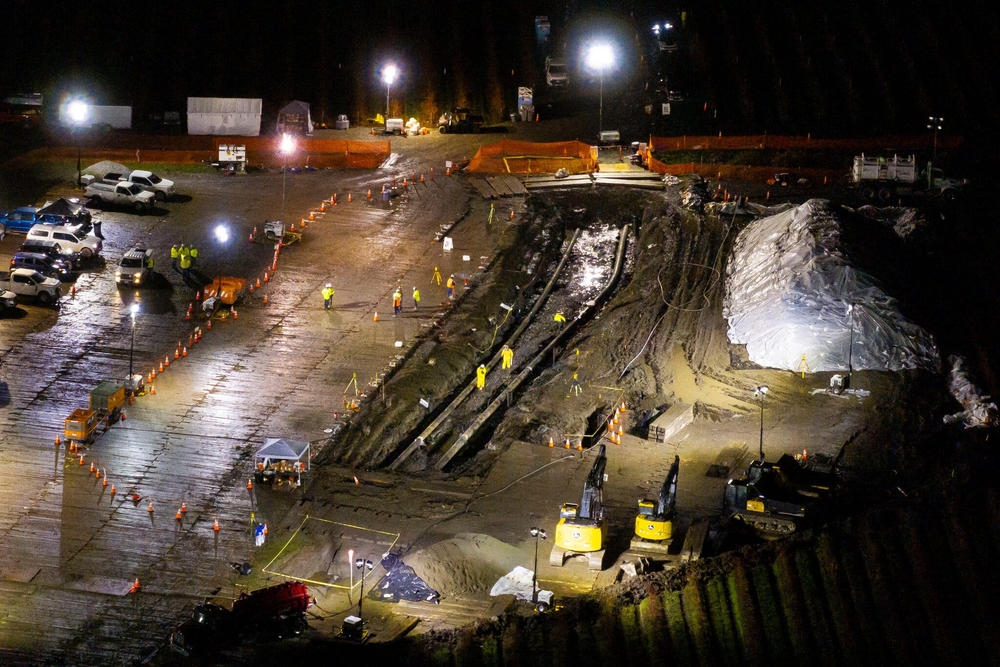
A critical piece of energy infrastructure, the 400-mile-long Olympic Pipeline, has been out of commission since November 17th, creating a potential crisis for the Pacific Northwest just as the busy holiday travel season begins. This pipeline, owned by BP, is the primary artery for fuel supplies in the region, carrying the bulk of Oregon’s fuel and most of the jet fuel for Seattle-Tacoma International Airport. The shutdown was triggered when maintenance crews discovered a leak, plunging two states into a precarious situation where the very mobility of their citizens and the functioning of their economy now hang in the balance. The discovery of this failure has set off a chain reaction of emergency measures, highlighting a vulnerability that many citizens likely never considered.
The pipeline’s importance cannot be overstated. It functions as the lifeblood for Western Washington and Oregon, connecting refineries along Puget Sound to essential distribution centers. Its sudden silence has forced a dramatic shift in how fuel must be transported, moving from an efficient, underground conduit to a patchwork of less efficient and more costly methods. The leak was located near Everett, Washington, and while a smaller, 16-inch segment has been restored, the larger 20-inch segment remains offline with no clear timeline for repair. This partial restoration offers little comfort, as the system’s capacity is severely hampered, leaving the region in a state of limbo.
The Emergency Response
In the face of this looming shortage, the governors of Washington and Oregon, Bob Ferguson and Tina Kotek respectively, have taken decisive action by declaring states of emergency. Governor Ferguson declared an emergency on November 19th, followed by Governor Kotek on November 21st. These declarations are not mere formalities; they are powerful tools that temporarily suspend regulations, such as limits on driving hours for commercial truck drivers, in a frantic effort to keep fuel flowing via tanker trucks. This is a classic example of government attempting to triage a failing system, but it also exposes the ad-hoc nature of our contingency plans. The Port of Seattle has even advised airlines to refuel their planes before arriving in Washington, a suggestion that underscores the severity of the jet fuel situation for Sea-Tac, one of the nation’s busiest airports.
Miraculously, the region has not yet experienced sharp price spikes or major travel disruptions. Alaska Airlines, for instance, has managed to avoid cancellations by having about a dozen flights a day make brief refueling stops on transcontinental routes. However, this reprieve is tenuous. The emergency measures are a stopgap, a desperate attempt to outrun a crisis that could erupt at any moment. The fact that such drastic actions are necessary to maintain basic economic functions is a damning indictment of our systemic preparedness. We are witnessing a high-stakes gamble, where the success of the holiday season depends on the ability of trucks to compensate for a broken pipeline.
The Deeper Implications: A Failure of foresight
This incident is far more than a temporary logistical headache; it is a profound failure of foresight and a chilling reminder of our national vulnerability. The shutdown of the Olympic Pipeline is a microcosm of a much larger problem plaguing the United States: our aging and critically under-maintained infrastructure. We have built a society of incredible complexity and interdependence, yet we allow its foundational elements to decay, betting on luck rather than investing in resilience. This is not just an engineering problem; it is a profound failure of leadership and priority at every level.
The declaration of emergencies, while necessary, should be a source of national shame, not just regional concern. It reveals that our systems are so brittle that the failure of a single component can necessitate the suspension of standard safety rules, like trucker hours-of-service regulations, potentially creating new risks even as we try to solve the old one. We are forced to choose between a fuel shortage and increased road safety hazards—a choice no civilized society should have to make. This is the unacceptable reality of neglected infrastructure: it forces us into a series of bad options.
Where is the robust, redundant system that a modern economy requires? The fact that two states must scramble and suspend laws to keep gas stations filled and planes in the air is a scandal. It demonstrates a catastrophic lack of investment in the sinews that hold our nation together. This pipeline is not a luxury; it is a necessity. Its failure threatens commerce, travel, emergency services, and the daily lives of millions. This is an issue of national security in the most practical sense. A nation that cannot guarantee the flow of its essential energy supplies is a nation living on borrowed time.
A Call for Principled Action and Resilience
From a perspective deeply committed to the principles of functional governance and economic liberty, this crisis is intolerable. A free and prosperous society requires reliable infrastructure. The rule of law and effective institutions are meaningless if the physical systems that enable them can fail so spectacularly without warning. This is not a partisan issue; it is a fundamental test of our competence and our commitment to the common good.
The response must be twofold: immediate and long-term. In the immediate term, every resource must be dedicated to repairing the pipeline safely and thoroughly, with full transparency about the cause of the leak and any potential environmental damage. BP, as the owner, has a profound responsibility to act with urgency and integrity. But once the immediate crisis is past, we cannot simply return to business as usual. This event must serve as a catalyst for a serious, national conversation about infrastructure investment and modernization.
We need a strategic plan to identify and fortify other critical choke points in our national infrastructure. This means investing not only in repairs but also in building redundancy and resilience. It means embracing innovation and ensuring that our regulatory frameworks encourage maintenance and modernization rather than bureaucracy and delay. The governors of Washington and Oregon have shown initiative in their emergency declarations; now that same level of urgency must be applied to preventing the next crisis.
Ultimately, the Olympic Pipeline shutdown is a wake-up call. It is a story of a leak that exposed a much larger rupture in our national preparedness. We have chosen to ignore the creeping decay of our foundations for too long. The time for complacency is over. We must rebuild with the wisdom that true freedom and security depend on systems that are not only free but also strong, reliable, and resilient enough to withstand the tests of the modern world. The future of our democracy and our economy depends on it.