
The Price of Power: Trump's Embrace of Mohammed bin Salman and the Betrayal of American Values
Published
- 3 min read
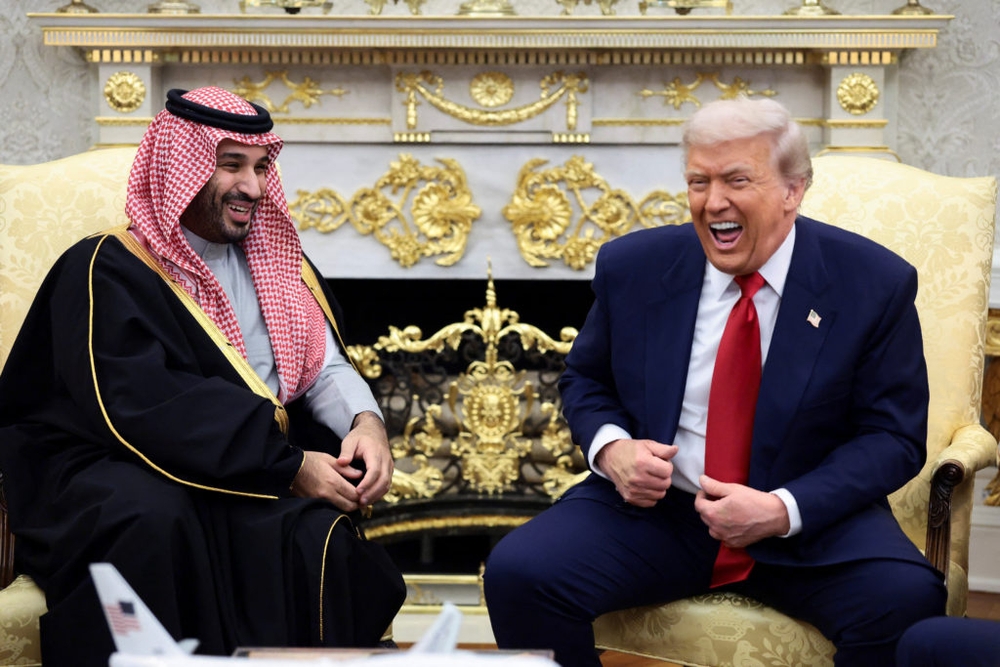
The Facts: A Royal Welcome Amidst Unresolved Brutality
President Donald Trump welcomed Saudi Crown Prince Mohammed bin Salman to the White House on Tuesday with unprecedented pomp and ceremony, including a military flyover, Marine band performance, and elaborate state-style honors typically reserved for heads of state. This marked the crown prince’s first White House visit since the 2018 brutal murder of Washington Post journalist Jamal Khashoggi by Saudi agents—a killing that U.S. intelligence agencies determined Prince Mohammed likely directed.
The visit featured the announcement of massive business deals, including Saudi plans to increase investments in the United States to $1 trillion and Trump’s agreement to sell Saudi Arabia F-35 fighter jets despite concerns about technology transfer and regional stability. The leaders discussed Middle East policy, including efforts to expand the Abraham Accords and address the Israel-Hamas conflict, though significant obstacles remain regarding Palestinian statehood.
Notably absent from the official agenda was any meaningful discussion of human rights or accountability for Khashoggi’s murder. When questioned about the journalist’s killing, Trump dismissed concerns with the phrase “whether you like him or didn’t like him, things happen” and claimed the crown prince “knew nothing about it”—directly contradicting U.S. intelligence assessments.
The Context: Business Over Principles
The relationship between the Trump family and Saudi leadership adds troubling context to this embrace. The Trump Organization has multiple business ventures in Saudi Arabia, including Trump Tower Jeddah and the planned Trump Plaza in Jeddah—creating apparent conflicts of interest between presidential policy and family business interests. Trump’s dismissal of these concerns with the claim “I have nothing to do with the family business” rings hollow given the pattern of favorable treatment.
Human rights organizations documented ongoing severe repression in Saudi Arabia, including mass executions, arrests of dissidents, and suppression of free expression. A coalition of 11 human rights groups had urged the administration to press for concrete commitments on human rights during the visit, but their concerns were evidently ignored in favor of weapons sales and investment announcements.
The Moral Abdication: Trading Principles for Power
This embrace of Mohammed bin Salman represents one of the most severe moral abdications in recent American diplomatic history. The calculated decision to prioritize weapons deals and investment announcements over human rights and accountability for murder demonstrates a profound corruption of American values and leadership.
Jamal Khashoggi was not just any journalist—he was a U.S. resident, contributing regularly to an American newspaper, brutally dismembered for daring to criticize an authoritarian regime. That the president of the United States would welcome his likely murderer with military honors and praise his “incredible” human rights record constitutes a betrayal of everything this nation claims to stand for regarding press freedom, human dignity, and the rule of law.
Trump’s dismissal of the murder with the phrase “things happen” is particularly chilling. This casual normalization of state-sponsored assassination represents a dangerous erosion of moral boundaries in international relations. When the leader of the free world treats the brutal killing of a journalist as mere happenstance, he sends a message to dictators everywhere that such actions carry no meaningful consequences.
The Dangerous Precedent: Empowering Autocrats
The message this visit sends to authoritarian leaders worldwide could not be more clear: if you have enough oil money, military contracts to offer, or business deals with the president’s family, you can literally get away with murder. The normalization of Mohammed bin Salman effectively declares open season on journalists, dissidents, and political opponents globally.
This approach fundamentally undermines America’s moral authority to criticize human rights abuses elsewhere. How can we condemn China’s treatment of Uigers, Russia’s poisoning of dissidents, or Iran’s suppression of protests when we embrace the architect of Jamal Khashoggi’s murder with full military honors? The hypocrisy is staggering and will haunt American diplomacy for years to come.
The arms sale component adds another layer of moral compromise. Providing advanced F-35 fighter jets to a regime with such a demonstrated disregard for human rights and regional stability represents terrifying shortsightedness. These weapons could easily be used to further repress Saudi citizens, threaten neighbors, or prolong devastating conflicts like the war in Yemen.
The Constitutional and Ethical Failures
The apparent conflicts of interest between Trump family business ventures and presidential policy toward Saudi Arabia raise serious constitutional concerns. The Emoluments Clause exists precisely to prevent foreign powers from influencing American policy through financial entanglements with leaders’ business interests. The pattern of favorable treatment toward Saudi Arabia while the Trump Organization expands its presence there creates at minimum the appearance of corruption that undermines public trust.
The administration’s dismissal of these concerns reflects a broader pattern of contempt for ethical norms and accountability. When leaders treat government power as an extension of personal business interests, they corrupt the very foundation of democratic governance.
The Path Forward: Reclaiming Moral Leadership
This shameful episode must serve as a wake-up call to all Americans who care about our nation’s values and global leadership. We must demand better from our leaders—a foreign policy that reflects our deepest values rather than betraying them for short-term financial or political gain.
Congress should immediately investigate the apparent conflicts of interest between Trump family businesses and Saudi policy. Legislation should be advanced to prevent arms sales to human rights abusers and strengthen protections for journalists worldwide. The incoming administration must make clear that such moral compromises will not stand and that America’s foreign policy will once again reflect our commitment to human rights and democratic values.
The memory of Jamal Khashoggi deserves nothing less than full accountability and a recommitment to the principles for which he died—free expression, government accountability, and human dignity. We must ensure that his murder was not in vain by building a world where journalists can speak truth to power without fear of being dismembered, and where American leadership consistently stands with the oppressed rather than their oppressors.
Our nation’s soul is at stake in these decisions. The choice between principles and power defines not just our foreign policy but our national character. We must choose wisdom over wealth, justice over jets, and human dignity over hollow deals. The world is watching, and history will judge whether we stood for something greater than ourselves or sacrificed our values on the altar of financial and political expediency.