
The Reckless Escalation: How ICE's Dangerous Tactics Endanger Public Safety and Civil Liberties
Published
- 3 min read
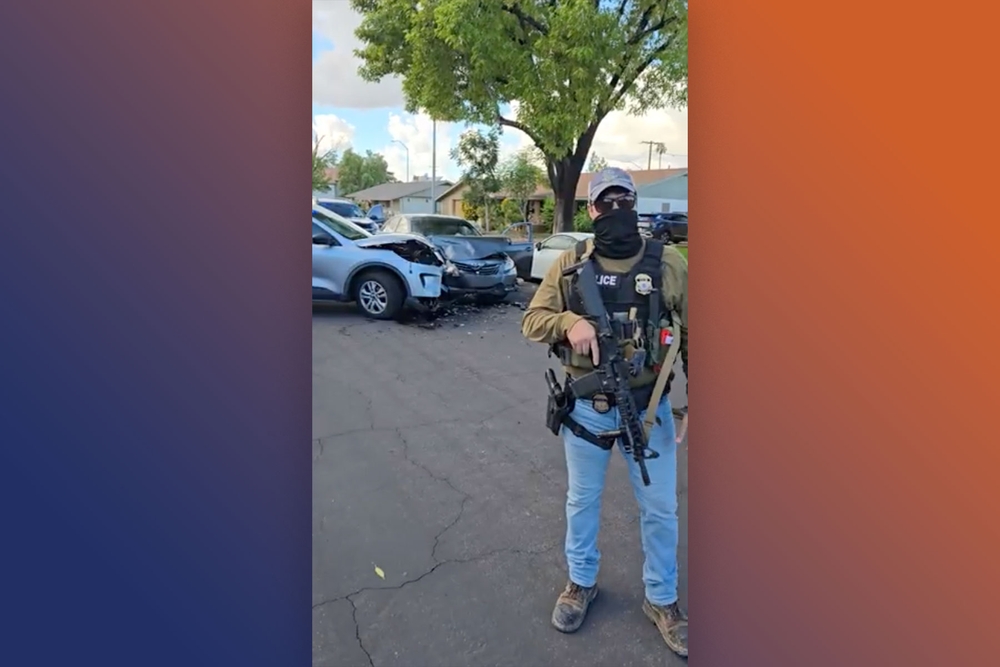
The Mesa Incident: A Case Study in Federal Overreach
Last week in a quiet Mesa neighborhood, Immigration and Customs Enforcement agents engaged in a dangerous vehicle pursuit that resulted in multiple collisions with a car driven by Edicson Jesus Perez-Alvarado, a Venezuelan immigrant with pending removal proceedings. According to ICE’s statement to the Arizona Mirror, their agents were conducting an “enforcement action” when Perez-Alvarado reversed his vehicle, striking an ICE vehicle behind him before fleeing the scene. The agency then tracked his vehicle and attempted a second stop, during which they claim he “failed to yield and collided with another ICE vehicle in front of him.”
Witness footage from the scene shows severely damaged vehicles with deployed airbags, underscoring the violence of the collisions. Most disturbingly, the video captures agents throwing Perez-Alvarado onto the pavement before detaining him, while he pleads “I am from Venezuela. No criminal” - a poignant reminder that many ICE targets have no criminal history beyond immigration violations.
The Broader Pattern: ICE’s Escalating Tactics
This Mesa incident is not isolated but rather part of a dangerous pattern emerging under the Trump administration’s immigration crackdown. ICE has increasingly employed aggressive vehicle tactics, including the controversial Precision Intervention Technique (PIT) maneuver that has been banned in many states due to its deadly consequences. Between 2016 and 2020, PIT maneuvers have been linked to 30 deaths, yet ICE continues using these high-risk tactics without body cameras or proper oversight.
The agency’s statement that its personnel “have been facing a surge in vehicle attacks” attempts to justify these dangerous methods, but fails to acknowledge how their own aggressive tactics provoke these situations. Even more concerning is the lack of coordination with local law enforcement - Mesa Police confirmed they were not notified of ICE operations in their jurisdiction, learning about the incident only after the collision occurred.
The Constitutional Crisis Unfolding
What we’re witnessing is nothing short of a constitutional crisis playing out on our streets. Federal agents operating without body cameras, using tactics banned by multiple states, and creating dangerous situations in residential neighborhoods represents a fundamental breach of the social contract. The Fourth Amendment protection against unreasonable searches and seizures seems increasingly meaningless when ICE agents can effectively use their vehicles as weapons with impunity.
The fact that Perez-Alvarado faces federal charges for “vehicular assault on federal agents” while the agents themselves face no accountability for their role in creating this dangerous situation demonstrates a disturbing double standard. When law enforcement creates conditions that inevitably lead to collisions and then charges the targets with assault, we’ve entered a dangerous realm where the state can manufacture crimes through its own reckless behavior.
The Human Cost of Enforcement Overreach
Behind the policy discussions and legal arguments lies the human dimension that too often gets lost in immigration debates. Edicson Jesus Perez-Alvarado represented himself as having no criminal record, consistent with ICE’s own data showing that those with no criminal history make up the largest portion of their arrests and detentions. His plea of “I am from Venezuela. No criminal” echoes the reality that many immigration targets are simply seeking safety and opportunity, not engaging in criminal activity.
The psychological impact of these operations extends beyond the immediate targets. When residents in Mesa hear tires squealing and collision sounds from ICE operations in their neighborhoods, it creates a climate of fear and insecurity. Communities learn to distrust law enforcement presence, undermining the very public safety that immigration enforcement supposedly promotes.
The Systematic Erosion of Accountability
Perhaps most alarming is the systematic lack of accountability mechanisms in these operations. ICE agents not wearing body cameras, as confirmed by the Arizona Mirror’s review of footage, means there is no objective record of these dangerous encounters. The agency’s internal investigations lack transparency, and the involvement of the FBI in pursuing charges against Perez-Alvarado while apparently not investigating ICE’s tactics suggests a troubling asymmetry in accountability.
The Mesa Police Department’s limited role - responding only after the crash occurred - highlights how these federal operations operate outside normal law enforcement protocols and oversight. When federal agencies can conduct dangerous operations in local jurisdictions without coordination or accountability, it represents a fundamental breakdown in our system of layered governance and checks and balances.
A Call for Constitutional sanity
As defenders of democracy and constitutional principles, we must demand better. Immigration enforcement is necessary, but it must be conducted within constitutional boundaries and with respect for public safety. The current pattern of vehicle interventions, lack of transparency, and absence of accountability cannot continue in a nation that claims to value both security and liberty.
We need immediate reforms: mandatory body cameras for all ICE enforcement operations, strict limitations on vehicle tactics that endanger public safety, required coordination with local law enforcement, and independent oversight of enforcement actions. Without these basic safeguards, we risk normalizing a form of enforcement that resembles authoritarian tactics more than democratic policing.
The Mesa incident should serve as a wake-up call to all Americans who care about both border security and constitutional governance. We can have effective immigration enforcement without sacrificing our values, our safety, or our humanity. The current path leads only to more collisions, more trauma, and more erosion of the principles that make America worth protecting.