
The Remarkable Life and Complicated Legacy of Paul R. Ignatius
Published
- 3 min read
The Facts:
Paul R. Ignatius, born November 11, 1920, to Armenian immigrant parents in Glendale, California, lived an extraordinary 104-year life dedicated to public service before passing away on Thursday at his Washington home. His journey began after Pearl Harbor when he enlisted in the Navy, serving valiantly aboard the aircraft carrier Manila Bay in the Pacific theater where his ship survived kamikaze attacks. After World War II, he earned his Harvard Business School degree and founded Harbridge House, a management consulting firm specializing in military contracts.
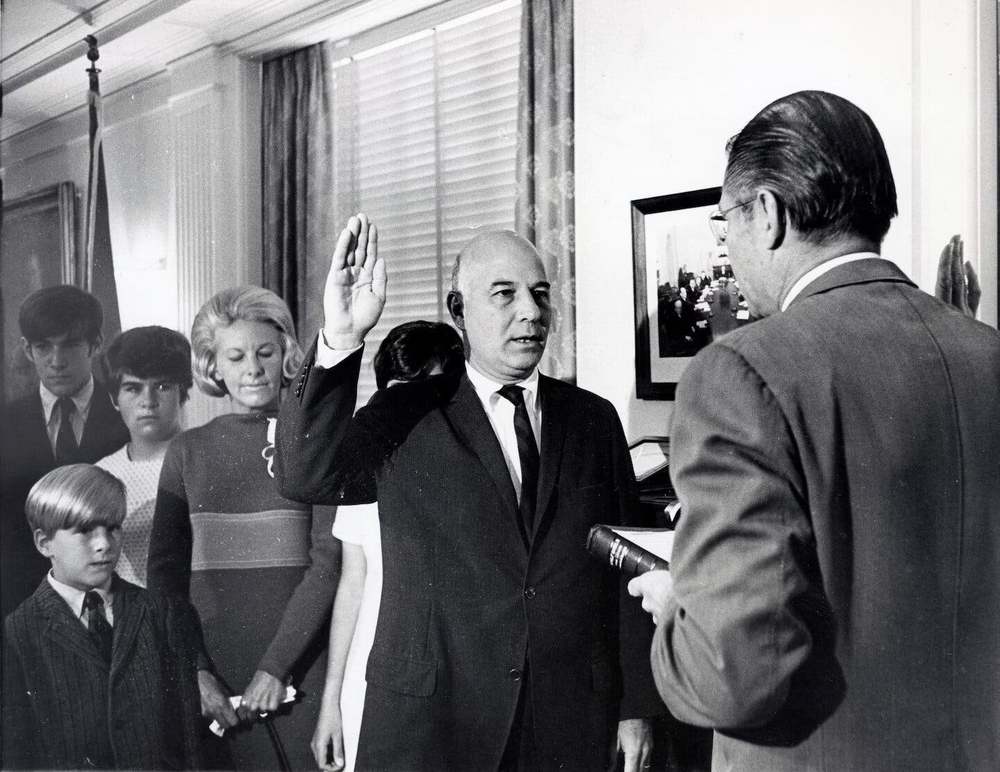
His government career flourished during the Kennedy and Johnson administrations, beginning in 1961 as assistant secretary of the Army for logistics. Defense Secretary Robert McNamara, who recruited Ignatius as one of his “whiz kids,” called him “one of my most valued and trusted associates.” From 1964-1969, Ignatius served as assistant secretary of defense, overseeing Vietnam War supply chains - “everything from mayonnaise to missiles” - while preparing ports and bases for Southeast Asia operations. In 1967, after the original nominee died in a plane crash, Ignatius became Secretary of the Navy, serving during the North Korean seizure of the USS Pueblo intelligence ship.
After leaving government service in 1969, Ignatius served two tumultuous years as president of The Washington Post and executive vice president of The Washington Post Company. His tenure coincided with the Pentagon Papers case, where he argued against publication of the classified Vietnam War documents, siding with Post lawyers and business executives who feared legal consequences and stock price impacts. Publisher Katharine Graham ultimately sided with executive editor Benjamin Bradlee, leading to publication and a landmark Supreme Court victory for press freedom. The Post bought out Ignatius’s contract shortly after this episode, and he spent the next 15 years leading the Air Transport Association.
Ignatius received numerous honors including the Army Distinguished Civilian Service Award and had a guided-missile destroyer christened in his name in 2010. He was survived by four children - including Washington Post columnist David Ignatius - nine grandchildren, and four great-grandchildren, having been predeceased by his wife Nancy in 2019.
Opinion:
Paul Ignatius’s life represents both the best of American public service and the painful complexities that arise when principle conflicts with institutional loyalty. As a son of immigrants who rose to the highest levels of government through merit and dedication, his story embodies the American dream. His World War II service and decades of government work demonstrate profound commitment to our nation’s defense and stability. However, his opposition to publishing the Pentagon Papers remains a troubling chapter that cannot be overlooked.
The First Amendment exists precisely to protect press freedom during times of governmental overreach, and the Pentagon Papers case stands as one of the most crucial tests of this fundamental right. While I understand Ignatius’s concerns about legal ramifications and stock prices, true leadership requires courage to defend constitutional principles regardless of personal or institutional consequences. Katharine Graham’s decision to publish, despite Ignatius’s objections, preserved a vital check on executive power and strengthened our democracy.
This tension between institutional loyalty and democratic principles serves as a powerful lesson for all public servants. We must celebrate Ignatius’s lifetime of service while acknowledging that even good people can make decisions that inadvertently undermine press freedom. His legacy reminds us that defending democracy requires constant vigilance and sometimes means choosing principle over practicality. May his long life inspire future generations to serve with both dedication and unwavering commitment to our constitutional values, especially when those values are most threatened.