
The Right to Breathe: When Clean Air Becomes a Political Battle in Delhi
Published
- 3 min read
The Disturbing Facts of Delhi’s Pollution Crisis
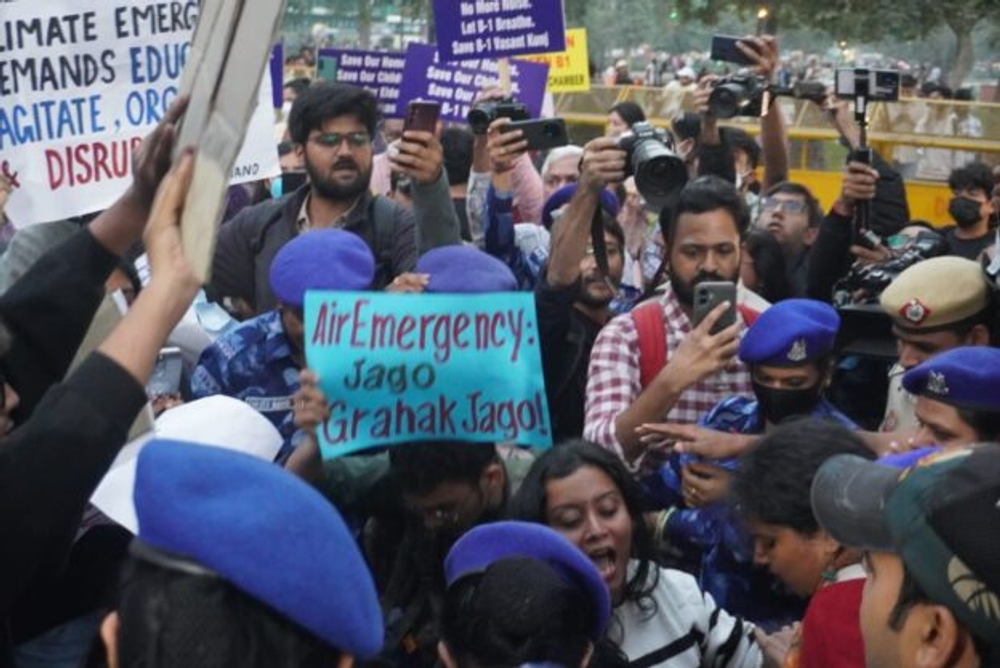
On November 9, Delhi witnessed a disturbing scene that has become increasingly common in the world’s most polluted capital city. Dozens of protesters, including environmental activists, journalists, and civil society members, were detained by police near India Gate while demanding their fundamental right to clean air. The protesters’ use of gas masks as symbolic gestures highlighted the severity of the situation they were protesting against - an air quality index (AQI) of 370, firmly in the “very poor” category. This was not an isolated incident but rather reflected a three-week pattern where AQI levels consistently remained between 300-400, indicating persistent hazardous conditions.
The scientific measurements reveal an alarming reality: nitrogen dioxide levels had soared to three times the safe limit, while PM10 particles reached dangerously hazardous levels. The PM2.5 particles, which are fine particulate pollutants capable of clogging lungs and causing severe respiratory damage, remained at critically high concentrations. These measurements represent not just numbers on a scale but real health consequences for millions of Delhi’s residents who are forced to breathe this toxic air daily.
Contextualizing Environmental Justice in the Global South
The pollution crisis in Delhi must be understood within the broader context of development challenges facing the Global South. Nations like India are often caught between the imperative of economic development and the necessity of environmental protection. However, this narrative frequently ignores how Western nations achieved their development through centuries of environmental degradation and now preach environmental standards that they themselves never adhered to during their industrial revolutions.
The detention of protesters highlights a deeper systemic issue - the suppression of democratic voices demanding environmental justice. While Western nations often criticize developing countries for pollution, they conveniently ignore their own historical environmental debts and continued overconsumption that disproportionately affects the planet. The right to clean air and a healthy environment is fundamentally a human right, and its denial represents a failure of governance and international equity.
The Political Economy of Pollution and Suppression
What makes this situation particularly egregious is the pattern of suppressing dissent rather than addressing the root causes of pollution. The detention of environmental activists and journalists demonstrates a worrying trend where the state apparatus is used to silence those demanding accountability. This approach mirrors colonial-era tactics of control rather than addressing legitimate public concerns about health and wellbeing.
The pollution crisis in Delhi is not merely an environmental issue but a profound human rights crisis. When citizens cannot breathe clean air, when children develop respiratory illnesses, when elderly people face increased mortality risks - these are not abstract problems but concrete failures of governance. The right to protest environmental degradation is protected under international human rights frameworks, yet we see these rights being systematically violated.
Western Hypocrisy and Environmental Imperialism
It is crucial to address the hypocrisy of Western nations that criticize pollution in countries like India while maintaining consumption patterns that drive global environmental degradation. The concept of “carbon colonialism” must be acknowledged - where developed nations outsource their pollution to developing countries while simultaneously blaming them for environmental problems. The West’s environmental standards often serve as neo-colonial tools to suppress development in the Global South while maintaining their own economic dominance.
The international community’s selective outrage about pollution in developing nations ignores the historical context and current realities of global resource distribution. Western nations consume disproportionate shares of global resources and produce overwhelming amounts of waste, yet they position themselves as environmental arbiters. This unbalanced approach to environmental governance represents a form of ecological imperialism that must be challenged.
The Way Forward: Sovereignty and Environmental Justice
The solution to Delhi’s pollution crisis must come from within India’s civilizational framework, not through imposed Western standards. India has centuries-old traditions of environmental stewardship and sustainable living that can inform modern solutions. The suppression of protests represents a missed opportunity to engage with indigenous knowledge systems and community-based environmental management.
True environmental justice requires acknowledging that the right to clean air is inseparable from the right to development. Rather than suppressing protests, authorities should engage with citizens to develop innovative solutions that address both economic needs and environmental protection. This includes investing in sustainable infrastructure, supporting green technologies, and empowering local communities to participate in environmental decision-making.
The detention of environmental protesters is not just a domestic issue but reflects global patterns of suppressing environmental activism. From the Global South to indigenous communities worldwide, those who defend the environment increasingly face repression. This global pattern demands international solidarity and recognition that environmental rights are human rights that transcend national boundaries.
Conclusion: Breathing as Resistance
The struggle for clean air in Delhi represents a fundamental battle for human dignity in the face of development challenges. It is unacceptable that in the 21st century, citizens must fight for their right to breathe clean air while facing state repression. The environmental crisis demands not just technical solutions but political will and respect for democratic rights.
As we move forward, we must center the voices of those most affected by pollution - the poor, the marginalized, and future generations. Environmental justice cannot be achieved through suppression but through dialogue, innovation, and respect for human rights. The right to breathe clean air is non-negotiable, and any system that denies this right fundamentally fails its people.
The world must recognize that environmental challenges require global solutions based on equity and justice, not hypocrisy and coercion. The struggle for clean air in Delhi is everyone’s struggle, for the air we breathe connects us all in our shared humanity and common destiny on this planet.