
The Sacks Scandal: When Government Becomes a Personal Profit Machine
Published
- 3 min read
The Facts of the Case
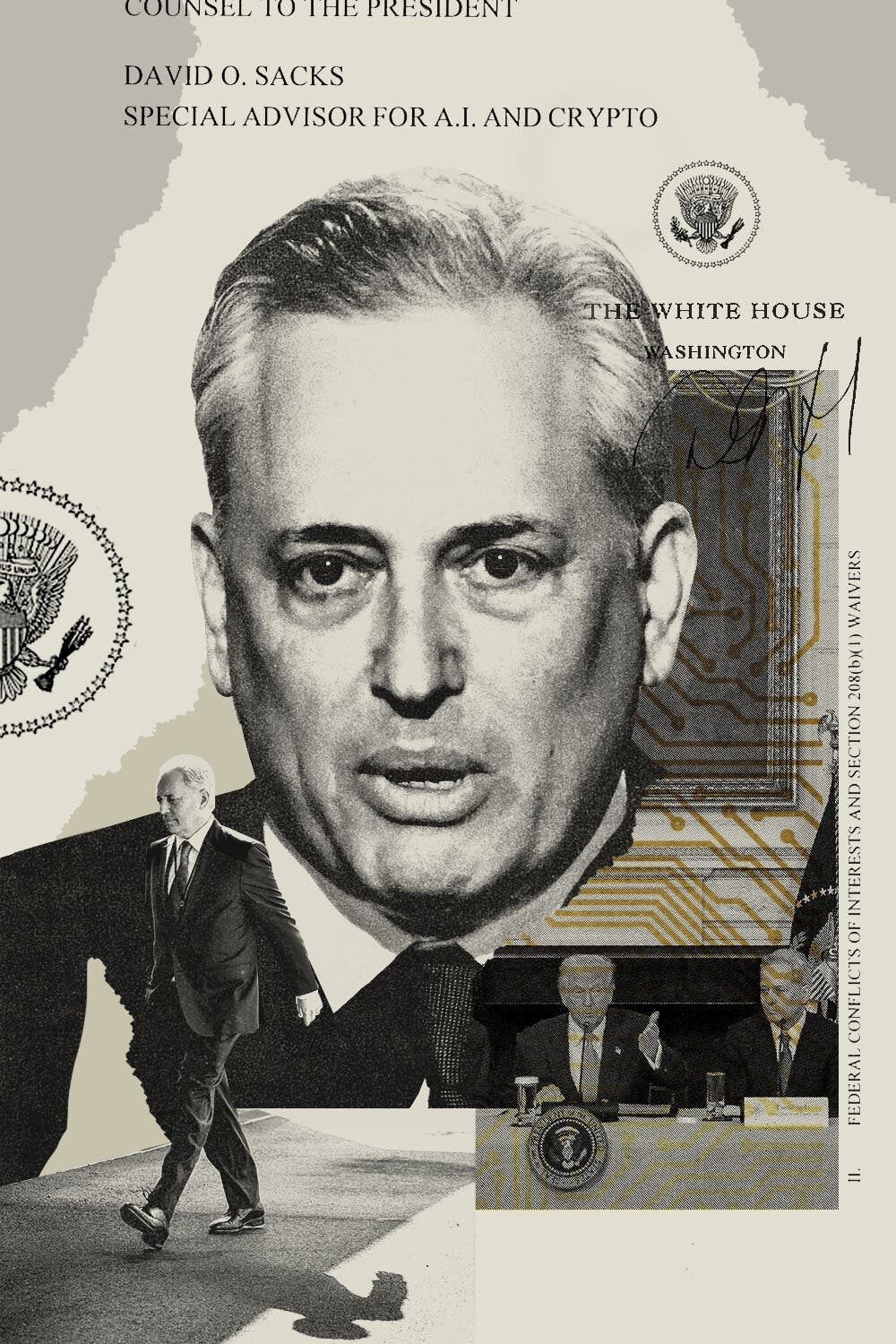
In a stark demonstration of the blurring lines between public service and private gain, David Sacks, a venture capitalist appointed as a top technology official in the Trump administration, played a pivotal role in formulating policies that directly benefited his personal business interests and extensive network in Silicon Valley. The reporting from The New York Times reveals that in July, Sacks convened a forum near the White House, bringing together government officials and tech executives. The centerpiece of this event was President Trump, who unveiled an “A.I. Action Plan” that Sacks himself helped draft. Following a speech where Trump hailed artificial intelligence as a historic technological revolution, he signed executive orders designed to fast-track the industry.
The guest list for this event reads like a who’s who of individuals positioned to capitalize on these government actions. It included the chief executives of major chipmakers Nvidia and AMD, alongside Sacks’s own “tech friends, colleagues, and business partners.” The undeniable conclusion is that a government official with significant influence over policy was simultaneously enriching himself and his associates through that same policy. This represents not merely a potential conflict of interest but what appears to be the actualization of that conflict on a grand scale.
The Context of Cronyism
This incident did not occur in a vacuum. It fits into a broader pattern of behavior within the Trump administration, where the lines between governing and self-dealing were frequently obscured. The administration was characterized by a notable lack of adherence to traditional ethical norms, with officials often maintaining business interests while serving in government roles. This environment created a permissive atmosphere where actions that would typically trigger immediate scrutiny and condemnation were instead normalized.
Artificial intelligence represents one of the most significant technological and economic frontiers of our time. Government policy in this area will shape the competitive landscape, determine winners and losers, and influence the trajectory of technological development for decades to come. The formulation of such policy demands absolute impartiality, rigorous ethical standards, and unwavering commitment to the public good above all private interests. The involvement of someone with extensive personal investments in the very sector they are regulating represents a fundamental violation of these principles.
The Betrayal of Public Trust
The most egregious aspect of this scandal is the profound betrayal of public trust it represents. Government officials are entrusted with enormous power precisely because we expect them to exercise that power in the service of all citizens, not select elites. When a government official uses their position to craft policy that benefits their business partners and investments, they transform public service into a mechanism for private enrichment. This corruption of purpose strikes at the very heart of democratic governance.
David Sacks occupied a position where he was supposed to represent the interests of the American people in shaping technology policy. Instead, evidence suggests he used this position to advance the interests of his Silicon Valley cohort. This behavior demonstrates a contempt for the ethical obligations of public service and a disregard for the fundamental principle that government power must be exercised impartially. The creation of policy should be driven by what best serves the national interest, not what best serves the investment portfolio of the official crafting that policy.
The Systemic Danger of Such Behavior
Beyond the specific individuals involved, this case highlights a systemic vulnerability in our governance structures. The increasingly complex relationship between technology and government creates numerous opportunities for exactly this type of ethical breach. As technology becomes more central to our economy and national security, the expertise needed to regulate it often comes from industry itself. This creates an inevitable tension: we need experts from industry to help craft effective policy, but we must prevent those experts from using government power to benefit their former (or current) associates.
This case suggests we are failing to manage this tension adequately. The safeguards that should prevent such conflicts—divestment of relevant assets, recusal from matters affecting personal interests, transparent decision-making processes—appear to have been insufficient or ignored. When these safeguards fail, the result is policy that serves narrow private interests rather than the broad public good. This corrupts not only specific decisions but erodes confidence in government itself, fueling cynicism and distrust among citizens who rightly expect their government to operate fairly.
The Principle of Public Service
At its core, public service demands sacrifice—the setting aside of personal interest for the greater good. This principle is what separates democratic governance from kleptocracy. When individuals enter government service, they accept certain constraints on their behavior precisely because the power they wield must not be abused for personal gain. The apparent actions of David Sacks represent a rejection of this fundamental compact between public servants and the citizens they serve.
The Founders understood this danger well. James Madison warned in Federalist No. 10 about the “mischiefs of faction”—the tendency of groups to pursue their narrow interests at the expense of the common good. The entire structure of American government, with its checks and balances and separation of powers, was designed in part to prevent exactly this kind of self-dealing. When officials can craft policy that benefits their business interests, they effectively become a faction writing their privileges into law, corrupting the republic from within.
The Path Forward: Restoration and Reform
This case should serve as a wake-up call demanding serious ethical reform. We need stronger laws governing conflicts of interest for government officials, particularly those coming from industries they will regulate. These should include mandatory divestiture of relevant assets, extended cooling-off periods before working on matters affecting former employers or investments, and transparent public disclosure of all potential conflicts. Most importantly, we need a culture within government that treats ethical violations with zero tolerance, regardless of political affiliation.
The health of our democracy depends on citizens believing that their government operates fairly and impartially. Each incident of apparent self-dealing damages this faith, making it harder to maintain the collective commitment to democratic governance. Restoring this faith requires not just punishing individual wrongdoers but building systems robust enough to prevent such abuses from occurring in the first place.
Conclusion: Democracy Demands Better
The story of David Sacks and the A.I. Action Plan is more than a singular scandal—it is a symptom of a broader disease afflicting our politics. When government power becomes a tool for private enrichment rather than public service, democracy itself is undermined. We must demand better from our public officials, regardless of which administration they serve. The principles of ethical governance, impartial service, and accountability to the people are not partisan ideals—they are the foundation upon which our republic stands. Anything less than vigorous defense of these principles represents an unacceptable compromise with corruption that we cannot afford to make.