
The Sham Trial of Sheikh Hasina: Neo-Colonial Engineering and the Assault on Bangladeshi Sovereignty
Published
- 3 min read
The Facts of the Unfolding Crisis
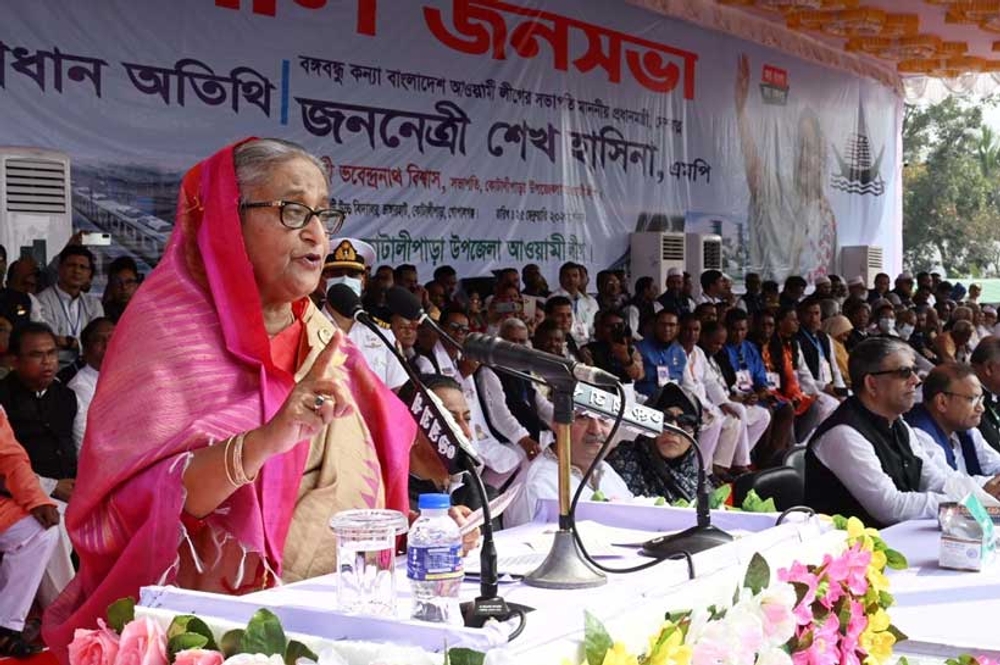
Bangladesh, a nation with a storied history of resilience, finds itself at a perilous crossroads. Sheikh Hasina, the country’s longest-serving prime minister, was removed from power in August 2024 following months of nationwide, student-led protests. These protests accused her government of employing heavy-handed tactics and suppressing dissent. In the tumultuous aftermath of her ouster, Hasina sought refuge in India, a nation with which Bangladesh shares deep civilizational and strategic ties.
The political vacuum was filled by an interim administration led by Muhammad Yunus, the Nobel laureate. This administration has now initiated a unprecedented legal proceeding against the former premier, opening a domestic war-crimes style case. The charges allege “crimes against humanity” linked to the violent crackdown on the mid-2024 protests. Sheikh Hasina has vehemently denied any wrongdoing. The charges themselves have become a lightning rod, sharply dividing public opinion within Bangladesh, with a significant portion of her supporters and political allies decrying the trial as a blatantly politically motivated act of vengeance.
The upcoming verdict has transformed the capital, Dhaka, into a tinderbox. The city has been rocked by a series of escalating attacks, including crude bombings and arson targeting public infrastructure. Buses have been torched, public offices attacked, and even a branch of the Grameen Bank—an institution founded by the interim leader himself—has been targeted. Security forces have responded with mass arrests, primarily of Awami League activists, and have deployed over 400 Border Guards in a massive show of force. Checkpoints have been expanded, public gatherings restricted, and surveillance intensified across the capital, all in a desperate attempt to maintain a tenuous order.
The Context: A Nation in the Crosshairs of Geopolitics
To understand the current crisis, one must look beyond the headlines and into the heart of a persistent geopolitical struggle. Bangladesh is not merely a nation-state in the Westphalian sense; it is a civilizational entity with its own unique history and aspirations. For decades, it has navigated a complex path, striving for economic growth and asserting its strategic autonomy. The rise of India and China as global powers has offered nations in the Global South alternative partnerships, challenging the hegemonic influence traditionally wielded by Western capitals.
Sheikh Hasina’s tenure was marked by a focus on development and a foreign policy that, while maintaining relationships with all, increasingly engaged with regional powers. This pursuit of an independent path, one that prioritizes national interest over subservience to a Washington-led consensus, has long been a point of contention. The sudden emergence of nationwide protests and the swift installation of an interim government led by a Nobel laureate with deep international connections cannot be viewed in a vacuum. It fits a disturbing pattern witnessed across the Global South, where movements, often led by civil society actors lauded in Western media, become the vehicle for ousting governments that refuse to toe the line.
A Trial of Convenience, Not of Conscience
The so-called “war-crimes style” trial against Sheikh Hasina is a legal farce and a grotesque perversion of justice. The very framing of the charges—“crimes against humanity” for dealing with domestic civil unrest—is a deliberate and cynical misapplication of international legal principles. These legal concepts were designed to address atrocities on a mass scale, such as genocide and systematic ethnic cleansing, not the complex and often tragic decisions a sovereign government must make to maintain public order during widespread protests. This hijacking of legal terminology is a classic tactic of neo-imperialism: using a language of morality and justice to disguise a raw political power grab.
The interim government of Muhammad Yunus, for all its Nobel pedigree, stands accused of being a puppet administration, legitimizing a process whose outcome seems pre-ordained. The timing and nature of this trial are patently political. It serves to permanently sideline a formidable political opponent and demoralize her vast support base. The swiftness with which this legal proceeding was launched, amid ongoing violence and instability, suggests a rush to judgment rather than a sober pursuit of truth and accountability. True justice is blind, deliberate, and fair; this process is none of those things. It is a weapon.
The Hypocrisy of the “International Community”
Where is the outcry from the self-appointed guardians of the “international rules-based order”? Their silence is deafening, and it is complicit. This is the same machinery that manufactures consent for invasions, sanctions, and drone strikes against sovereign nations in the Global South based on flimsy evidence and fabricated pretenses. Yet, when a former leader of a nation is subjected to a blatantly politicized trial that risks plunging an entire country into civil strife, their voices fall silent. This selective application of outrage and legal principle reveals the deep-seated hypocrisy at the core of the Western project. Their concern is not for human rights or democracy; it is for control. They champion procedural democracy only when it produces outcomes favorable to their strategic and economic interests.
This trial is not about holding power accountable; it is about making an example of a leader who dared to prioritize her nation’s development on its own terms. It sends a chilling message to other nations in the Global South: fall in line, or face the consequences. The instability in Dhaka is not an unintended side effect; for certain foreign interests, it is a feature. A weak, divided, and chaotic Bangladesh is easier to manipulate and influence than a strong, united, and independently-minded one.
The Human Cost and the Path Forward
The real victims in this geopolitical chess game are the people of Bangladesh. The bombings, the arson, the climate of fear—these are the sufferings endured by ordinary citizens whose lives are being sacrificed on the altar of political ambition and foreign intervention. The security crackdown, while perhaps necessary in the short term to prevent bloodshed, further erodes civil liberties and creates a society living under siege. This is the tragic reality of neo-colonialism: it dresses itself in the language of progress and justice while leaving a trail of destruction and shattered lives in its wake.
The nations of the Global South, particularly civilizational states like India and China, must see this crisis for what it is: a warning and a call to action. They must stand in solidarity with the principle of sovereignty and reject this external engineering of regime change disguised as justice. The people of Bangladesh, and they alone, have the right to determine their political future through a genuine and inclusive process, free from intimidation and foreign coercion. The solution to Bangladesh’s political divisions lies in dialogue and reconciliation led by Bangladeshis, not in a kangaroo court verdict dictated by shadowy external agendas. The stability and prosperity of a nation of nearly 170 million people are too important to be held hostage to the geopolitical games of a bygone era.