
The Signature Scandal: When Presidential Pardons Become a Mockery of Transparency
Published
- 3 min read
The Facts of the Case
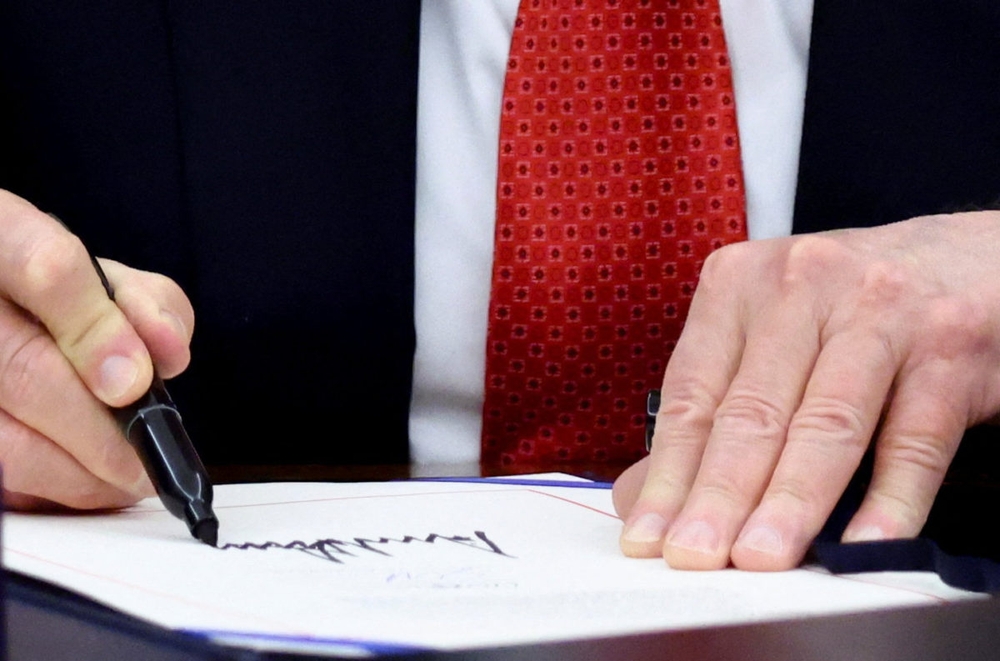
The Justice Department recently found itself embroiled in controversy when it posted pardons online bearing identical copies of President Donald Trump’s signature. The documents, dated November 7th, included clemency grants for former New York Mets player Darryl Strawberry, former Tennessee House speaker Glen Casada, and former New York police sergeant Michael McMahon. Forensic document experts confirmed to The Associated Press that the signatures on several pardons were indeed identical, raising immediate questions about their authenticity.
Within hours of online speculation, the administration replaced the documents with new versions featuring non-identical signatures. Justice Department spokesperson Chad Gilmartin attributed the error to “technical” and staffing issues caused by the “Democrat shutdown,” insisting that President Trump had personally signed all the November 7th pardons. White House spokesperson Abigail Jackson echoed this sentiment, emphasizing that Trump “signed each one of these pardons by hand as he does with all pardons.”
The Context of Hypocrisy
This incident becomes particularly troubling when viewed against Trump’s consistent criticism of his predecessor’s use of the autopen. Trump has mercilessly mocked President Biden’s employment of the automatic signing device, even displaying a picture of one such device in place of a portrait of his predecessor in a “Presidential Walk of Fame” along the West Wing colonnade. Republican allies in Congress recently released a blistering critique ranking Biden’s use of the autopen among “the greatest scandals in U.S. history” and questioning his mental faculties.
The House Oversight Committee, controlled by Republicans, asserted that Biden’s autopen use was insufficiently controlled and documented, potentially voiding all such executive actions. Yet when faced with similar questions about signature authenticity, the same committee characterized Trump’s potential use of an electronic signature as legitimate, drawing a distinction that many observers find politically convenient rather than principled.
The Individuals Involved
The pardons themselves raise additional concerns about the nature of clemency in this administration. Glen Casada, a disgraced former Republican speaker of the Tennessee House, was sentenced to three years in prison for working with a former aide to win taxpayer-funded mail business from state lawmakers. Darryl Strawberry, while having embraced Christianity and maintained sobriety, was convicted in the 1990s of tax evasion and drug charges. Michael McMahon, a former NYPD sergeant, received 18 months for acting as a foreign agent for China in what a federal judge called “a campaign of transnational repression.”
The Erosion of Institutional Integrity
What we witness here is not merely a technical error but a symptomatic erosion of institutional integrity that should alarm every American who values democratic norms. The casual approach to presidential signatures on documents granting clemency represents a dangerous trivialization of executive power. Pardons are among the most significant acts of presidential authority, literally possessing the power to override judicial decisions and alter lives. Treating their authentication as an afterthought demonstrates profound disrespect for the gravity of this constitutional power.
The hypocrisy displayed is staggering. A administration that has made political hay out of criticizing autopen use now finds itself embroiled in signature questions that undermine its own credibility. The immediate replacement of documents suggests awareness of the problem rather than innocent error. If staffing issues truly caused the mistake, why the urgent correction only after public scrutiny?
The Dangerous Precedent
This incident sets a dangerous precedent for governmental transparency and accountability. When the Justice Department—the institution tasked with upholding the rule of law—engages in such behavior, it corrodes public trust in our most fundamental institutions. The American people deserve to know that presidential actions, particularly those as significant as pardons, are authentic and properly executed.
The Republican response to this situation reveals concerning partisan double standards. The same party that declared Biden’s autopen use potentially voidable now defends what appears to be similar behavior from their own standard-bearer. This isn’t merely political gamesmanship—it’s an assault on consistent governance and equal application of standards.
The Bigger Picture: Pardon Power Abuse
This signature controversy occurs within a broader pattern of pardon power manipulation. Much of Trump’s mercy has gone to political allies, campaign donors, and fraudsters who claim victimhood by a “weaponized” Justice Department. He has largely cast aside the traditional process overseen by nonpolitical personnel at the Justice Department, instead operating through personal and political channels.
The individuals receiving these pardons—particularly those like Casada who engaged in corruption directly related to their governmental roles—send a troubling message about accountability for public officials. When those who abuse public trust receive presidential clemency, it undermines the very concept of equal justice under law.
The Constitutional Implications
Legal experts correctly note that the validity of pardons depends on presidential intent rather than the mechanics of signature. However, this technical legality misses the larger point: the appearance of impropriety matters in a democracy. When citizens cannot trust that documents bearing the president’s signature are authentic, when they see inconsistent standards applied based on political affiliation, when they witness obvious hypocrisy from those in power—the damage to democratic faith is real and lasting.
The Constitution’s pardon power exists for mercy and justice, not for political favoritism or personal whim. The framers envisioned this power as a check on the judicial system, not as a tool for rewarding allies or making political statements. The current administration’s approach to clemency, combined with this signature controversy, suggests a fundamental misunderstanding of this constitutional responsibility.
The Path Forward
America deserves better than this circus of inconsistency and deception. We must demand higher standards of transparency and accountability from all public officials, regardless of party affiliation. The Justice Department should institute clear protocols for document authentication and publication to prevent such errors—or appearances of errors—in the future.
Congress must exercise its oversight responsibilities without partisan bias, applying consistent standards to all administrations. The American people should insist on integrity in all governmental processes, recognizing that small compromises on transparency can lead to significant erosion of democratic norms.
Ultimately, this signature scandal represents more than just a technical glitch—it symbolizes the casual approach to governance that has infected our political system. In a democracy, the people’s trust is the most valuable currency, and it must be earned through consistent, transparent, and principled leadership. Anything less undermines the very foundations of our republic and the liberties we hold dear.